
Fear has a job. It keeps you back from the edge of a cliff and out of the path of a car. A phobia is fear that has outgrown that job: it fires at things that pose little real danger, and the urge to steer clear of them can quietly redraw the map of where you go and what you do.
A type of anxiety disorder
The National Institute of Mental Health (NIMH) lists phobia-related disorders among the types of anxiety disorders. This article covers two of them, specific phobia and agoraphobia. Both are DSM-5-TR diagnoses, and a qualified clinician makes them. Social anxiety disorder, once called social phobia, has its own article: shy or social anxiety disorder?
Specific phobia
In DSM-5-TR, the American Psychiatric Association describes specific phobia as marked fear or anxiety about a particular object or situation. Meeting it almost always brings fear right away, the person avoids it or gets through it with intense distress, and the fear is far larger than the actual danger. It usually lasts 6 months or more and causes real distress or trouble in daily life. The manual sorts common triggers into kinds:
- Animals, such as dogs, snakes or spiders
- The natural world, such as heights, storms or water
- Blood, needles or injury, which can leave some people feeling faint
- Situations, such as flying, elevators, tunnels or small enclosed rooms
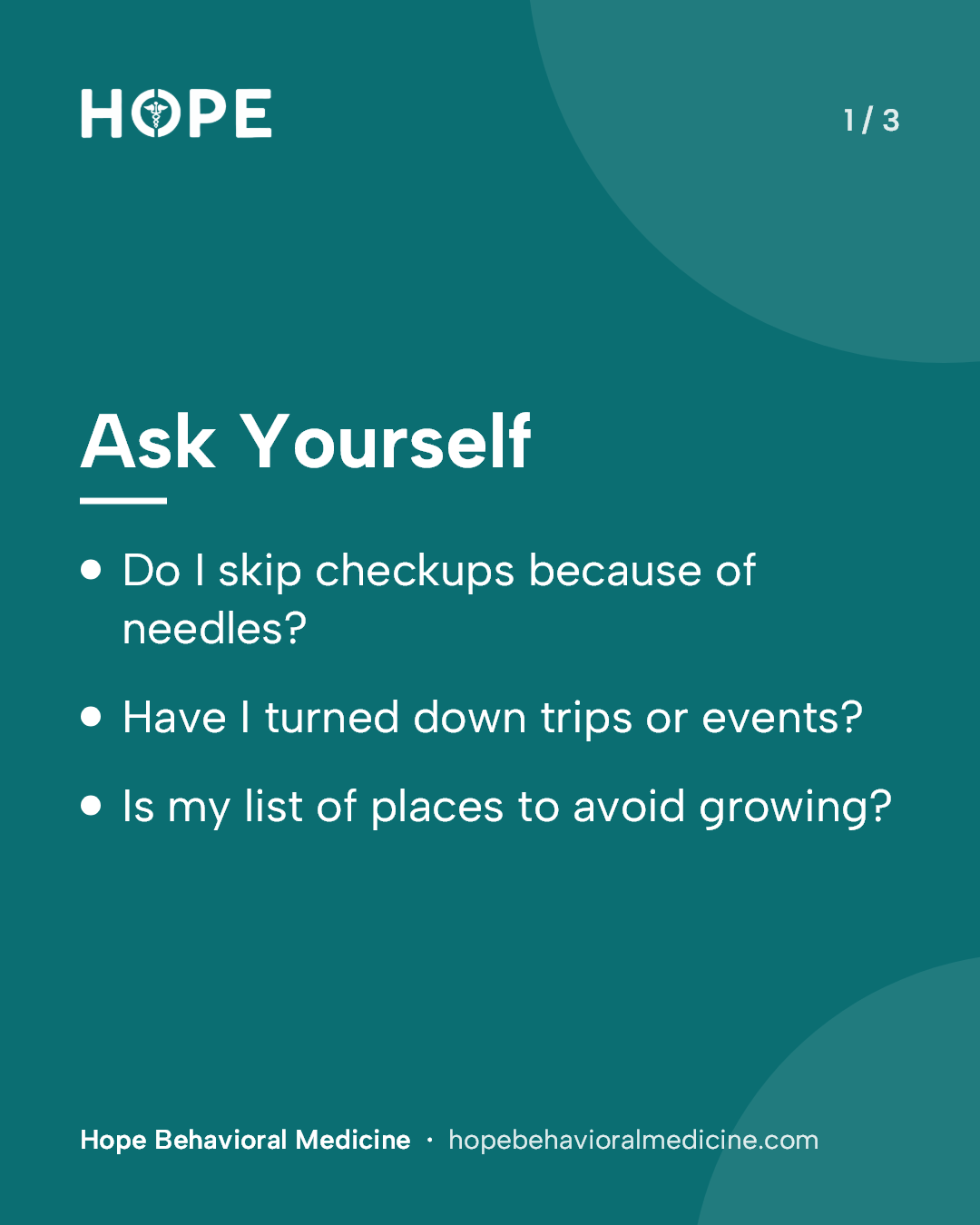
A fear of needles can mean skipped blood draws and checkups. A fear of flying can mean missed weddings and turned-down jobs. That cost is often what separates a phobia from a simple dislike.
Agoraphobia
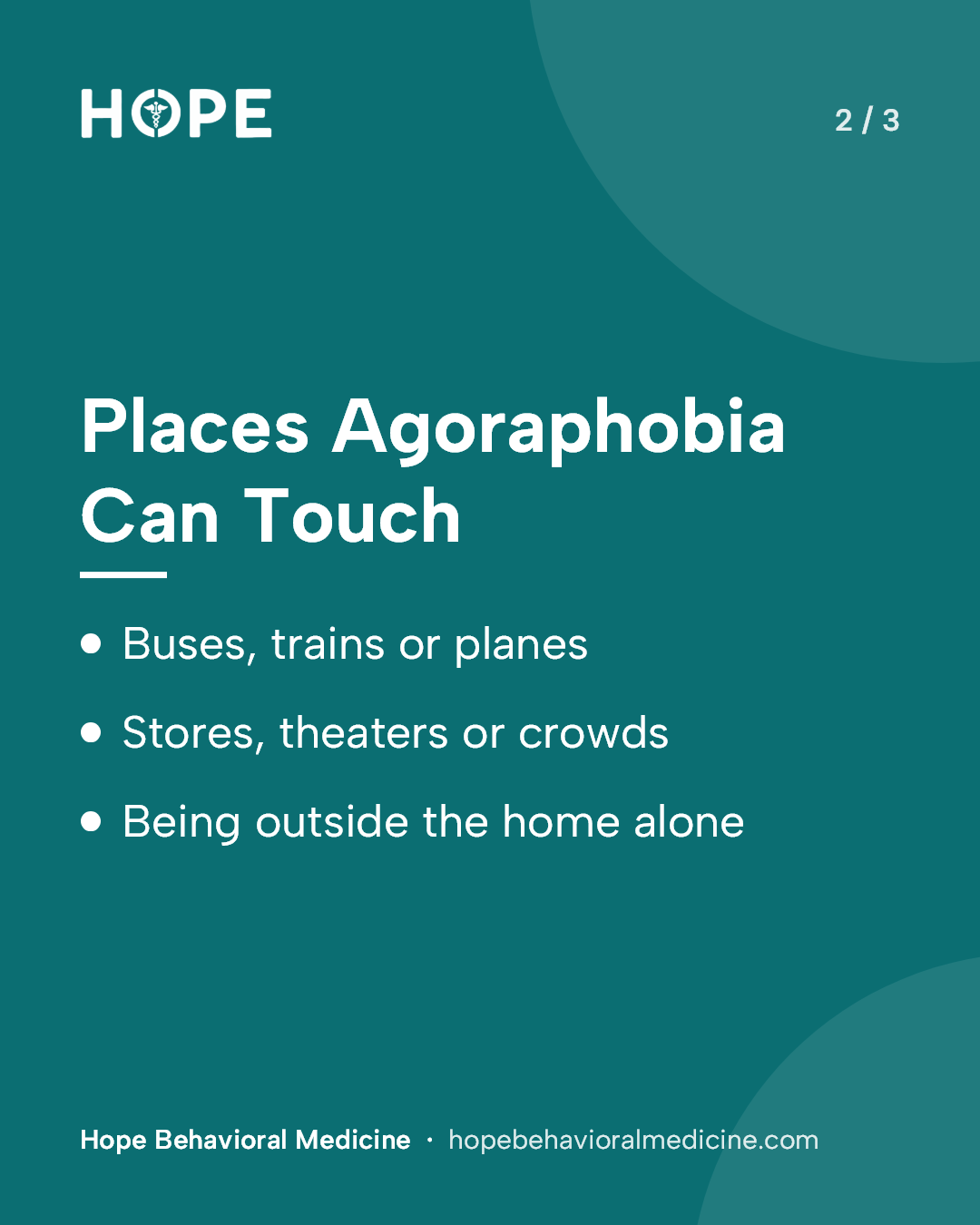
Agoraphobia is fear of being somewhere that would be hard to leave, or where help might not come, if panic-like or embarrassing symptoms struck. DSM-5-TR describes fear in two or more of five kinds of situations:
- Using public transportation, such as buses, trains or planes
- Being in open spaces, such as parking lots or bridges
- Being in enclosed places, such as stores or theaters
- Standing in line or being in a crowd
- Being outside the home alone
NIMH notes that agoraphobia can sometimes develop alongside panic disorder, as people begin to fear or avoid places where attacks have happened. It can also occur without panic disorder, and DSM-5-TR diagnoses it on its own. At its most severe, agoraphobia can make leaving the house feel impossible. If repeated panic attacks are part of your story, read panic attack or panic disorder?
Why avoidance makes the world smaller
Steering clear of a feared thing brings quick relief, and that relief teaches the brain the thing really was dangerous. The next time, the fear arrives sooner, and the list of places to skip gets longer. Over months a person may stop driving on the interstate, then stop shopping at busy hours, then stop going out alone.
Need to Talk to Someone?
In-person in West Ashley or telehealth statewide across South Carolina.
5 cards. Swipe or tap to see the next one.
Phobias can be treated
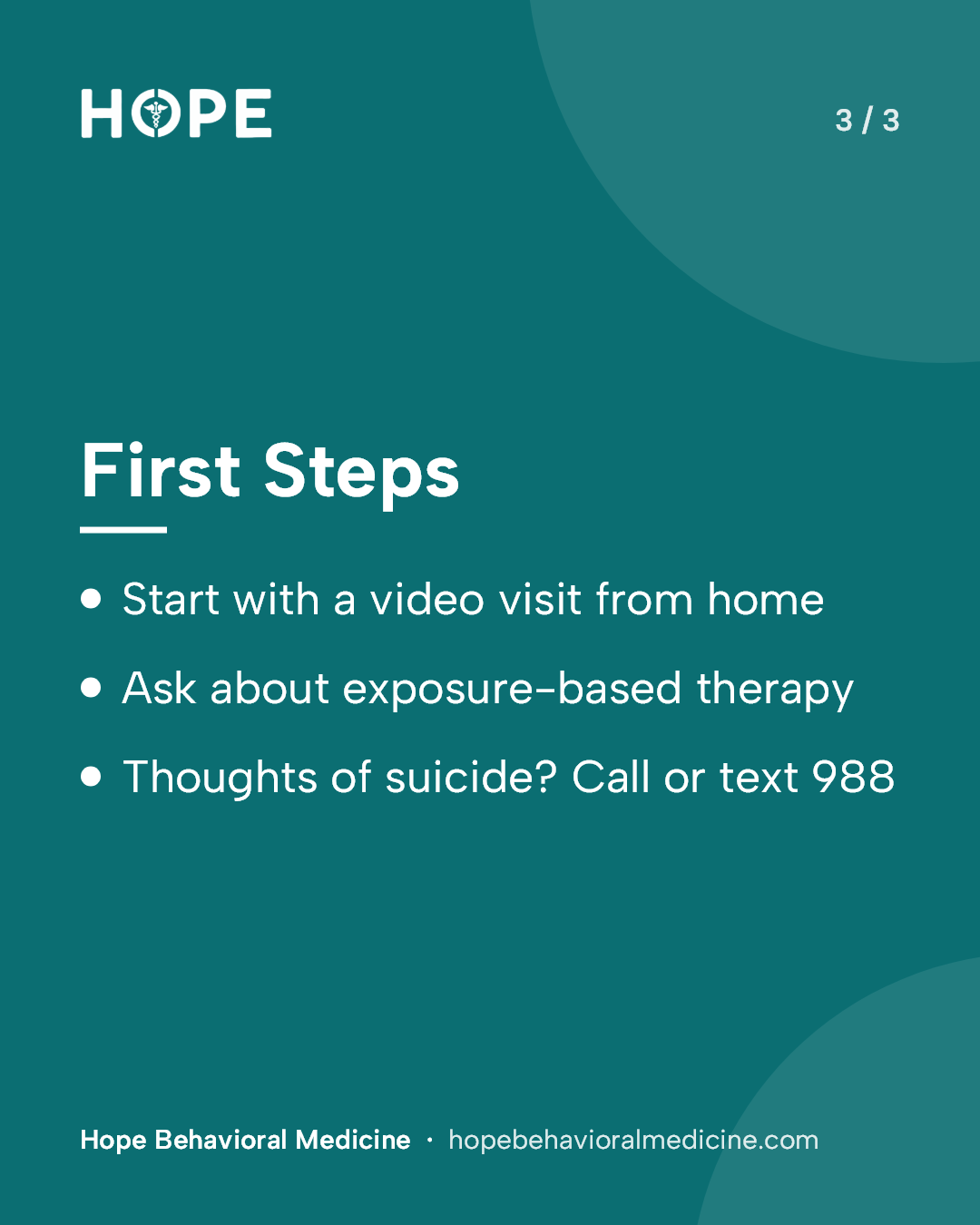
Facing the fear in a planned, gradual way is at the center of treatment. NIMH describes exposure therapy as a type of CBT in which a person spends short stretches in a supportive setting, learning step by step to tolerate the distress linked to certain objects, ideas or imagined scenes until the fear eases. In practice, you and your clinician build a ladder of steps, from looking at a photo of a dog to standing near one, and climb it at a pace you agree on.
Some people also work with acceptance and commitment therapy (ACT), which NIMH says encourages accepting thoughts without judgment and uses mindfulness and goal setting. Support from people who understand, including support groups, helps some people keep practicing between sessions. Medication, when indicated, is decided jointly with you.
Care at Hope Behavioral Medicine
We see adults in person in West Ashley and by secure video anywhere in South Carolina. For agoraphobia, starting by video means the first step does not depend on the trip you have been avoiding. A psychiatric nurse practitioner or therapist can use CBT with exposure elements or exposure-based therapy, and when a more intensive exposure program fits you better, your provider can refer you out and keep your care coordinated. If you are looking for a particular approach, ask us when you call and we will tell you what we can offer.
Learn about anxiety care in West Ashley and panic attack care, or request an appointment.
If fear or isolation ever comes with thoughts of suicide, call or text 988 at any hour. In an emergency, call 911 or go to the nearest emergency room.
Sources: NIMH, Anxiety Disorders; NIMH, Psychotherapies (reviewed February 2024); NIMH, Panic Disorder: What You Need to Know (revised 2025); American Psychiatric Association, DSM-5-TR (specific phobia, agoraphobia).
This article is general information, not medical advice, and does not create a patient–provider relationship. Every situation is different, so see a provider who can evaluate yours and develop a plan of care. Any medication discussed here may not be right for you: the right choice depends on your diagnoses, other health conditions and current medicines, so take medication only as directed by the provider managing your care. If you are ever in doubt about an emergency, call 911 or go to the nearest emergency room.
Frequently Asked Questions
Yes. Exposure therapy, a type of CBT, helps a person face a feared object or situation in gradual steps until the fear eases, at a pace agreed on with the clinician.
A specific phobia centers on one kind of object or situation, such as heights, needles or flying. Agoraphobia is fear of places where escape or help might be hard to reach if panic-like symptoms struck, such as crowds, public transportation or being out alone.
No. NIMH notes agoraphobia can develop alongside panic disorder, but DSM-5-TR treats them as separate diagnoses, and agoraphobia can occur on its own.
Yes. Hope Behavioral Medicine sees adults by secure video anywhere in South Carolina, so a first visit does not require leaving home.