
A deadline at work, a move, a parent in the hospital, a stack of bills: stress is part of ordinary life. Anxiety can feel much the same in the body, with a tight chest, a busy mind and poor sleep, which is why the two are so easy to mix up. The difference that matters most is whether the feeling has a cause that passes, or whether it stays after the cause is gone.
How NIMH tells them apart
The National Institute of Mental Health (NIMH) describes stress as a physical or mental reaction to something outside you, and says it tends to go away after that situation is settled. In NIMH's description, anxiety is a lasting feeling of apprehension or dread that does not lift, and it can show up even when nothing is threatening you right now.
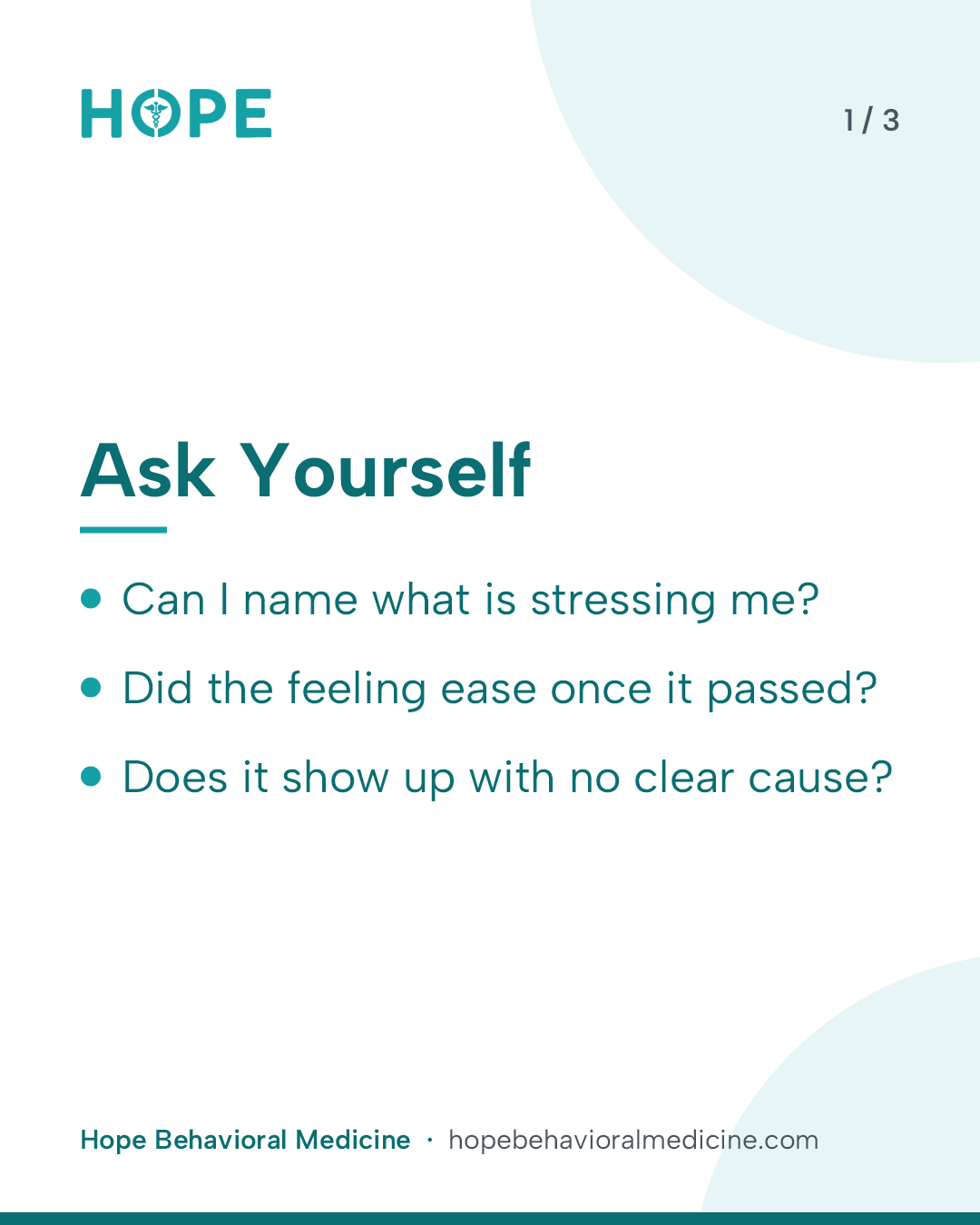
- Stress usually points to a cause you can name, such as a project, a conflict or a change at home, and it eases as that cause is dealt with.
- Anxiety can linger after the cause is gone, or arrive with no clear cause at all.
Steps that help with everyday stress
NIMH suggests several ways to cope:
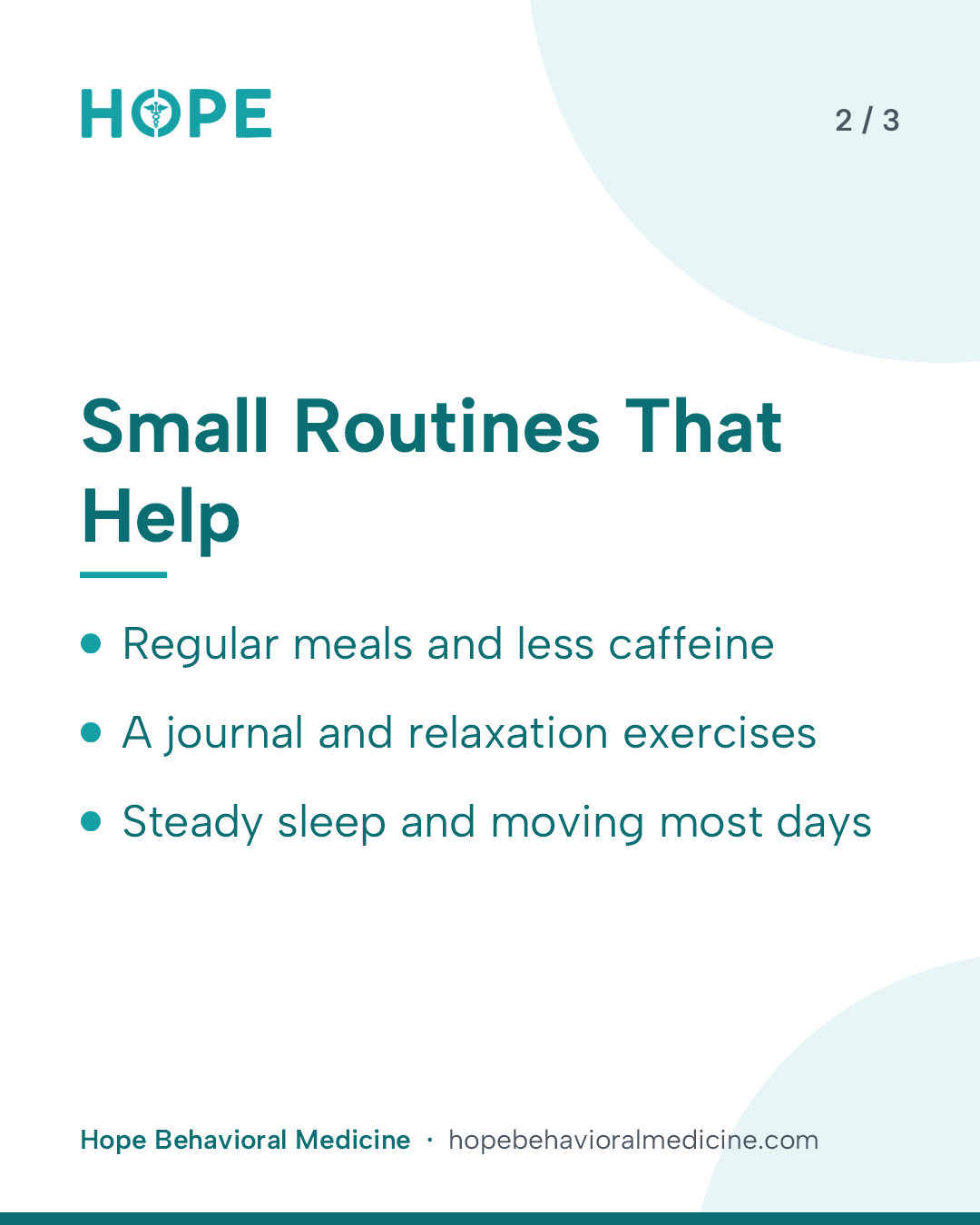
- Eat healthy meals at regular times and avoid too much caffeine
- Keep a journal
- Try relaxation exercises
- Notice unhelpful thoughts and push back on them
It also helps to lean on the people who steady you, to keep a regular sleep schedule and to move your body most days. None of this is dramatic, but small routines are often what carry people through a hard stretch.
When to talk to a professional
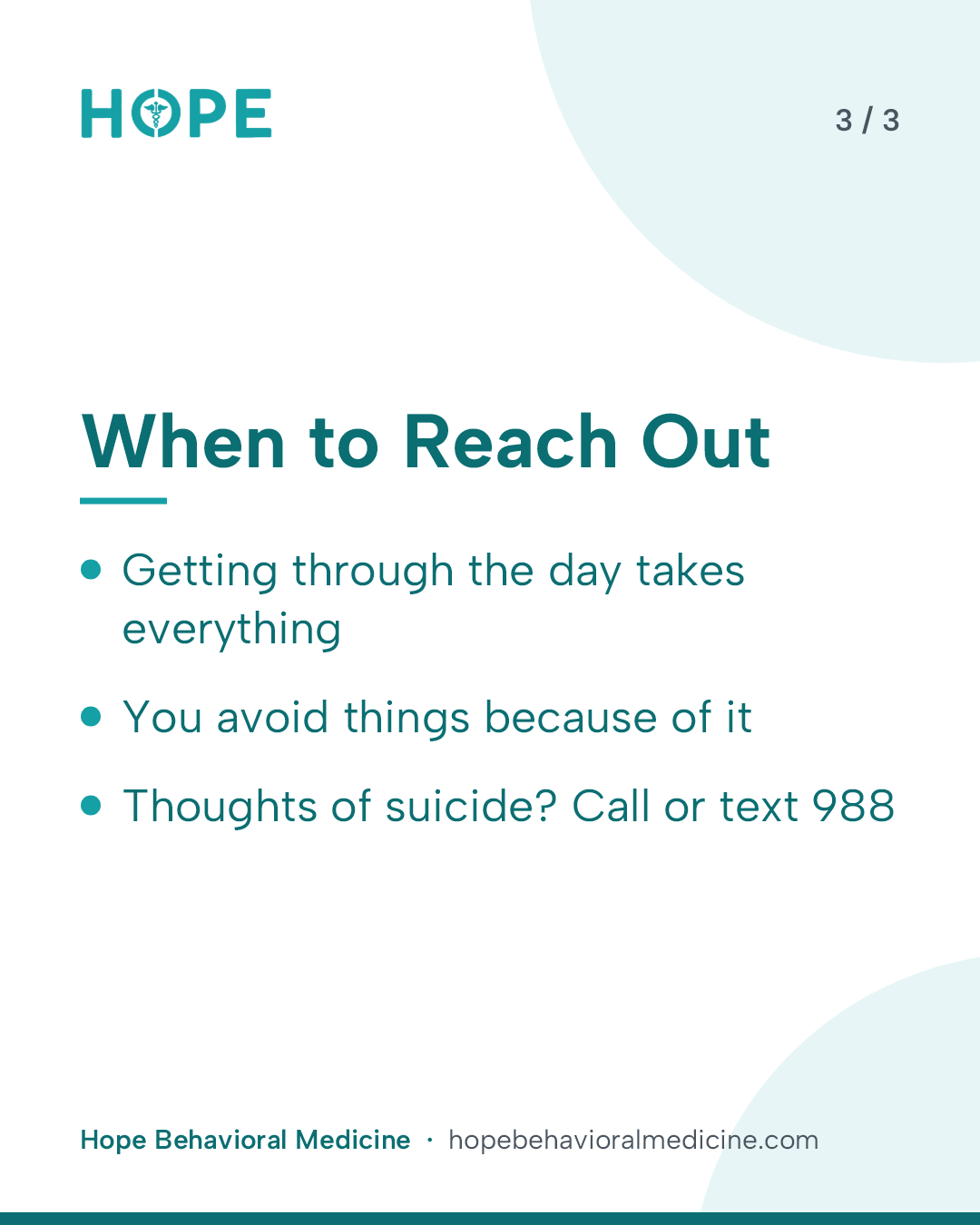
NIMH says it may be time to get help if coping feels like a struggle or the symptoms keep hanging on. Watch for symptoms that get in the way of everyday life, lead you to avoid things or seem to be there all the time. A pattern like that deserves an evaluation, because it may be an anxiety disorder, depression or another condition that can be treated.
Anxiety disorders are DSM-5-TR diagnoses, and a qualified clinician makes them. If worry has been steady for months, read how everyday worry differs from generalized anxiety disorder.
Need to Talk to Someone?
In-person in West Ashley or telehealth statewide across South Carolina.
5 cards. Swipe or tap to see the next one.
How counseling can help
Talk therapy gives stress and worry somewhere to go besides around and around in your head. NIMH explains that cognitive behavioral therapy (CBT) helps people spot automatic thoughts that are inaccurate or harmful, question them and change the patterns that keep them stuck. Our psychiatric nurse practitioners and therapists can use CBT and ACT in individual sessions, and medication, when indicated, is decided jointly with you. If you are looking for a particular approach, ask us when you call and we will tell you what we can offer.
Hope Behavioral Medicine sees adults in West Ashley and by secure video anywhere in South Carolina. Learn about counseling in West Ashley and anxiety care by video, or request an appointment.
Stress can build until it feels unbearable. If you are thinking about suicide, call or text 988 at any hour, and if anyone is in immediate danger, call 911 or go to the nearest emergency room.
Sources: NIMH, I'm So Stressed Out! Fact Sheet (NIH Pub. 20-MH-8125); NIMH, Psychotherapies (reviewed February 2024); American Psychiatric Association, DSM-5-TR (anxiety disorders).
This article is general information, not medical advice, and does not create a patient–provider relationship. Every situation is different, so see a provider who can evaluate yours and develop a plan of care. Any medication discussed here may not be right for you: the right choice depends on your diagnoses, other health conditions and current medicines, so take medication only as directed by the provider managing your care. If you are ever in doubt about an emergency, call 911 or go to the nearest emergency room.
Frequently Asked Questions
NIMH describes stress as a reaction to an outside cause that tends to fade once the situation is settled. Anxiety is a lasting feeling of apprehension or dread that can stay even when there is no current threat.
NIMH suggests reaching out if you are struggling to cope or symptoms will not go away, especially when they interfere with daily life, lead you to avoid things or seem always present.
NIMH suggests regular healthy meals, limiting caffeine, keeping a journal, relaxation exercises and challenging unhelpful thoughts. If that is not enough, a provider can help.
Yes. Talk therapy such as CBT helps you notice and question stressful thoughts and build new ways of responding. Hope Behavioral Medicine offers individual counseling in West Ashley and by video across South Carolina.