Is Fear Making Your World Smaller?
Based on National Institute of Mental Health, Anxiety Disorders
5 cards. Swipe or tap to see the next one.
Fear of needles, heights, crowds or leaving home can quietly shrink your life. What specific phobias and agoraphobia are, why avoidance feeds them and how exposure therapy helps.
Need to Talk to Someone?
In-person in West Ashley or telehealth statewide across South Carolina.
In this guide
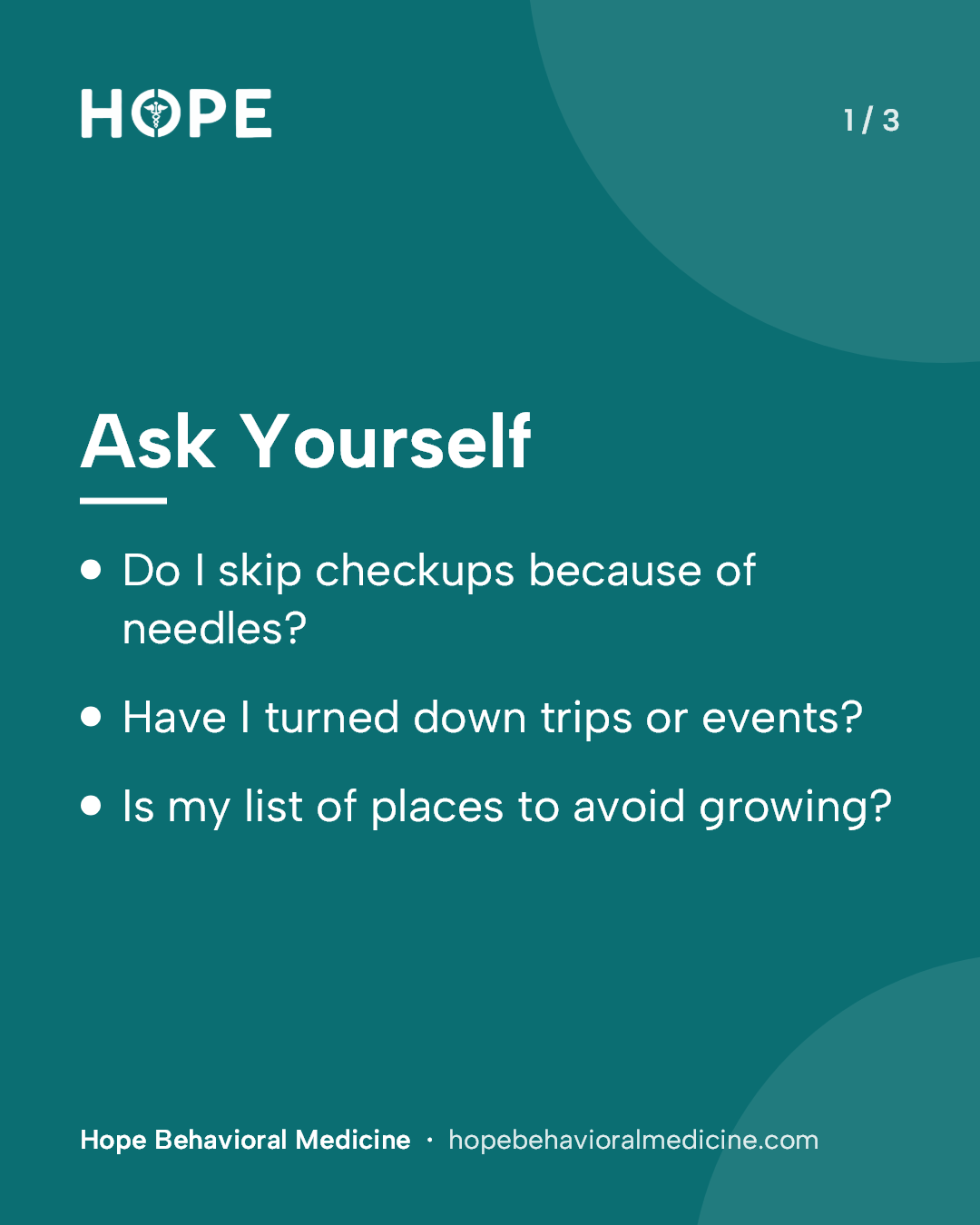
Ask Yourself
- Do I skip checkups because of needles?
- Have I turned down trips or events?
- Is my list of places to avoid growing?
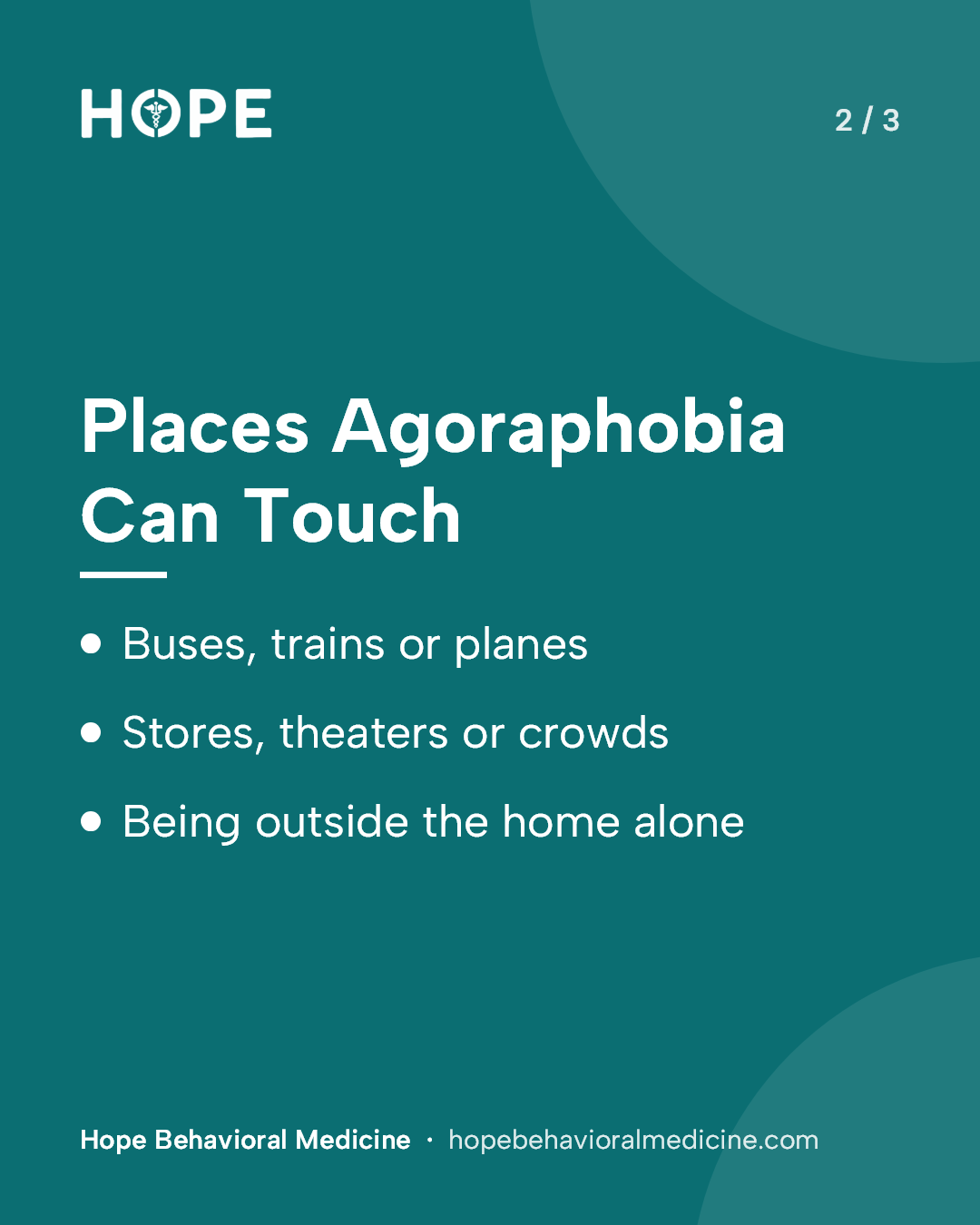
Places Agoraphobia Can Touch
- Buses, trains or planes
- Stores, theaters or crowds
- Being outside the home alone
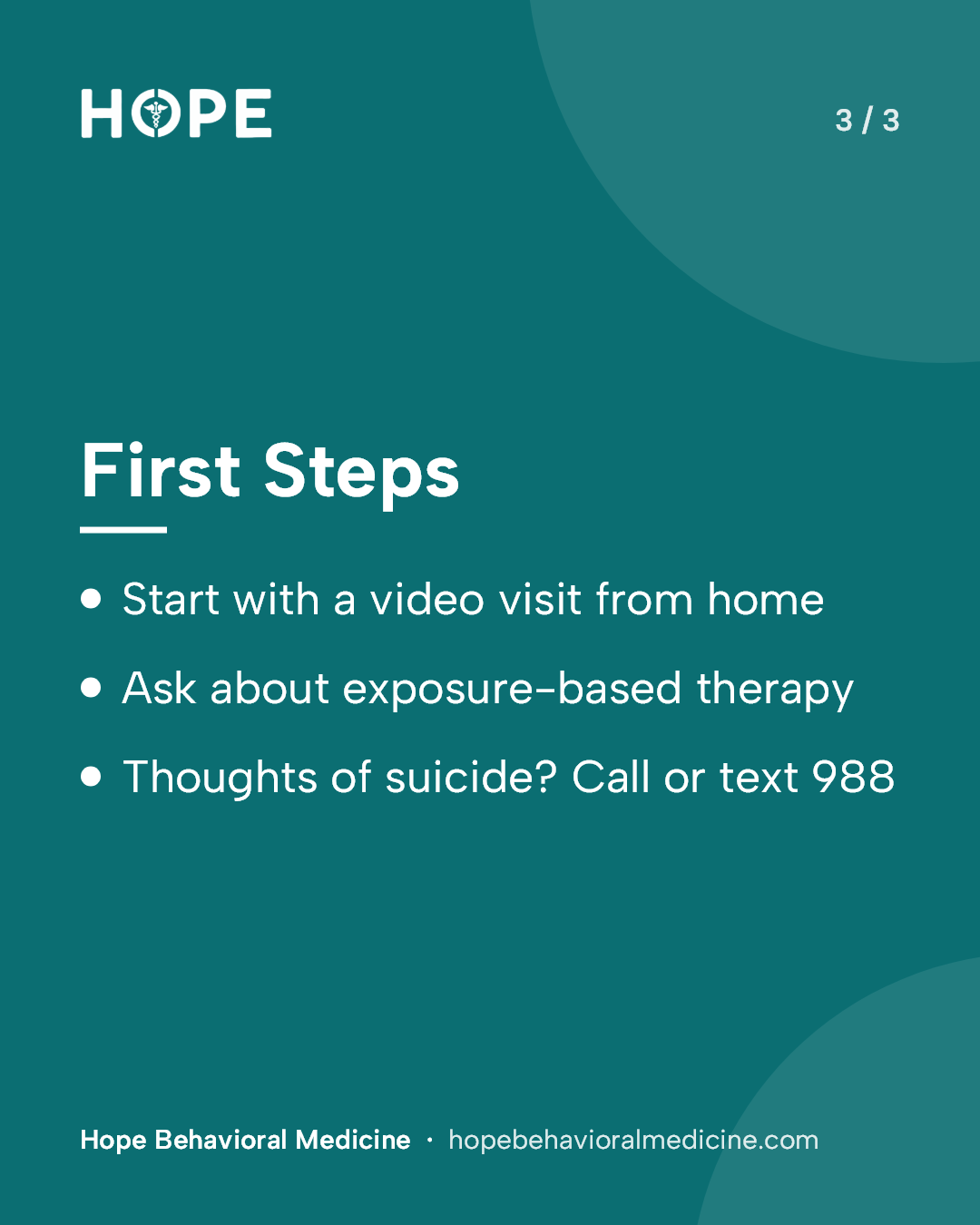
First Steps
- Start with a video visit from home
- Ask about exposure-based therapy
- Thoughts of suicide? Call or text 988
What the guideline says
- NIMH lists phobia-related disorders among the types of anxiety disorders; specific phobia and agoraphobia are DSM-5-TR diagnoses made by a qualified clinician.
- DSM-5-TR describes specific phobia as marked fear of a particular object or situation that is far larger than the actual danger and usually lasts 6 months or more.
- Agoraphobia is fear of being somewhere hard to leave, or where help might not come, if panic-like or embarrassing symptoms struck; DSM-5-TR describes fear in two or more of five kinds of situations.
- NIMH notes agoraphobia can develop alongside panic disorder, and it can also occur on its own.
- Avoidance brings quick relief that teaches the brain the feared thing was dangerous, so the fear can grow and the world gets smaller.
- NIMH describes exposure therapy as a type of CBT that helps a person tolerate distress step by step until the fear eases.
Source: National Institute of Mental Health, Anxiety Disorders
Read the full article: Specific Phobias and Agoraphobia: When Fear Shrinks Your World →
This guide is general health information and does not replace advice from your own provider.
Frequently Asked Questions
No. NIMH notes agoraphobia can develop alongside panic disorder, as people begin to fear places where attacks have happened, but it can also occur without panic disorder, and DSM-5-TR diagnoses it on its own.
DSM-5-TR describes fear in two or more of five kinds of situations: public transportation, open spaces, enclosed places such as stores, standing in line or being in a crowd, and being outside the home alone.
Blood, needles or injury is one of the kinds of specific phobia DSM-5-TR describes, and it can leave some people feeling faint.