Stressed Out or Something More? A Quick Guide
Based on National Institute of Mental Health, I'm So Stressed Out! Fact Sheet (NIH Pub. 20-MH-8125)
5 cards. Swipe or tap to see the next one.
Stress usually has a cause and fades once it passes; anxiety can linger without one. How to tell the two apart, simple steps that help and when to talk to someone.
Need to Talk to Someone?
In-person in West Ashley or telehealth statewide across South Carolina.
In this guide
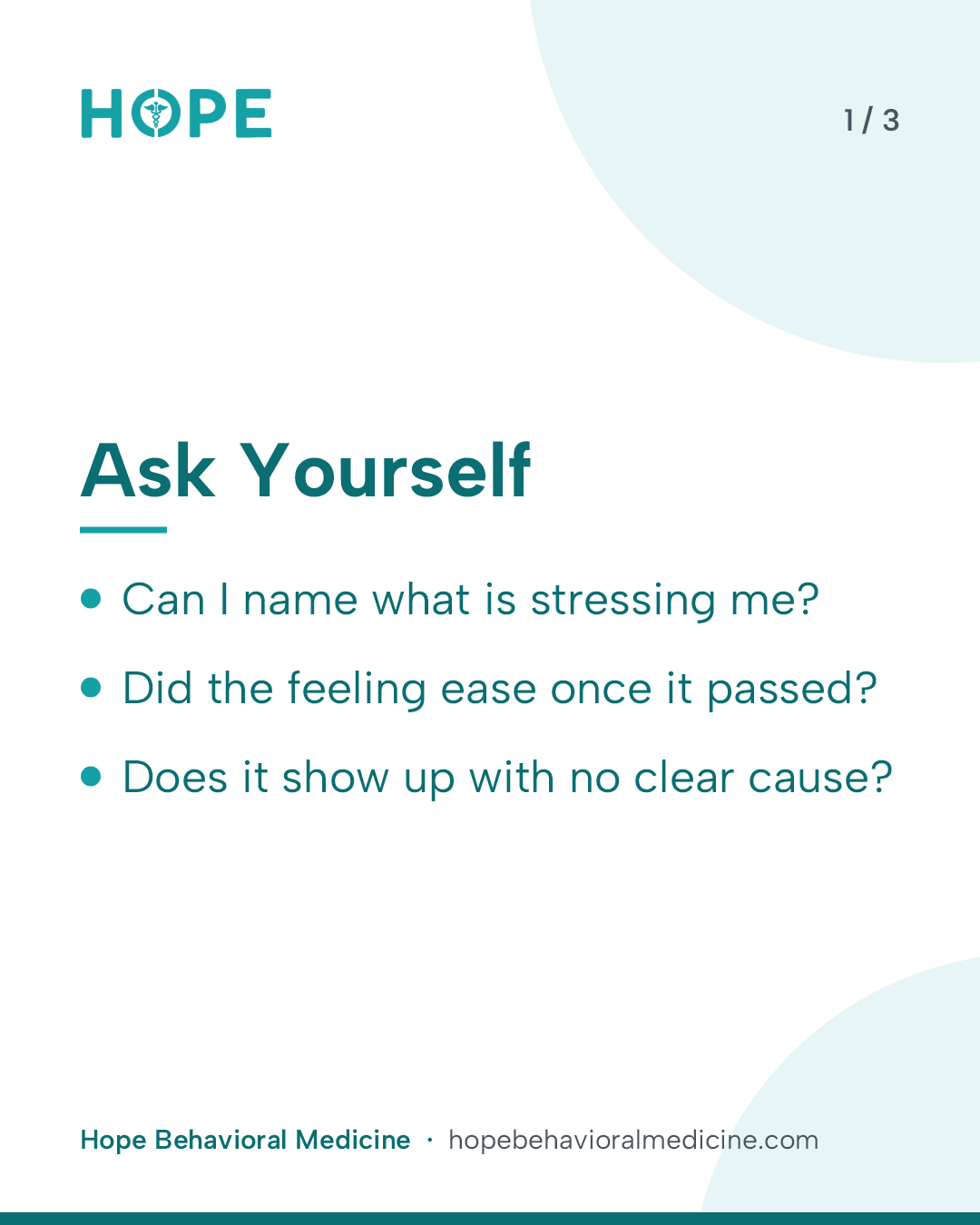
Ask Yourself
- Can I name what is stressing me?
- Did the feeling ease once it passed?
- Does it show up with no clear cause?
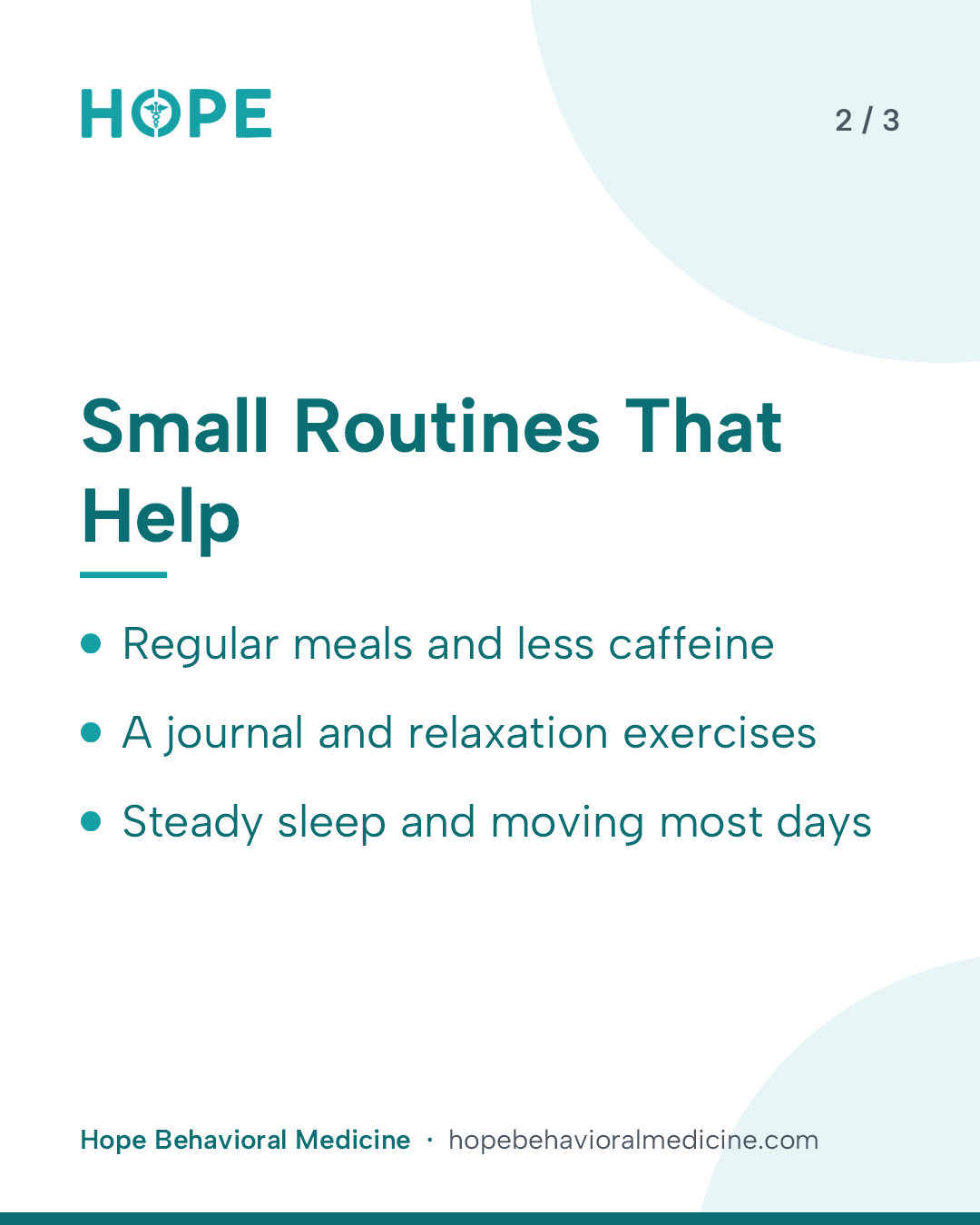
Small Routines That Help
- Regular meals and less caffeine
- A journal and relaxation exercises
- Steady sleep and moving most days
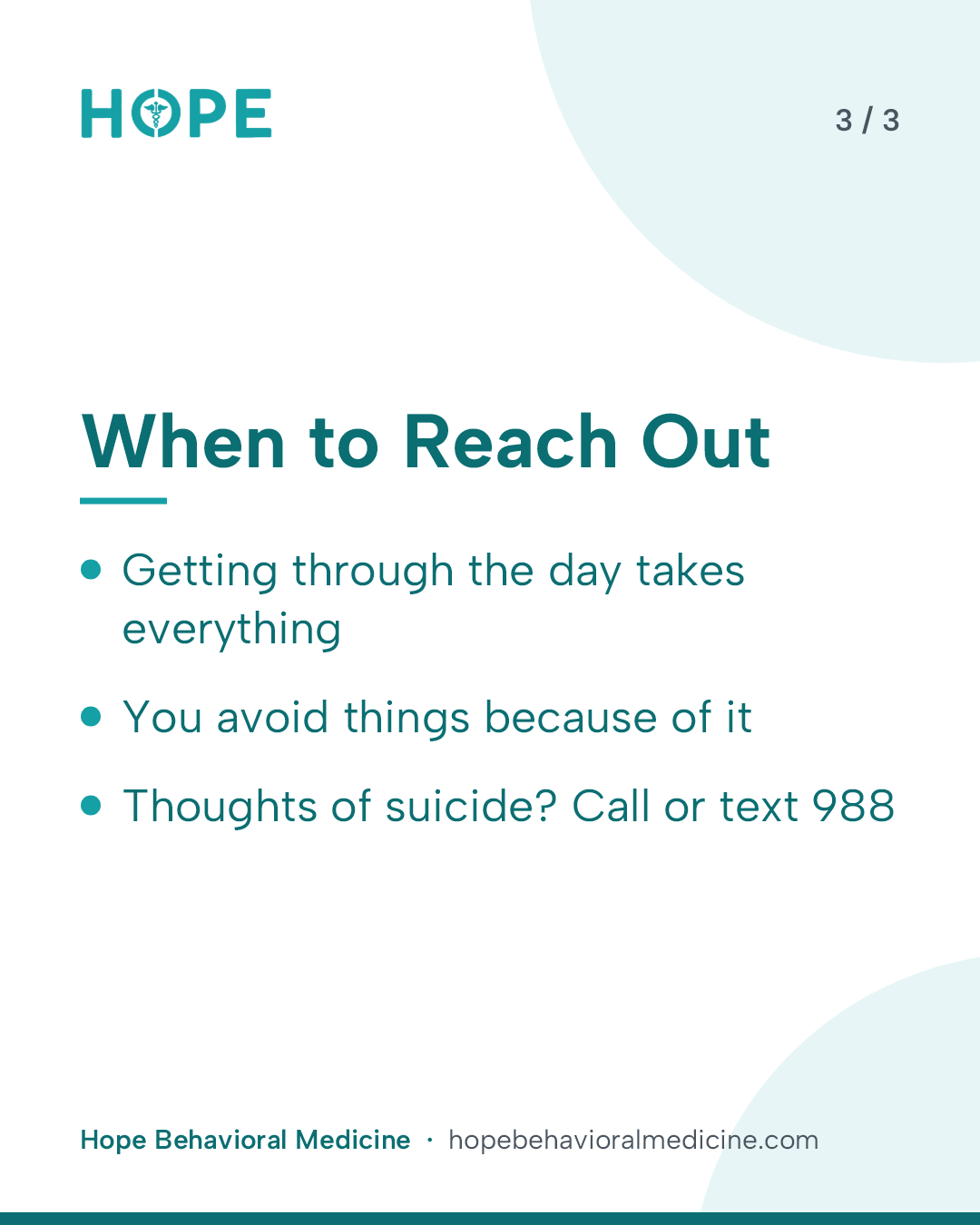
When to Reach Out
- Getting through the day takes everything
- You avoid things because of it
- Thoughts of suicide? Call or text 988
What the guideline says
- NIMH describes stress as a physical or mental reaction to something outside you that tends to go away once the situation is settled.
- In NIMH's description, anxiety is a lasting feeling of apprehension or dread that does not lift and can show up even with no current threat.
- NIMH suggests regular healthy meals, avoiding too much caffeine, keeping a journal, relaxation exercises and pushing back on unhelpful thoughts.
- NIMH says it may be time to get help if coping feels like a struggle or symptoms keep hanging on, get in the way of daily life or lead you to avoid things.
- Anxiety disorders are DSM-5-TR diagnoses made by a qualified clinician.
- Cognitive behavioral therapy helps people spot inaccurate or harmful automatic thoughts, question them and change the patterns that keep them stuck.
Source: National Institute of Mental Health, I'm So Stressed Out! Fact Sheet (NIH Pub. 20-MH-8125)
Read the full article: Stressed or Anxious? How to Tell the Difference and When to Get Help →
This guide is general health information and does not replace advice from your own provider.
Frequently Asked Questions
NIMH suggests eating healthy meals at regular times, avoiding too much caffeine, keeping a journal, trying relaxation exercises and noticing unhelpful thoughts and pushing back on them.
Leaning on the people who steady you, keeping a regular sleep schedule and moving your body most days are not dramatic, but small routines often carry people through a hard stretch.
NIMH says it may be time to get help if coping feels like a struggle or symptoms keep hanging on. Watch for symptoms that get in the way of everyday life, lead you to avoid things or seem to be there all the time.