Worried About Someone? What to Say and Do
Based on National Institute of Mental Health, Warning Signs of Suicide (revised 2025)
5 cards. Swipe or tap to see the next one.
The warning signs of suicide NIMH lists, the five steps it recommends for helping someone, the words to use and when to call 988 or 911.
Need to Talk to Someone?
In-person in West Ashley or telehealth statewide across South Carolina.
In this guide
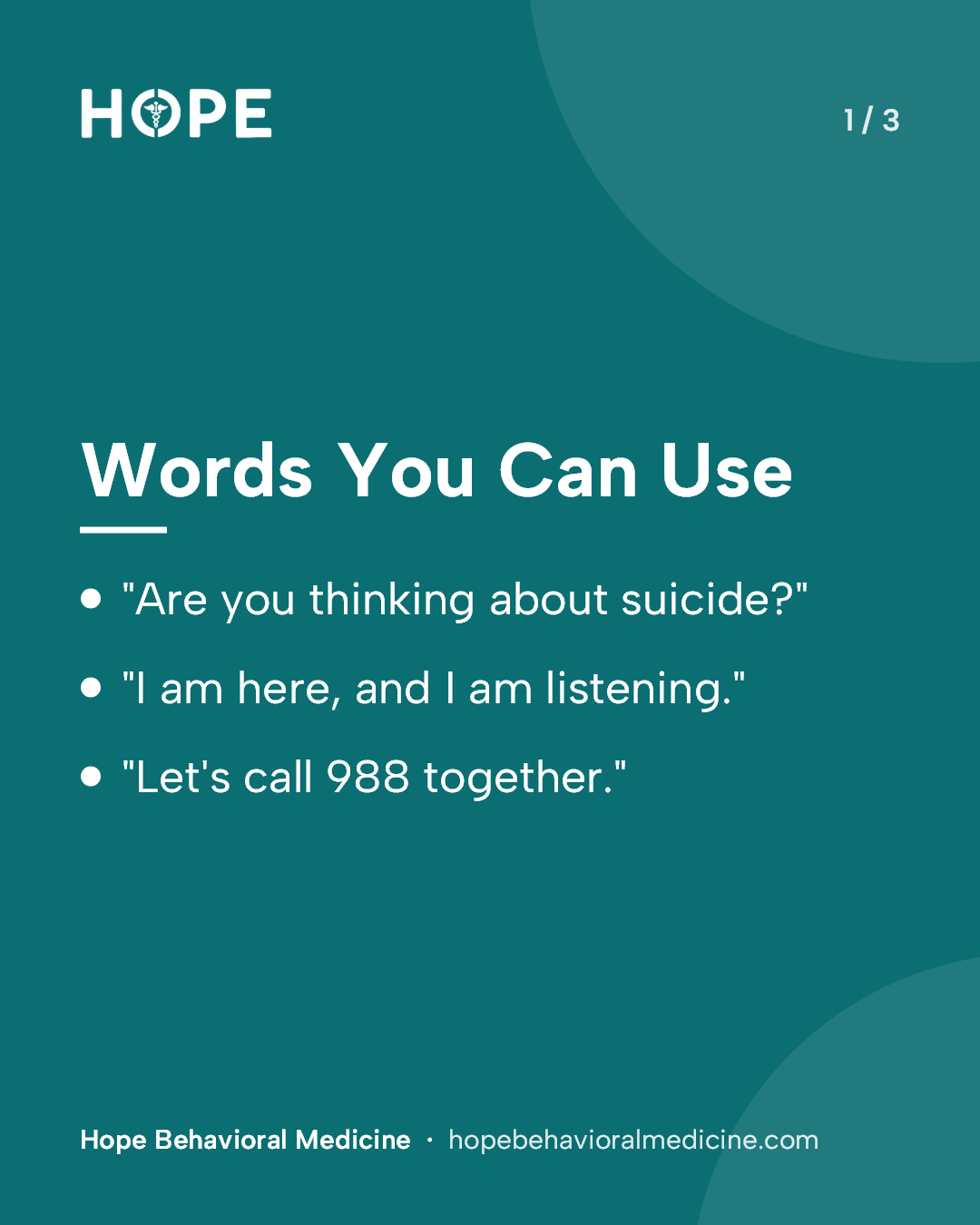
Words You Can Use
- "Are you thinking about suicide?"
- "I am here, and I am listening."
- "Let's call 988 together."
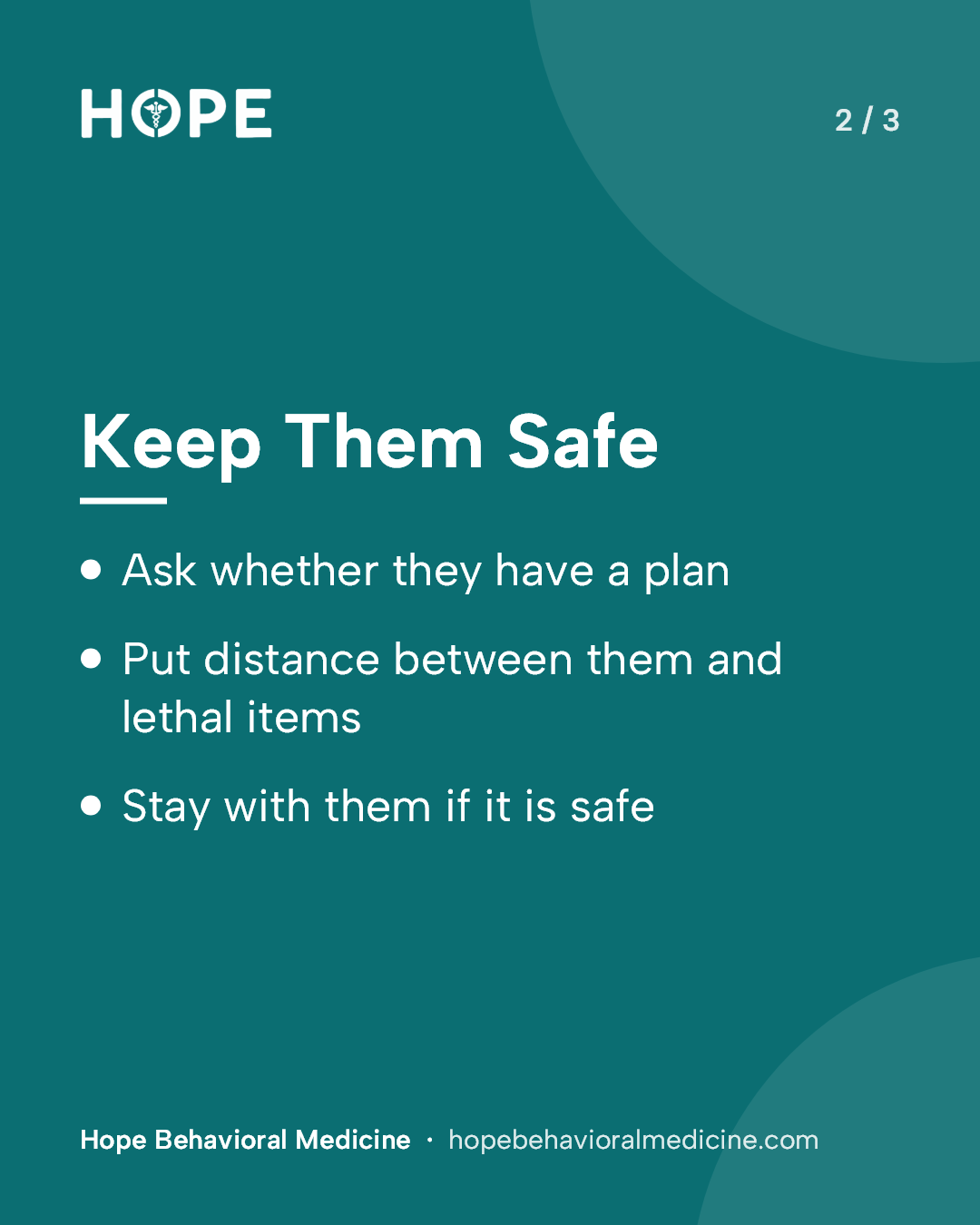
Keep Them Safe
- Ask whether they have a plan
- Put distance between them and lethal items
- Stay with them if it is safe
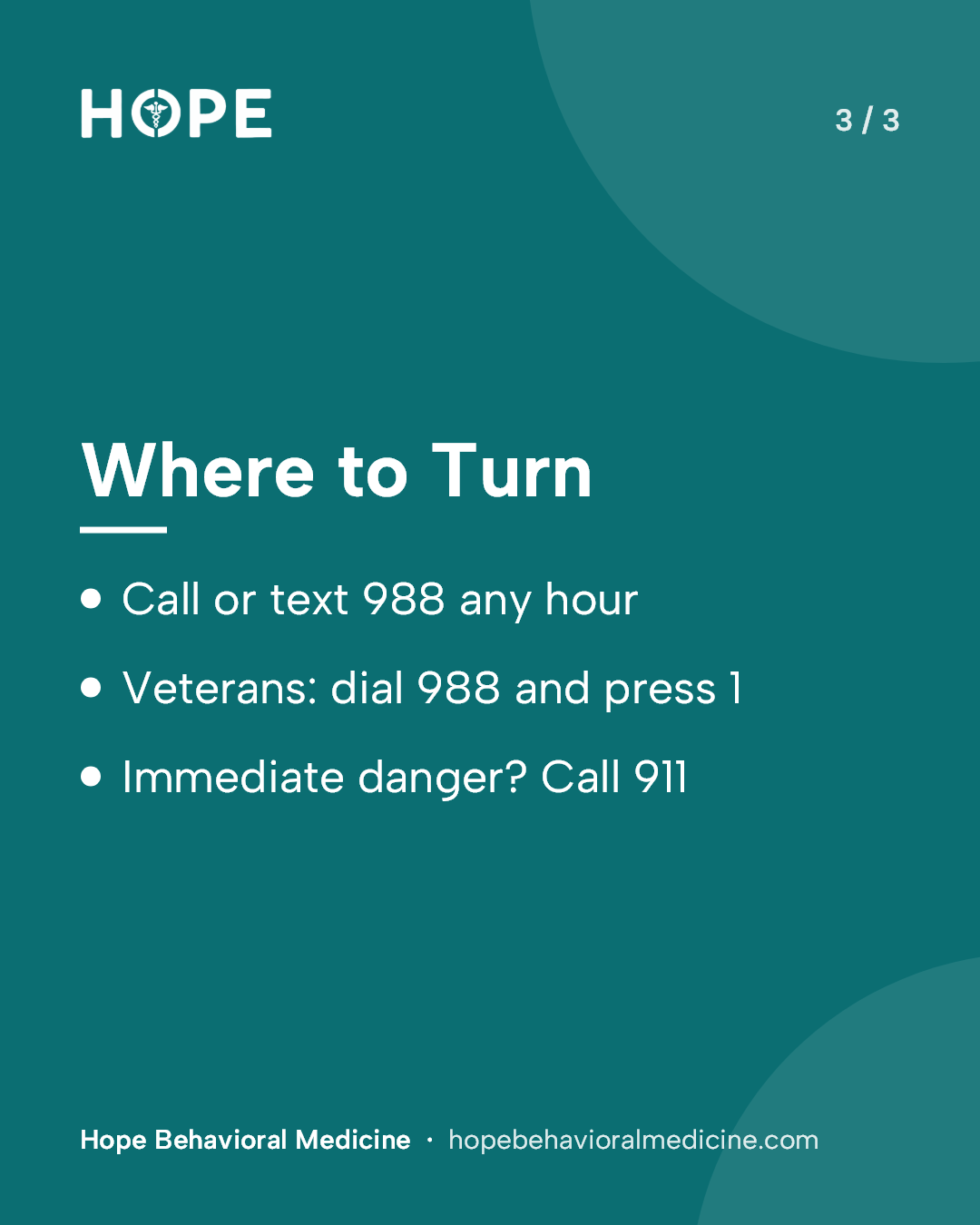
Where to Turn
- Call or text 988 any hour
- Veterans: dial 988 and press 1
- Immediate danger? Call 911
What the guideline says
- NIMH lists warning signs in what people talk about, such as wanting to die, great guilt or shame, or being a burden to others.
- People may feel empty, hopeless or trapped, extremely sad, more anxious, agitated or full of rage, or in pain that seems unbearable.
- Behavior changes include making a plan, pulling away from friends, giving away important things, taking dangerous risks and big changes in eating or sleeping.
- NIMH says to get help as soon as possible, especially when a behavior is new or has recently increased.
- NIMH recommends five steps: ask, be there, help keep them safe, help them connect and follow up.
- Call or text 988 at any hour, and call 911 or go to the nearest emergency room if someone may act on it now.
Source: National Institute of Mental Health, Warning Signs of Suicide (revised 2025)
Read the full article: Warning Signs of Suicide and How to Help Someone →
This guide is general health information and does not replace advice from your own provider.
Frequently Asked Questions
No. NIMH cites studies showing that asking directly does not increase suicidal thoughts or behavior. Ask plainly: "Are you thinking about suicide?"
Call 911 or go to the nearest emergency room, and stay with the person until help arrives if it is safe to do so. For support, call or text 988 at any hour.
NIMH says supportive, ongoing contact plays an important role in prevention. A text the next day and a call the next week count.