Wondering About ADHD as an Adult Woman?
Based on National Institute of Mental Health, ADHD in Adults: 4 Things to Know (2024)
5 cards. Swipe or tap to see the next one.
ADHD in girls and women is often missed in childhood. Why it surfaces in adult life, what an evaluation looks at and how testing works at our practice.
Need to Talk to Someone?
In-person in West Ashley or telehealth statewide across South Carolina.
In this guide
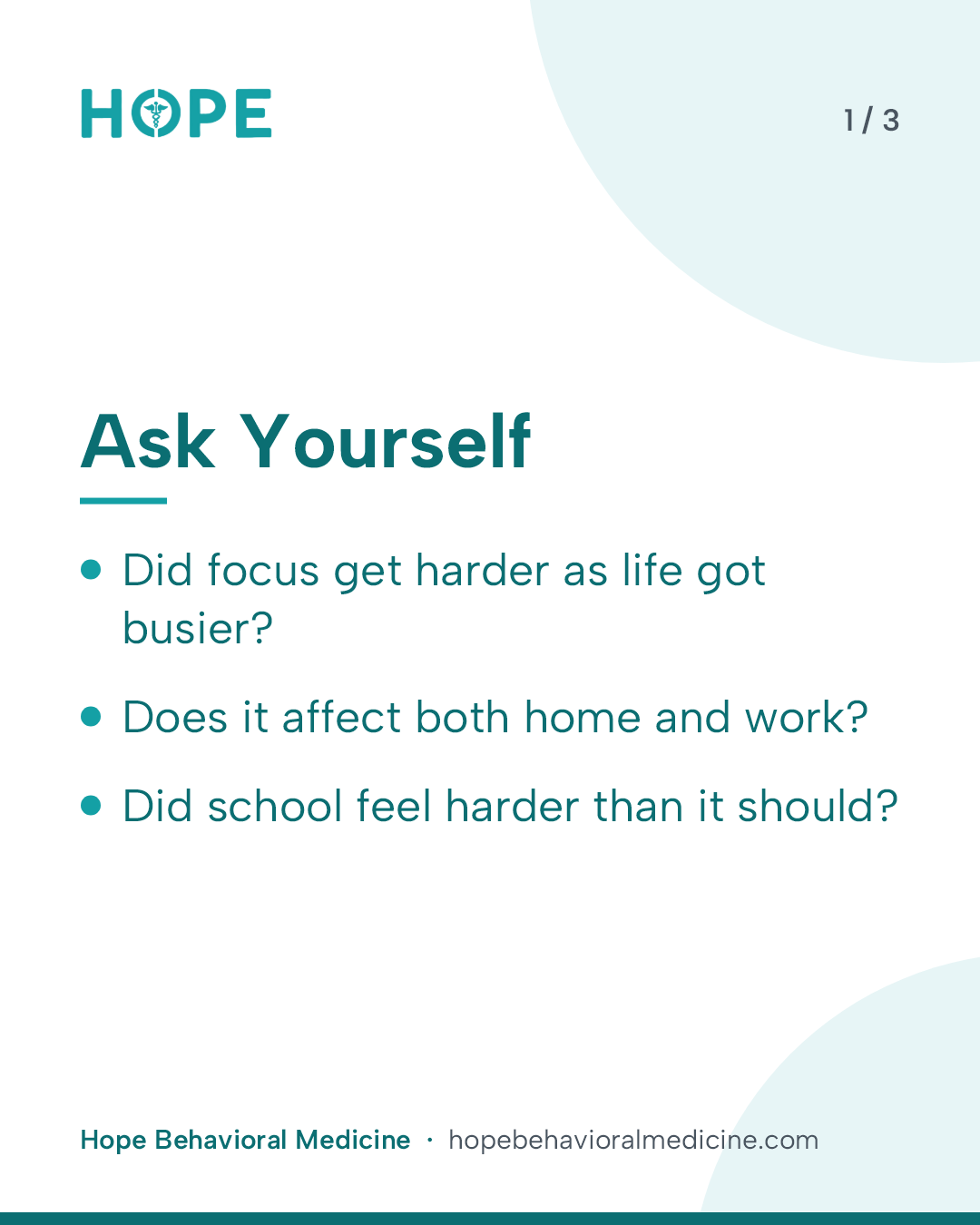
Ask Yourself
- Did focus get harder as life got busier?
- Does it affect both home and work?
- Did school feel harder than it should?
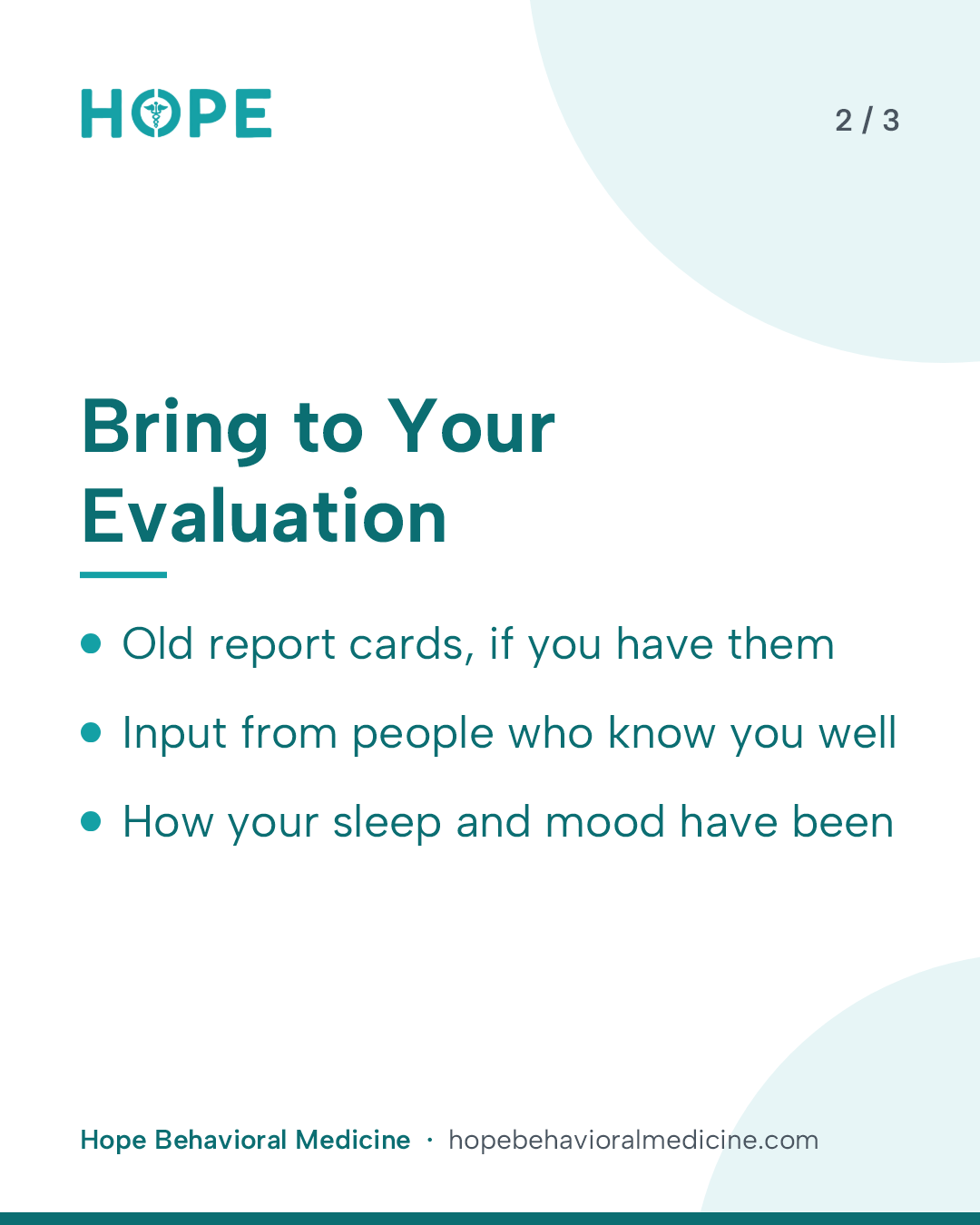
Bring to Your Evaluation
- Old report cards, if you have them
- Input from people who know you well
- How your sleep and mood have been
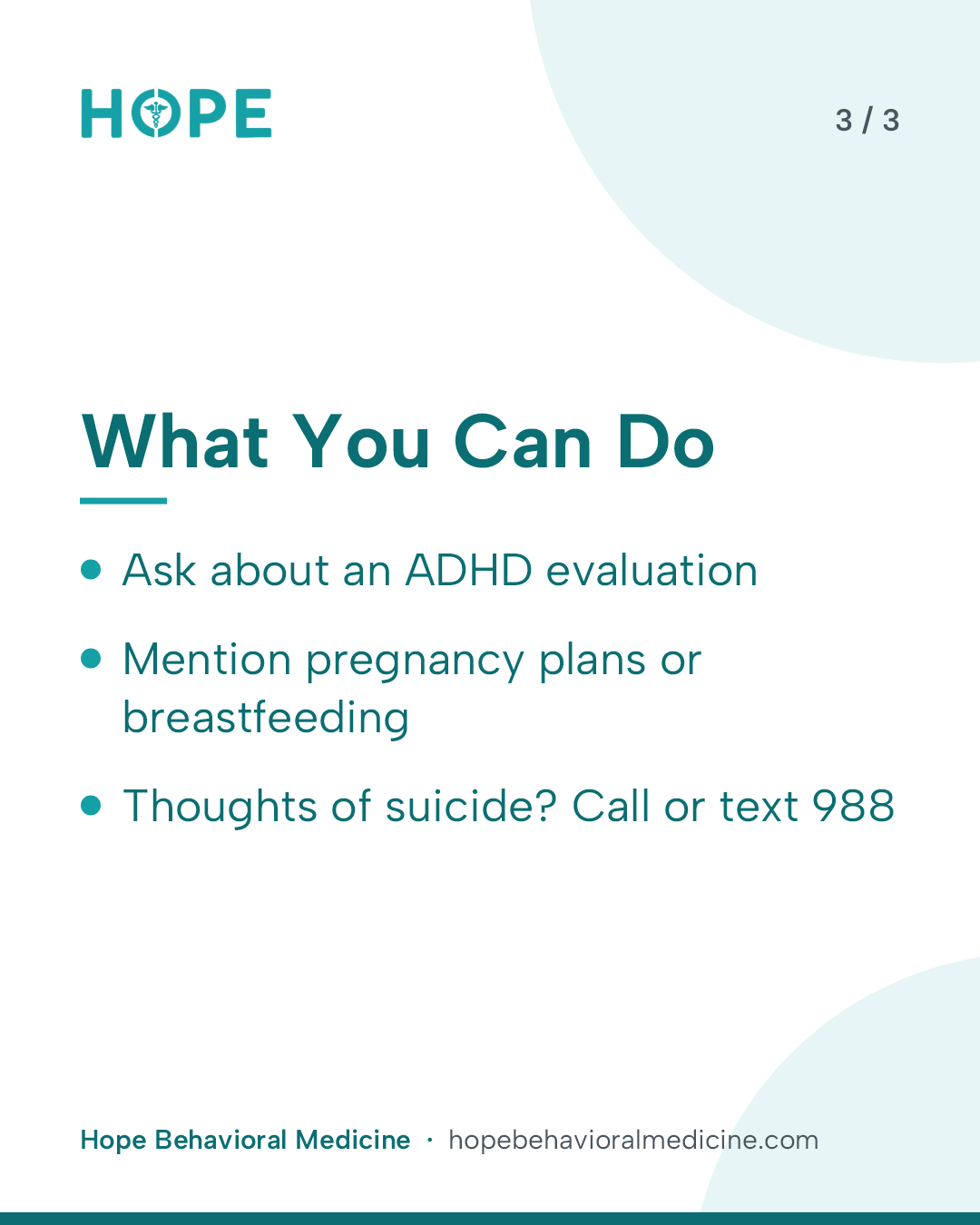
What You Can Do
- Ask about an ADHD evaluation
- Mention pregnancy plans or breastfeeding
- Thoughts of suicide? Call or text 988
What the guideline says
- NIMH says ADHD symptoms in girls and women are especially likely to have been missed in childhood.
- One reason NIMH gives for a diagnosis only in adulthood is a milder form that is managed well until the stresses of adult life pile up.
- NIMH describes adult ADHD as an ongoing pattern of inattention, hyperactivity and impulsivity, or some of these, that makes it hard to function in at least two areas of life, such as home and work.
- NIMH says sleep problems affect up to 70% of adults with ADHD.
- For an adult diagnosis, NIMH says symptoms must have started before age 12, so your history, including old report cards, matters.
- NIMH says treatment can reduce symptoms and improve functioning, and medication and psychotherapy are among the most common treatments for adults.
Source: National Institute of Mental Health, ADHD in Adults: 4 Things to Know (2024)
Read the full article: ADHD in Women: Why It Is Often Recognized Only in Adulthood →
This guide is general health information and does not replace advice from your own provider.
Frequently Asked Questions
Each of them can scatter focus on its own. NIMH also notes that ADHD often occurs alongside other mental disorders, so a careful evaluation looks at every one of them before reaching a conclusion.
If you still have old report cards, bring them. School reports and other childhood records help your provider understand your history, since symptoms must have started before age 12.
Attention-deficit/hyperactivity disorder is a DSM-5-TR diagnosis made by a qualified clinician. NIMH says a diagnosis relies heavily on past reports of behavior.