Winter Mood Check: Blues, Adjustment or SAD?
Based on National Institute of Mental Health, Seasonal Affective Disorder (revised 2023)
5 cards. Swipe or tap to see the next one.
When the clocks fall back, some people adjust in a week and others feel low until spring. How to tell the difference and what helps.
Need to Talk to Someone?
In-person in West Ashley or telehealth statewide across South Carolina.
In this guide
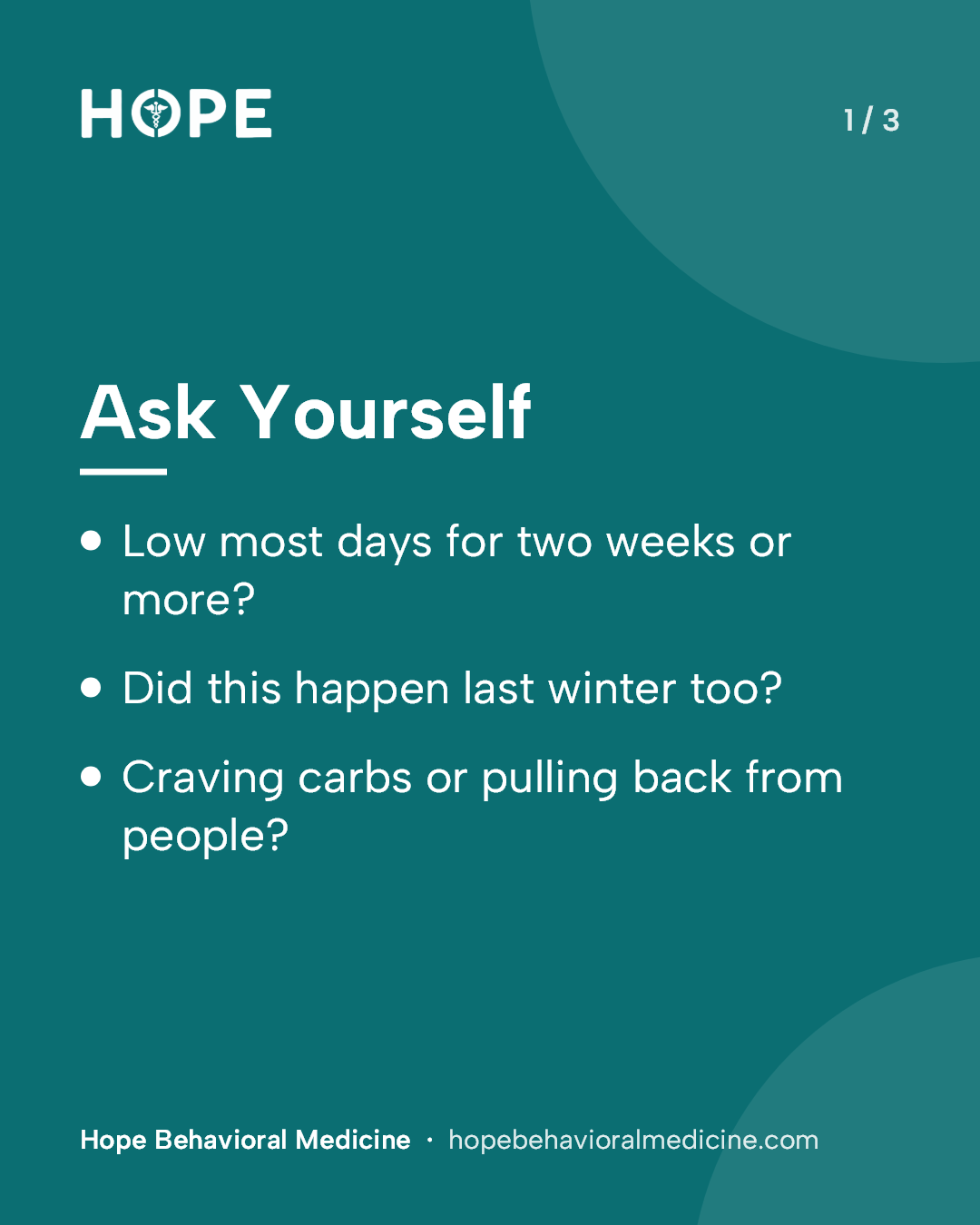
Ask Yourself
- Low most days for two weeks or more?
- Did this happen last winter too?
- Craving carbs or pulling back from people?
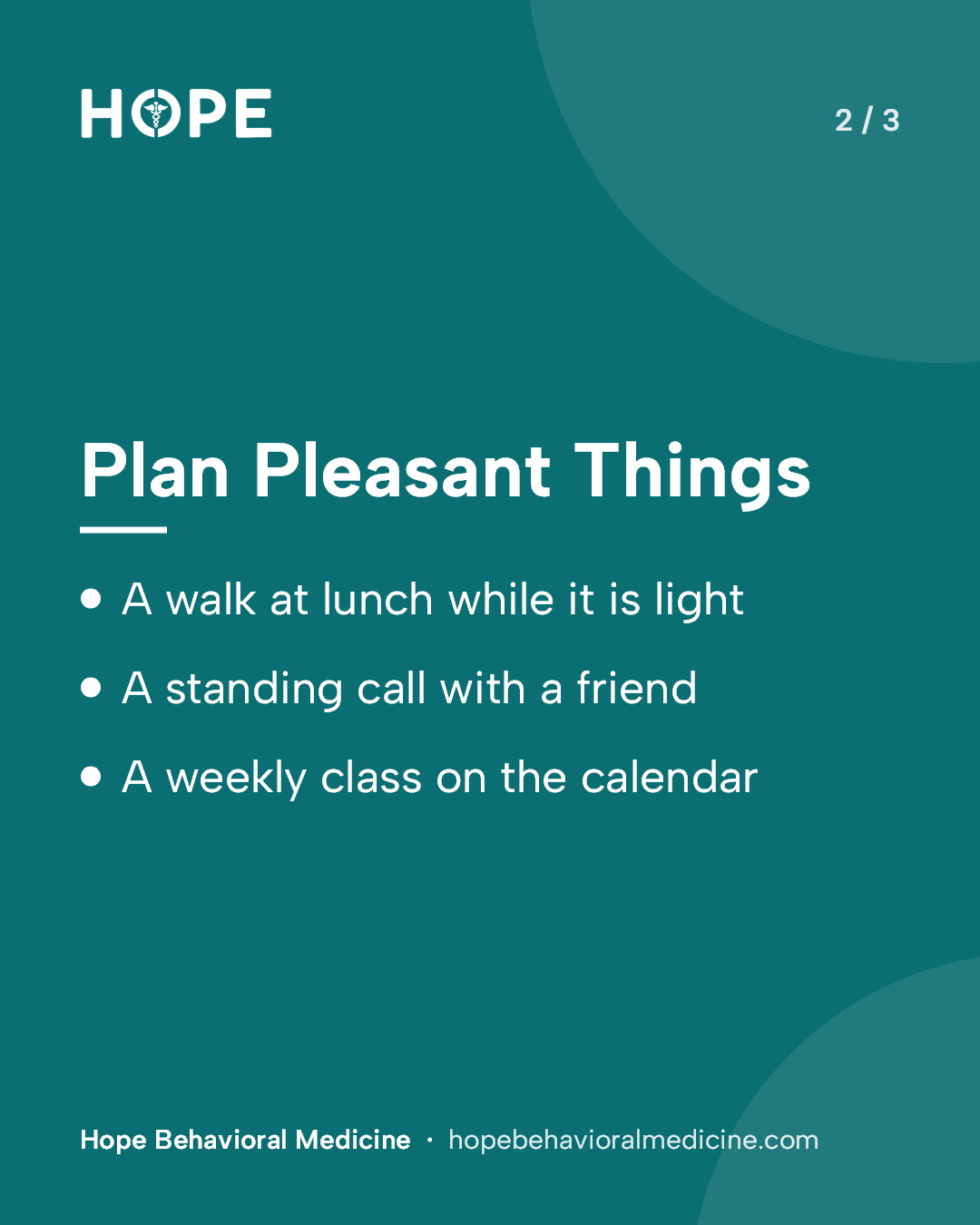
Plan Pleasant Things
- A walk at lunch while it is light
- A standing call with a friend
- A weekly class on the calendar
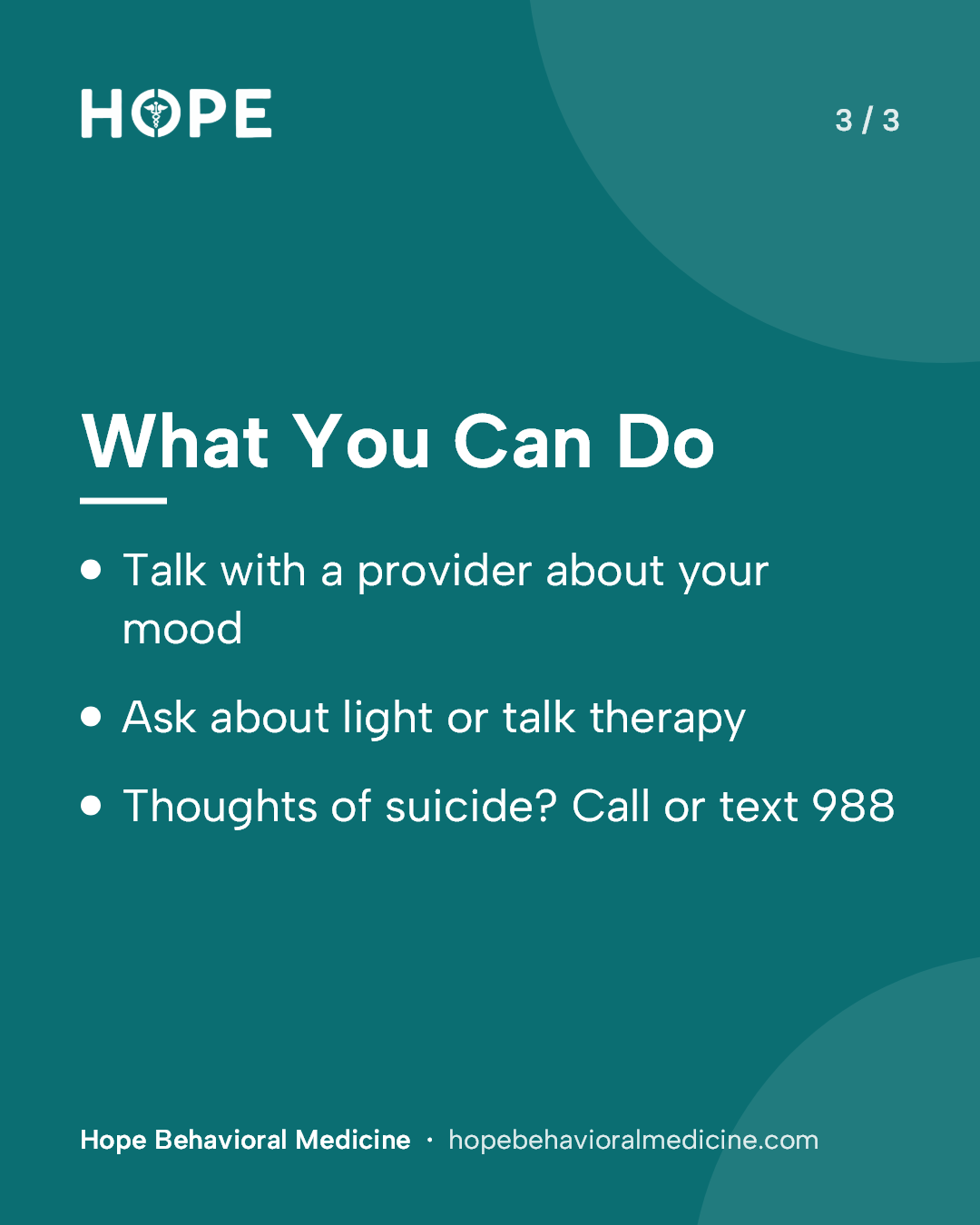
What You Can Do
- Talk with a provider about your mood
- Ask about light or talk therapy
- Thoughts of suicide? Call or text 988
What the guideline says
- NIMH describes seasonal affective disorder (SAD) as depression related to changes in daylight hours, not the calendar, that comes back around the same season year after year.
- NIMH says winter-pattern SAD should not be confused with the holiday blues, the stress and sadness tied to a busy or hard time of year.
- Plenty of people notice a dip in energy for a week or two after the clocks fall back and then settle in; for others the dip keeps going until spring.
- Behavioral activation, part of the CBT-SAD talk therapy NIMH describes, means identifying and scheduling pleasant, engaging activities.
- In studies NIMH cites, light therapy and CBT-SAD worked about equally well, and the benefits of CBT seemed to last longer when patients were followed for two winters.
- NIMH says people with a history of SAD might benefit from starting treatment before fall.
Source: National Institute of Mental Health, Seasonal Affective Disorder (revised 2023)
Read the full article: Darker Evenings, Lower Mood? A Short Adjustment, the Holiday Blues or SAD →
This guide is general health information and does not replace advice from your own provider.
Frequently Asked Questions
It is part of CBT-SAD, the talk therapy NIMH describes for seasonal affective disorder. It means identifying and scheduling pleasant, engaging activities, indoors or outdoors, so short days do not crowd them out.
In NIMH's account, CBT-SAD usually runs as two group sessions a week for 6 weeks.
Ask first. NIMH says people with certain eye diseases, or who take medicines that increase sensitivity to sunlight, may need another option or medical supervision.