When Panic Attacks Keep Coming Back
Based on National Institute of Mental Health, Panic Disorder: What You Need to Know (revised 2025)
5 cards. Swipe or tap to see the next one.
One panic attack is not a disorder. When repeated attacks and fear of the next one point to panic disorder, why chest pain still needs a check and what treatment involves.
Need to Talk to Someone?
In-person in West Ashley or telehealth statewide across South Carolina.
In this guide
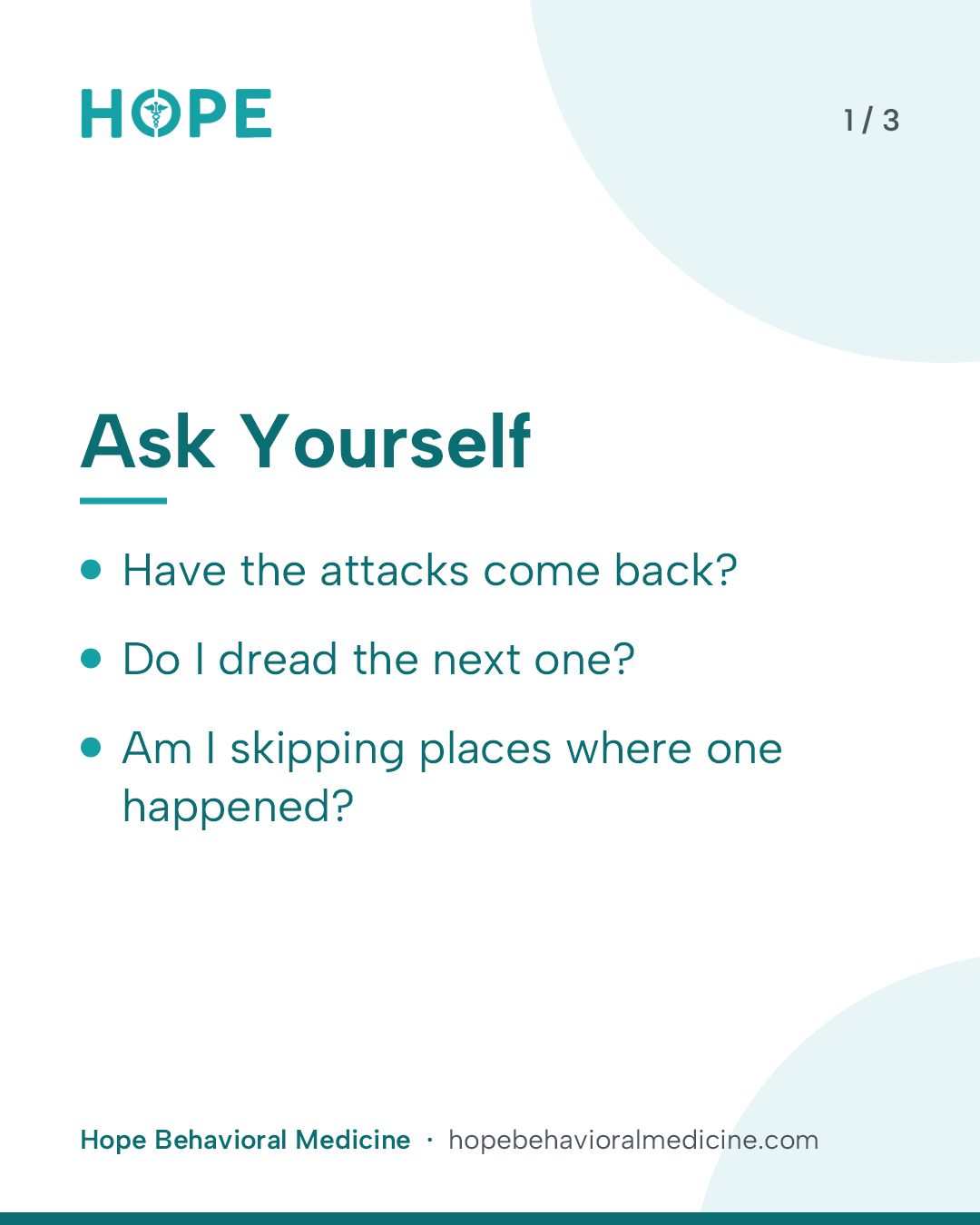
Ask Yourself
- Have the attacks come back?
- Do I dread the next one?
- Am I skipping places where one happened?
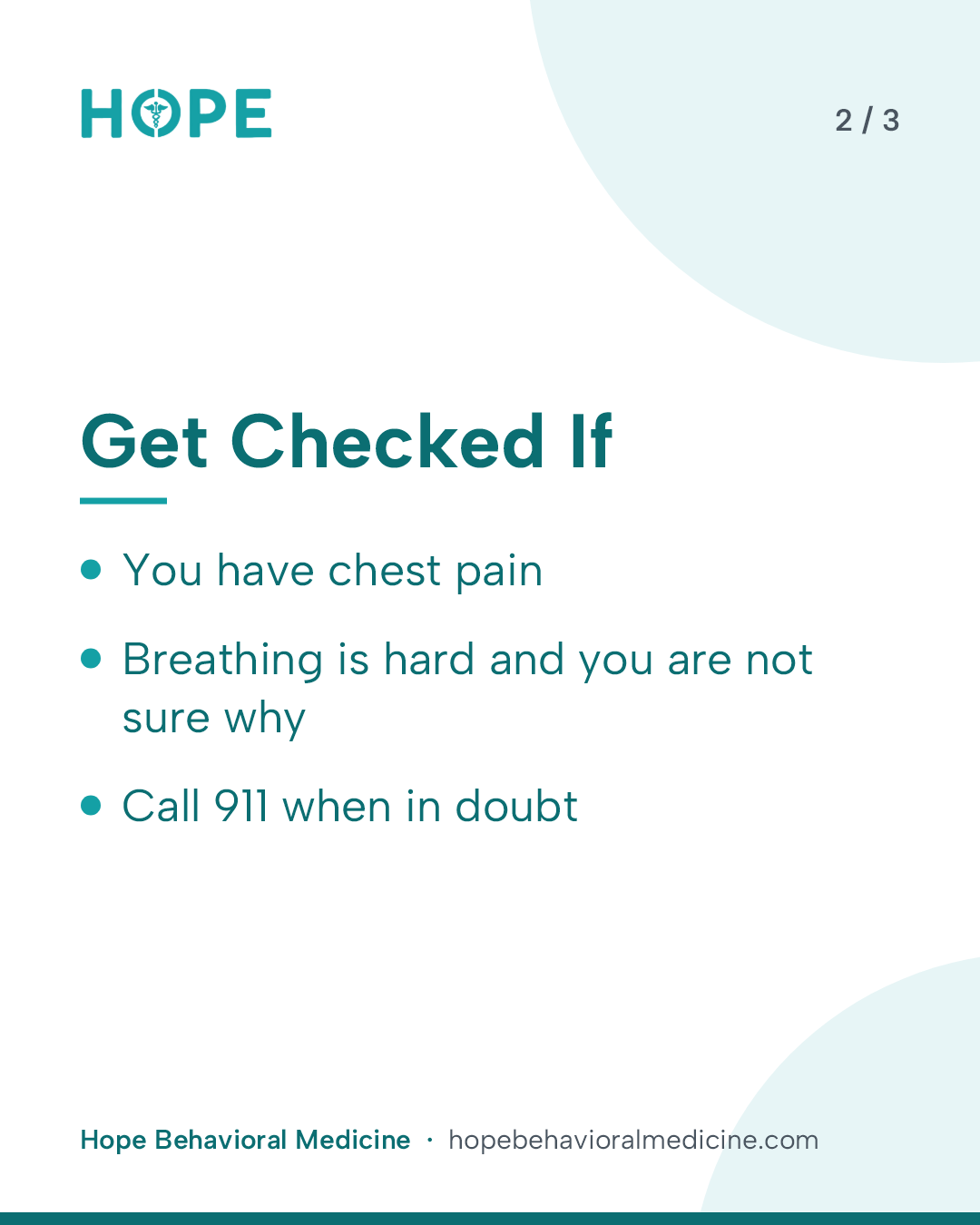
Get Checked If
- You have chest pain
- Breathing is hard and you are not sure why
- Call 911 when in doubt
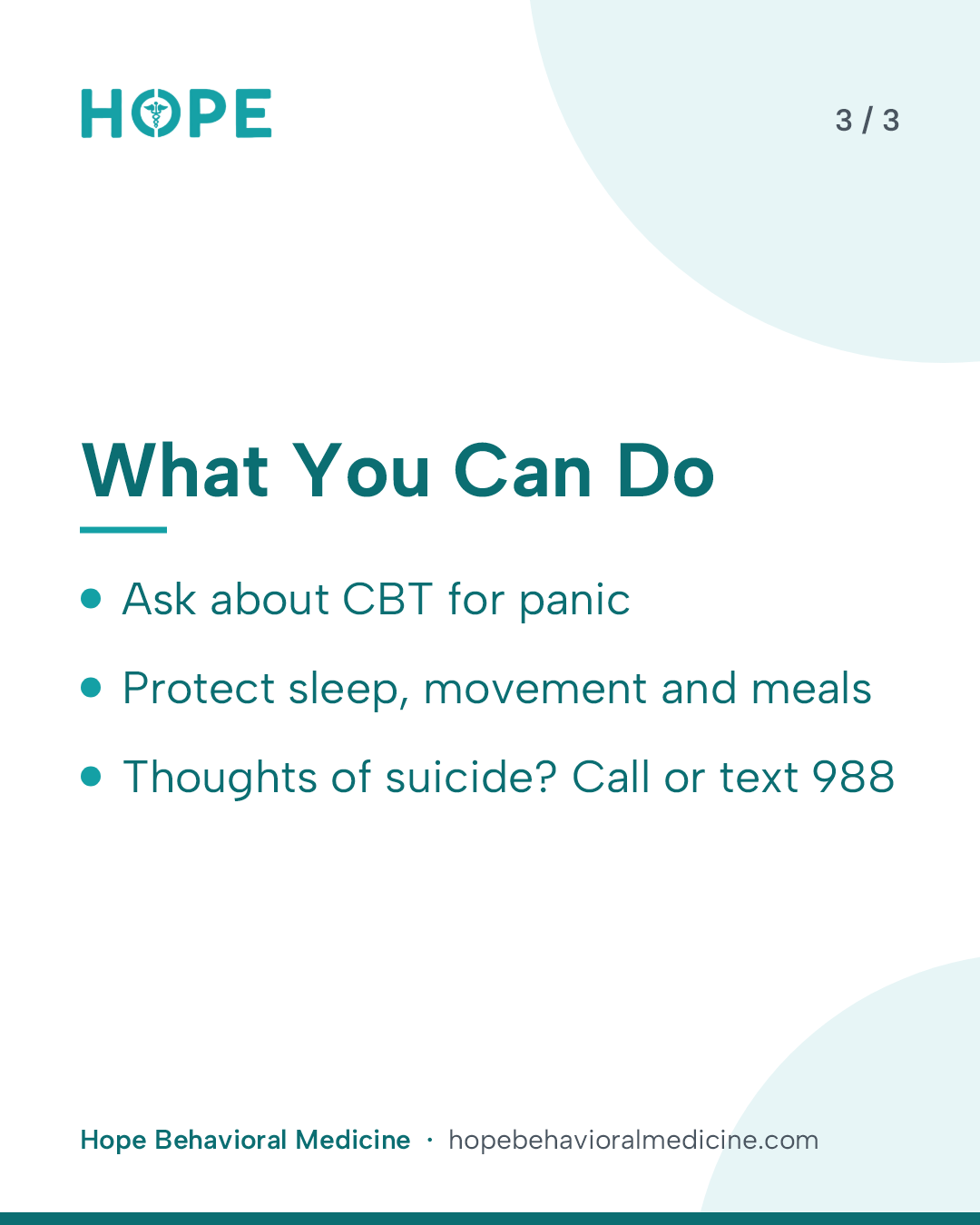
What You Can Do
- Ask about CBT for panic
- Protect sleep, movement and meals
- Thoughts of suicide? Call or text 988
What the guideline says
- NIMH says an isolated panic attack is not a mental disorder.
- NIMH describes a panic attack as a one-time or occasional episode of intense fear with physical and emotional symptoms, lasting from a few minutes to an hour, and sometimes longer.
- Panic disorder may be diagnosed when panic attacks are recurrent and unexpected, NIMH says, and people with it often worry intensely about the next attack.
- Chest pain and trouble breathing can come from the heart or lungs; if you are not sure, call 911 or go to the nearest emergency room.
- Panic disorder often begins in the late teens or early adulthood, and women are more likely than men to develop it, NIMH says.
- NIMH says treatment typically involves psychotherapy, medication or both, and cognitive behavioral therapy teaches new ways to react to the feelings of an attack.
Source: National Institute of Mental Health, Panic Disorder: What You Need to Know (revised 2025)
Read the full article: Panic Attack or Panic Disorder? When the Attacks Keep Coming Back →
This guide is general health information and does not replace advice from your own provider.
Frequently Asked Questions
It is one version of exposure therapy, a common CBT method. NIMH describes it as practicing with the body sensations of panic themselves.
NIMH says enough sleep, regular exercise, a healthy diet and support from family and friends you trust help, but cannot replace treatment.
Yes. Hope Behavioral Medicine evaluates and treats panic attacks and panic disorder by secure video anywhere in South Carolina and in person in West Ashley.