Starting Anxiety Care? What Your Plan Can Include
Based on National Institute of Mental Health, Generalized Anxiety Disorder: When Worry Gets Out of Control
5 cards. Swipe or tap to see the next one.
What anxiety treatment usually involves, how therapy and medication fit together, how long it can take, and what to expect at your first visit.
Need to Talk to Someone?
In-person in West Ashley or telehealth statewide across South Carolina.
In this guide
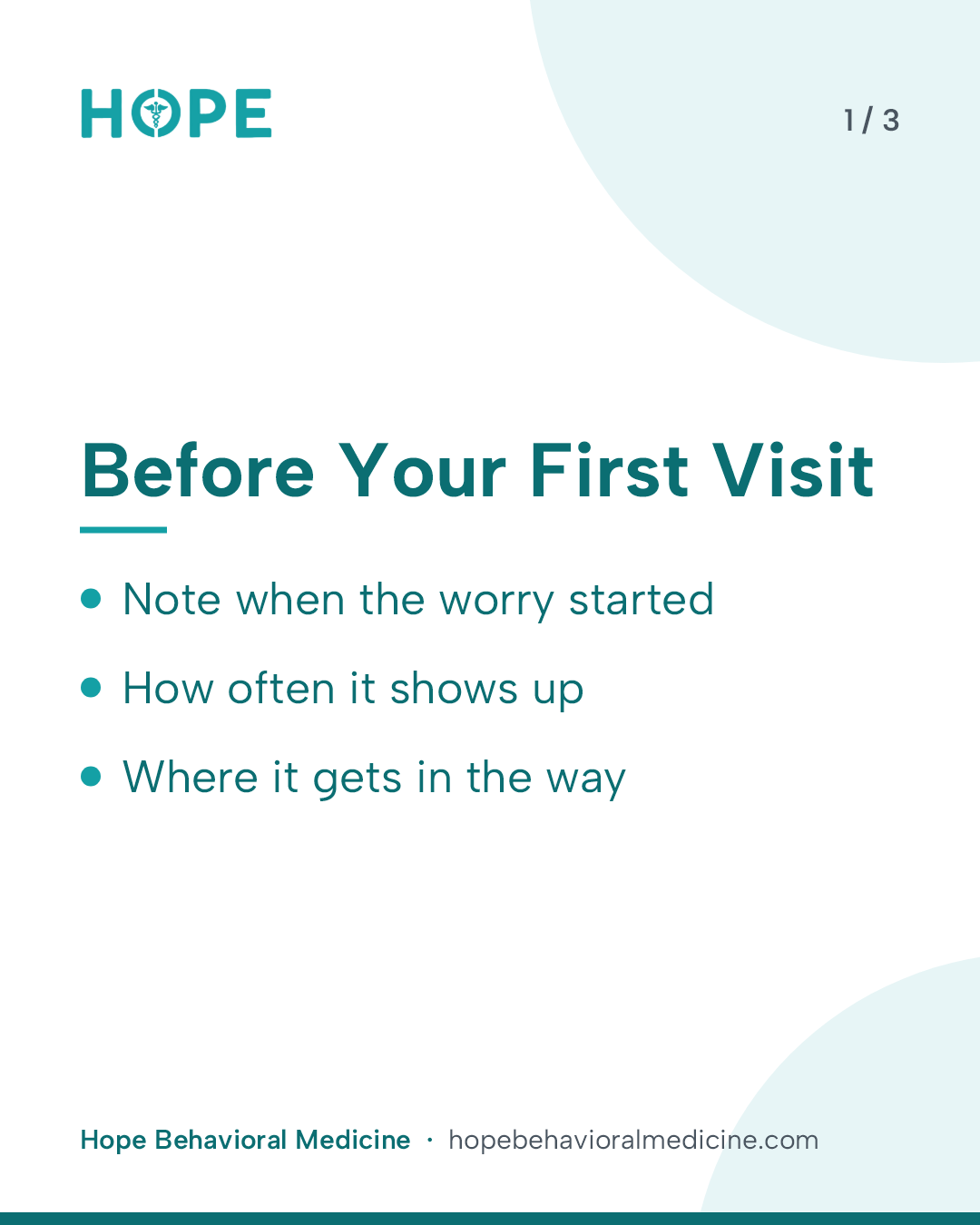
Before Your First Visit
- Note when the worry started
- How often it shows up
- Where it gets in the way
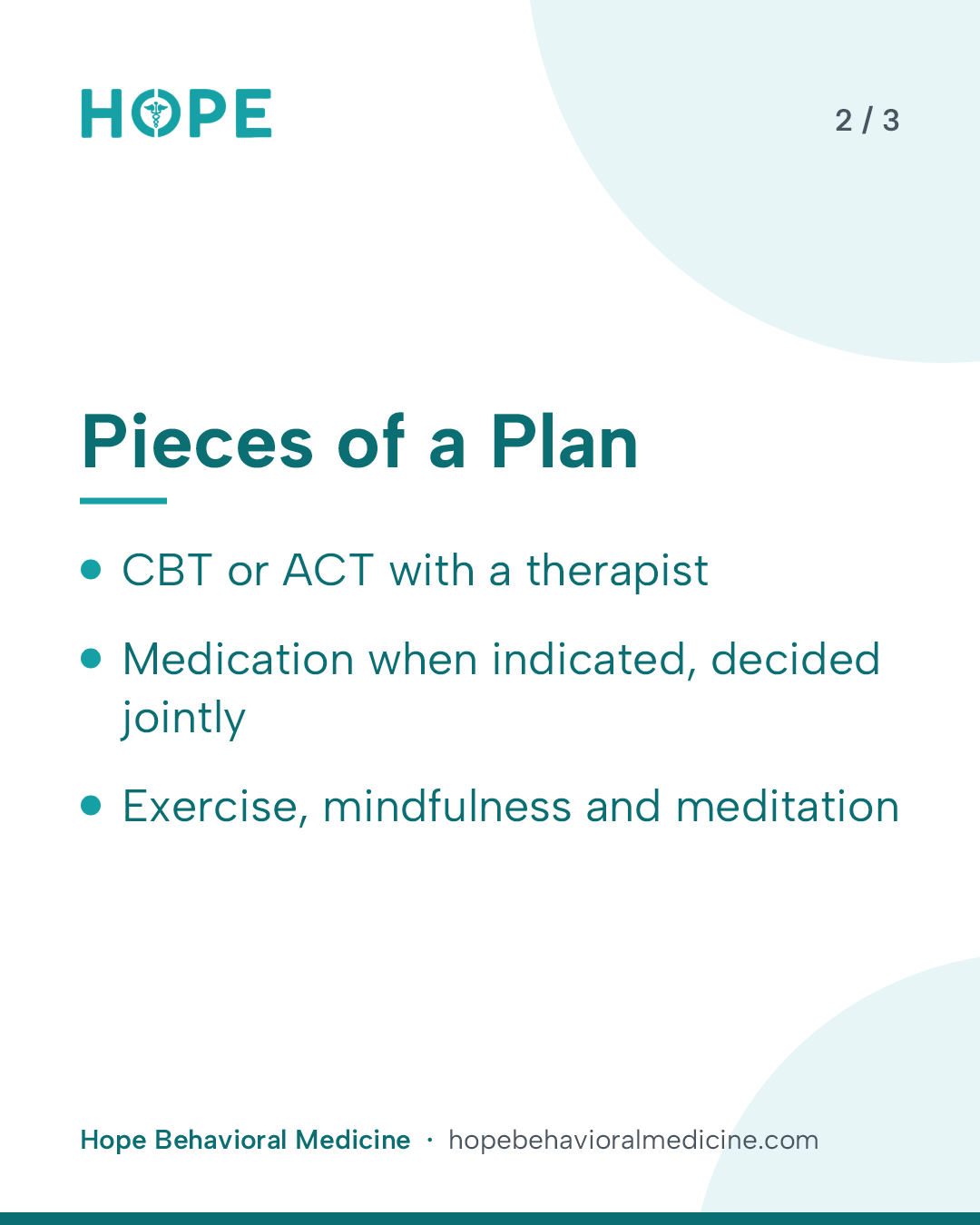
Pieces of a Plan
- CBT or ACT with a therapist
- Medication when indicated, decided jointly
- Exercise, mindfulness and meditation
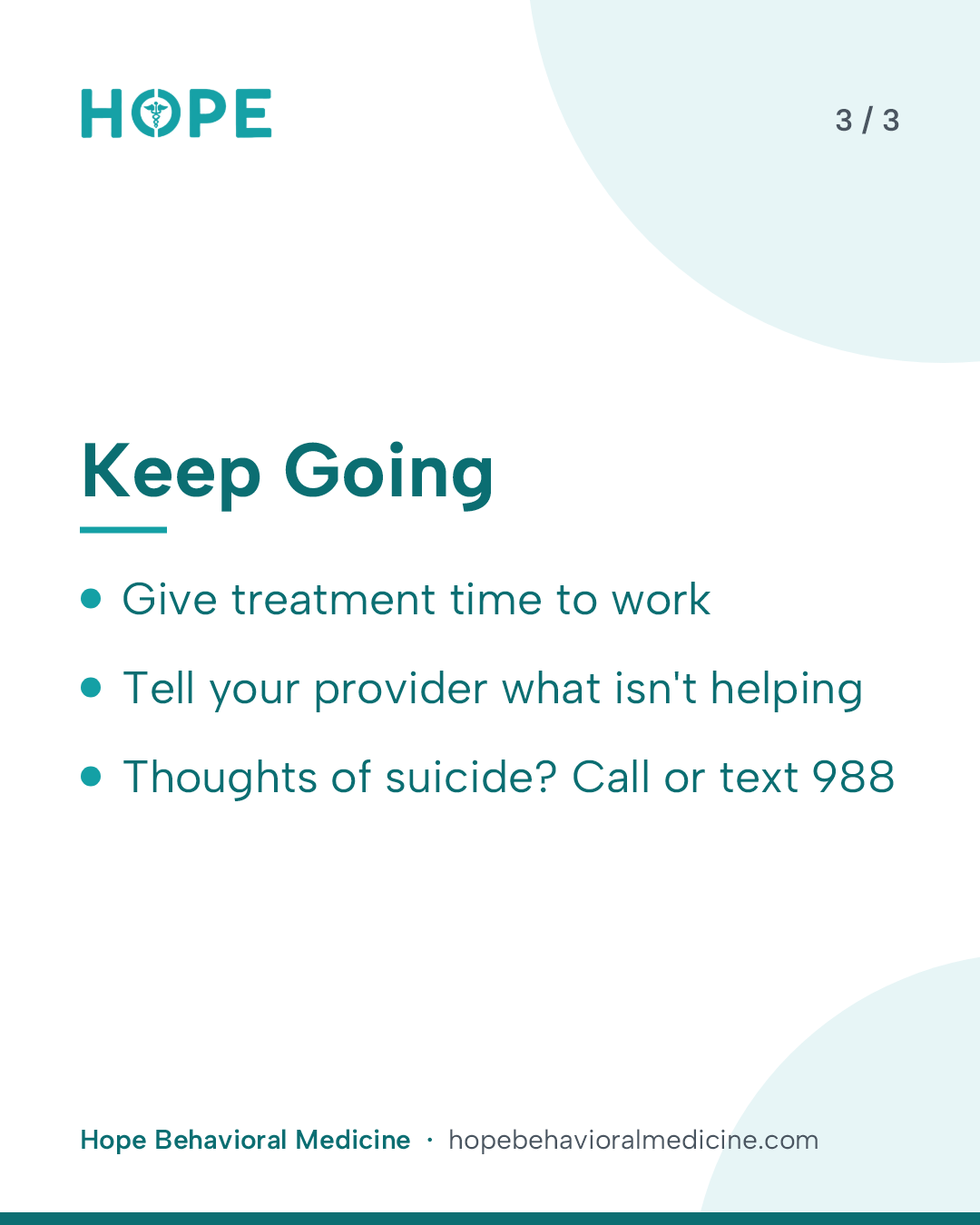
Keep Going
- Give treatment time to work
- Tell your provider what isn't helping
- Thoughts of suicide? Call or text 988
What the guideline says
- NIMH says about a third of U.S. adolescents and adults experience an anxiety disorder at some point in their lives.
- An evaluation covers when symptoms started, how often they happen and how they affect your life, and a physical exam can help rule out an unrelated physical cause.
- NIMH says treatment for generalized anxiety disorder typically involves psychotherapy, medication, or both.
- NIMH calls cognitive behavioral therapy the gold standard choice of psychotherapy, and acceptance and commitment therapy uses mindfulness and goal setting.
- Finding the best treatment may take trial and error, and medication may take several weeks to start working.
- Your first visit at Hope Behavioral Medicine is a comprehensive 45 to 60 minute evaluation, in person in West Ashley or by secure video anywhere in South Carolina.
Source: National Institute of Mental Health, Generalized Anxiety Disorder: When Worry Gets Out of Control
Read the full article: How Anxiety Treatment Works: What to Expect →
This guide is general health information and does not replace advice from your own provider.
Frequently Asked Questions
NIMH says finding the best treatment may take trial and error, and that therapy and medication can take some time to work. Tell your provider what is and isn't helping so your plan can change with you.
Acceptance and commitment therapy, or ACT, is a talk therapy that uses strategies such as mindfulness and goal setting.
Some people benefit from a self-help or support group, but advice from other members does not replace your provider's recommendations.