Shy, or Something More? A Social Anxiety Guide
Based on National Institute of Mental Health, Social Anxiety Disorder: What You Need to Know (revised 2025)
5 cards. Swipe or tap to see the next one.
Nerves before a big moment are normal. When the fear of being judged becomes social anxiety disorder, the situations and signs to know, and the treatments that help.
Need to Talk to Someone?
In-person in West Ashley or telehealth statewide across South Carolina.
In this guide
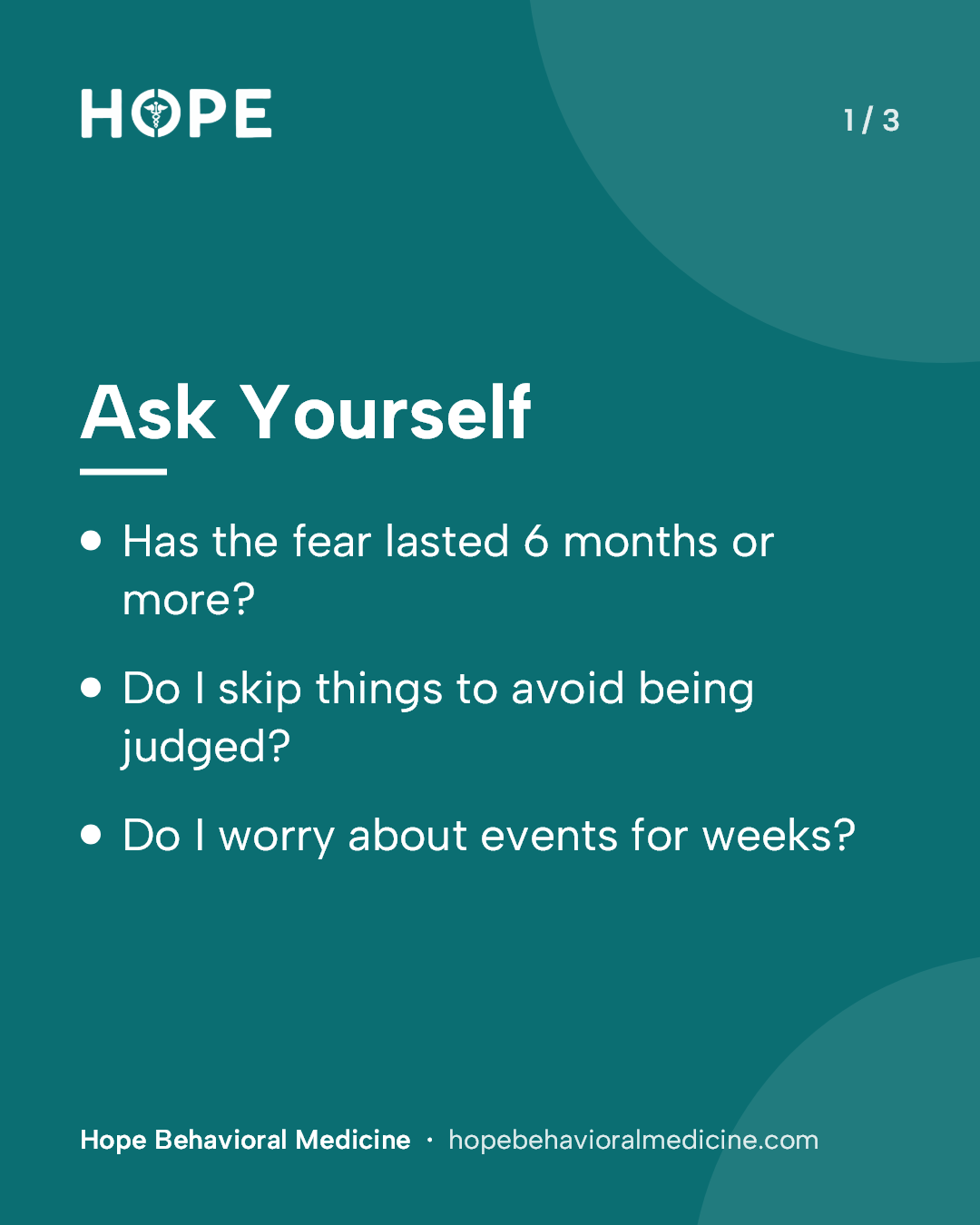
Ask Yourself
- Has the fear lasted 6 months or more?
- Do I skip things to avoid being judged?
- Do I worry about events for weeks?
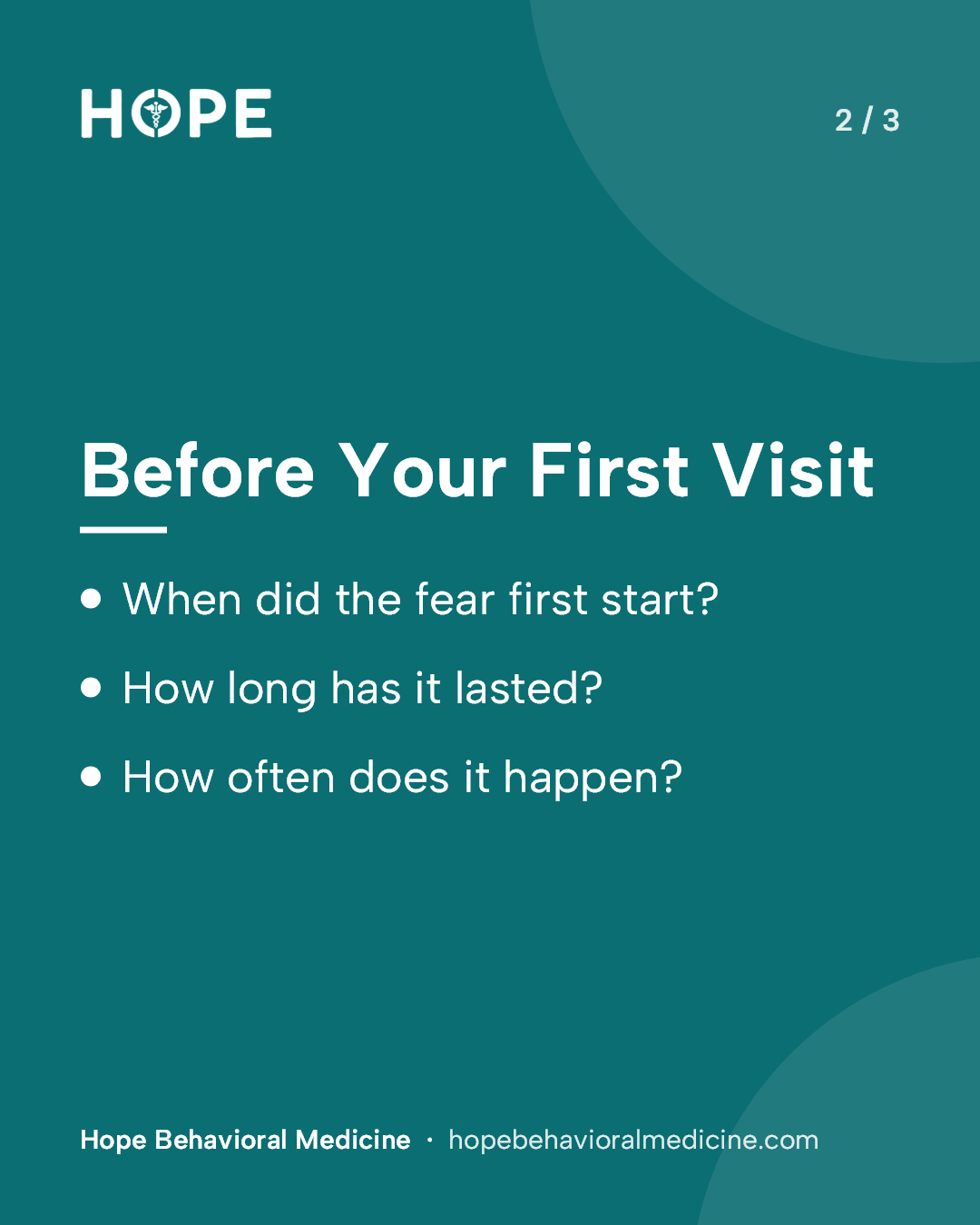
Before Your First Visit
- When did the fear first start?
- How long has it lasted?
- How often does it happen?
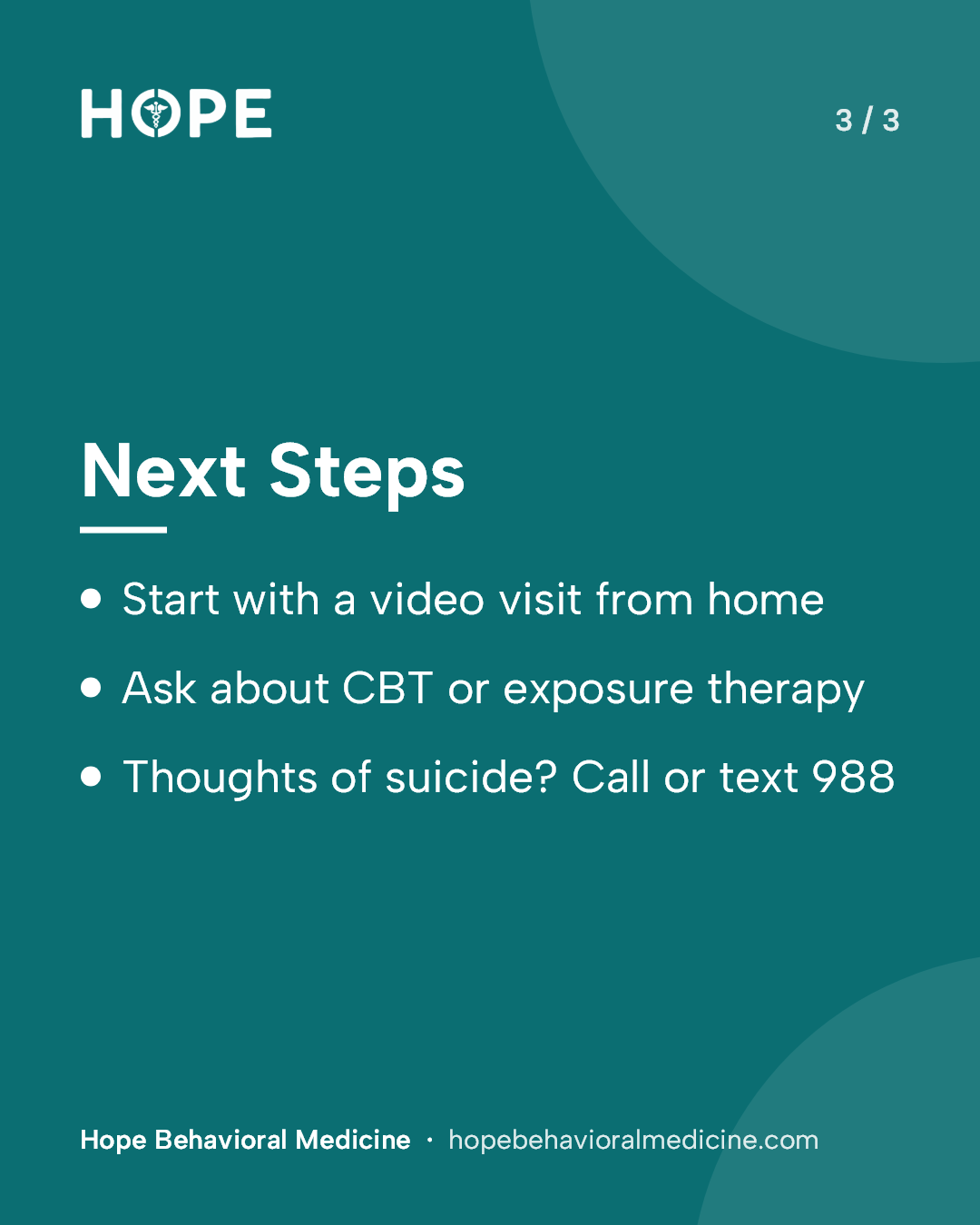
Next Steps
- Start with a video visit from home
- Ask about CBT or exposure therapy
- Thoughts of suicide? Call or text 988
What the guideline says
- NIMH says social anxiety disorder may look like extreme shyness, and that occasional stress and anxiety are normal but should not control your life.
- For a diagnosis, NIMH explains, symptoms must last at least 6 months and interfere with daily life; a qualified clinician makes the DSM-5-TR diagnosis.
- Situations NIMH names include speaking in public, meeting new people, dating, job interviews and everyday tasks such as using a public restroom.
- NIMH lists blushing, sweating or trembling and a rapid heart rate, along with avoiding places where others gather or worrying about an event for weeks.
- NIMH says social anxiety disorder usually begins in childhood or adolescence and may run in families.
- NIMH says treatment typically involves psychotherapy, medication or both, and names CBT, exposure therapy and acceptance and commitment therapy.
Source: National Institute of Mental Health, Social Anxiety Disorder: What You Need to Know (revised 2025)
Read the full article: Shy or Social Anxiety Disorder? Signs to Know and What Helps →
This guide is general health information and does not replace advice from your own provider.
Frequently Asked Questions
NIMH says a health care provider may ask when your symptoms began, how long they have lasted and how often they happen. Thinking through those answers ahead of time makes the visit easier.
Yes. Hope Behavioral Medicine sees adults by secure video anywhere in South Carolina, so your first appointment can happen from your own couch, with in-person care in West Ashley when you are ready.
NIMH says support groups, in person or online, help some people.