Running on Low for Years? Questions Worth Asking
Based on National Institute of Mental Health, Depression (NIH Pub. 24-MH-8079, revised 2024)
5 cards. Swipe or tap to see the next one.
When low mood lasts for years, it can feel like personality. What persistent depressive disorder is, how it differs from major depression and why it is worth treating.
Need to Talk to Someone?
In-person in West Ashley or telehealth statewide across South Carolina.
In this guide
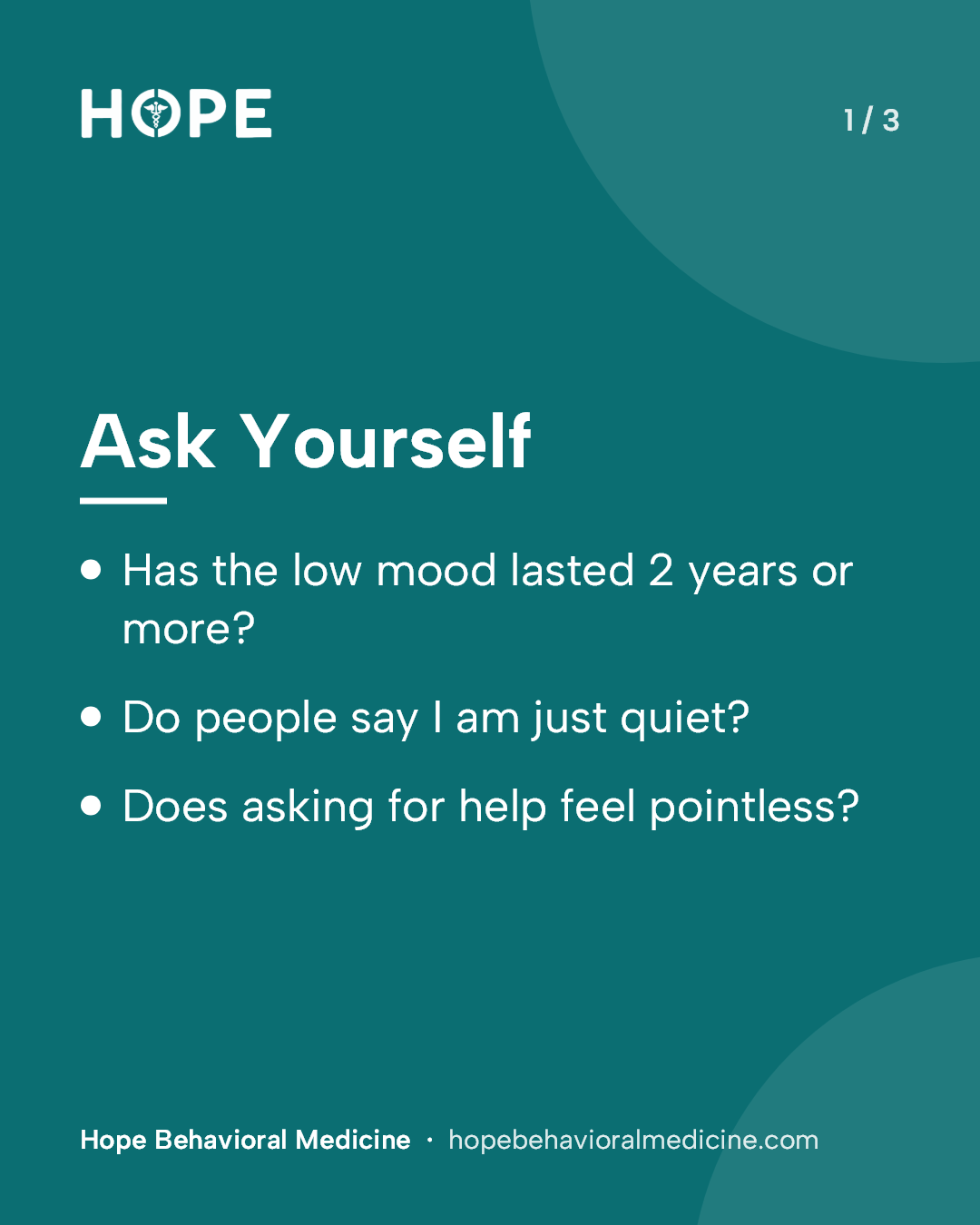
Ask Yourself
- Has the low mood lasted 2 years or more?
- Do people say I am just quiet?
- Does asking for help feel pointless?
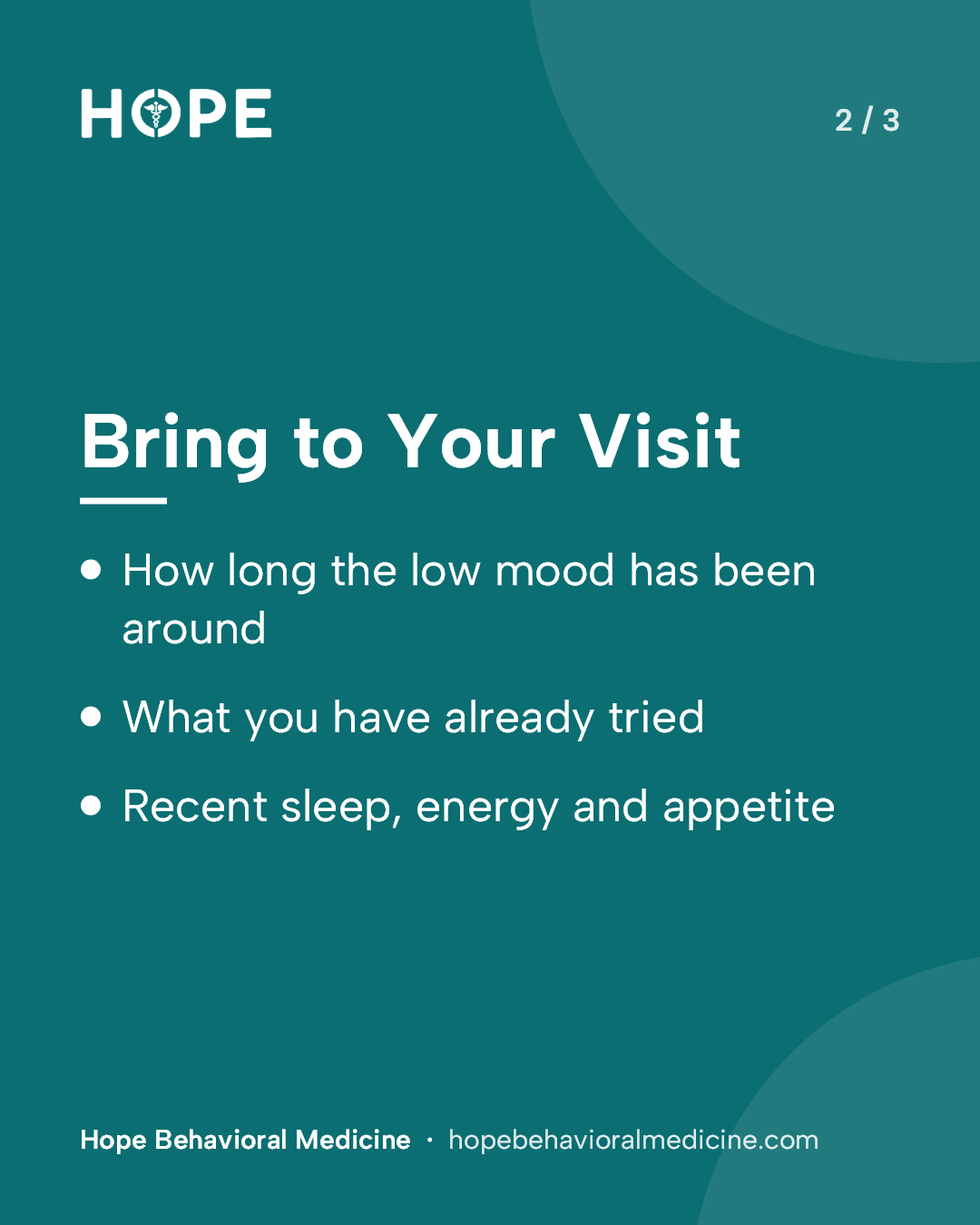
Bring to Your Visit
- How long the low mood has been around
- What you have already tried
- Recent sleep, energy and appetite
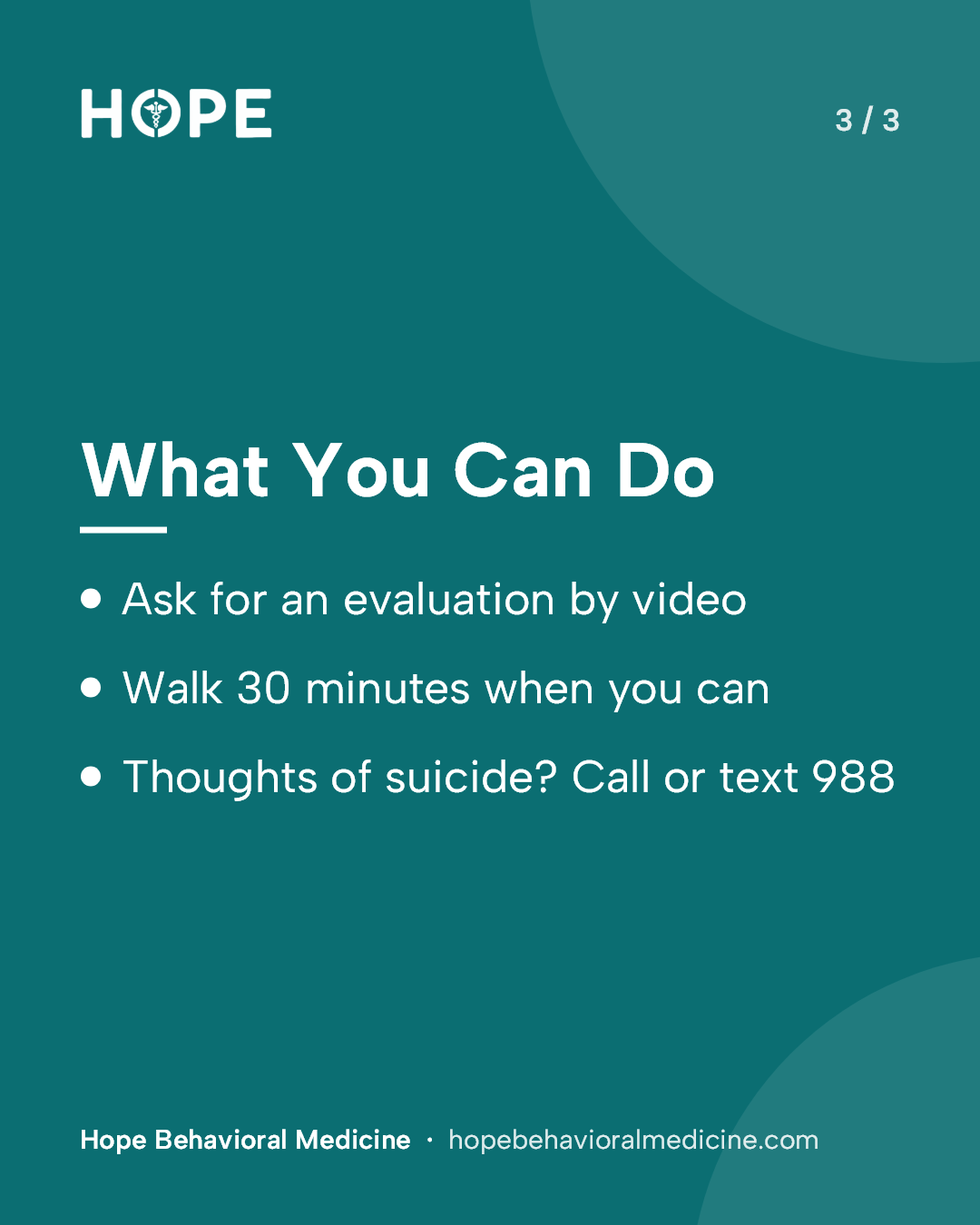
What You Can Do
- Ask for an evaluation by video
- Walk 30 minutes when you can
- Thoughts of suicide? Call or text 988
What the guideline says
- NIMH describes persistent depressive disorder, also called dysthymia, as depression with milder symptoms than a major depressive episode that last much longer, usually at least 2 years.
- Common signs NIMH lists include a sad, anxious or empty mood, hopelessness, guilt or worthlessness, low energy, trouble concentrating, and changes in sleep or appetite.
- A major depressive episode is diagnosed when symptoms are present most of the day, nearly every day, for at least two weeks, NIMH explains.
- NIMH says people with only a few symptoms may benefit from treatment.
- Some medical conditions, such as viruses or thyroid disorders, can cause the same symptoms as depression, and a provider can check for them.
- NIMH says depression is usually treated with talk therapy, medication or both, and that just 30 minutes a day of walking can boost mood.
Source: National Institute of Mental Health, Depression (NIH Pub. 24-MH-8079, revised 2024)
Read the full article: Low for Years, Not Weeks: Persistent Depressive Disorder →
This guide is general health information and does not replace advice from your own provider.
Frequently Asked Questions
NIMH says some medical conditions, such as viruses or thyroid disorders, can cause the same symptoms as depression. A provider can check with a physical exam, an interview and lab tests, which can be done at a lab of your choice near you.
Keep going with treatment, do something you used to enjoy, move a little every day, keep a regular sleep schedule and regular meals, and stay in touch with people you trust.
NIMH notes that depression often occurs alongside chronic illnesses such as diabetes, heart disease and chronic pain.