Retraining Your Sleep: A CBT-I Starter Guide
Based on National Heart, Lung, and Blood Institute, Insomnia Treatment
5 cards. Swipe or tap to see the next one.

What cognitive behavioral therapy for insomnia (CBT-I) involves, why it is the recommended first treatment for long-term insomnia, and how it works by video.
Need to Talk to Someone?
In-person in West Ashley or telehealth statewide across South Carolina.
In this guide
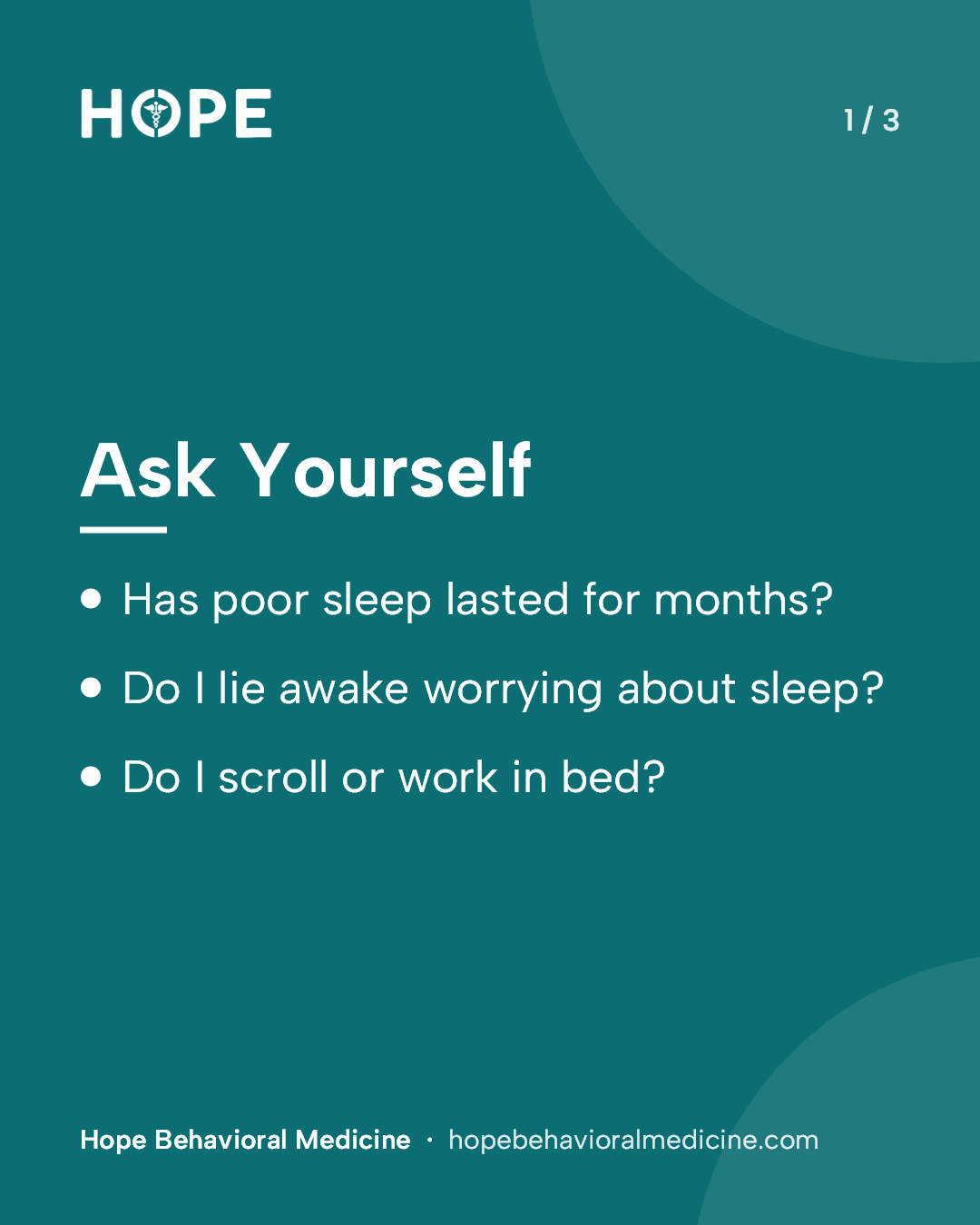
Ask Yourself
- Has poor sleep lasted for months?
- Do I lie awake worrying about sleep?
- Do I scroll or work in bed?
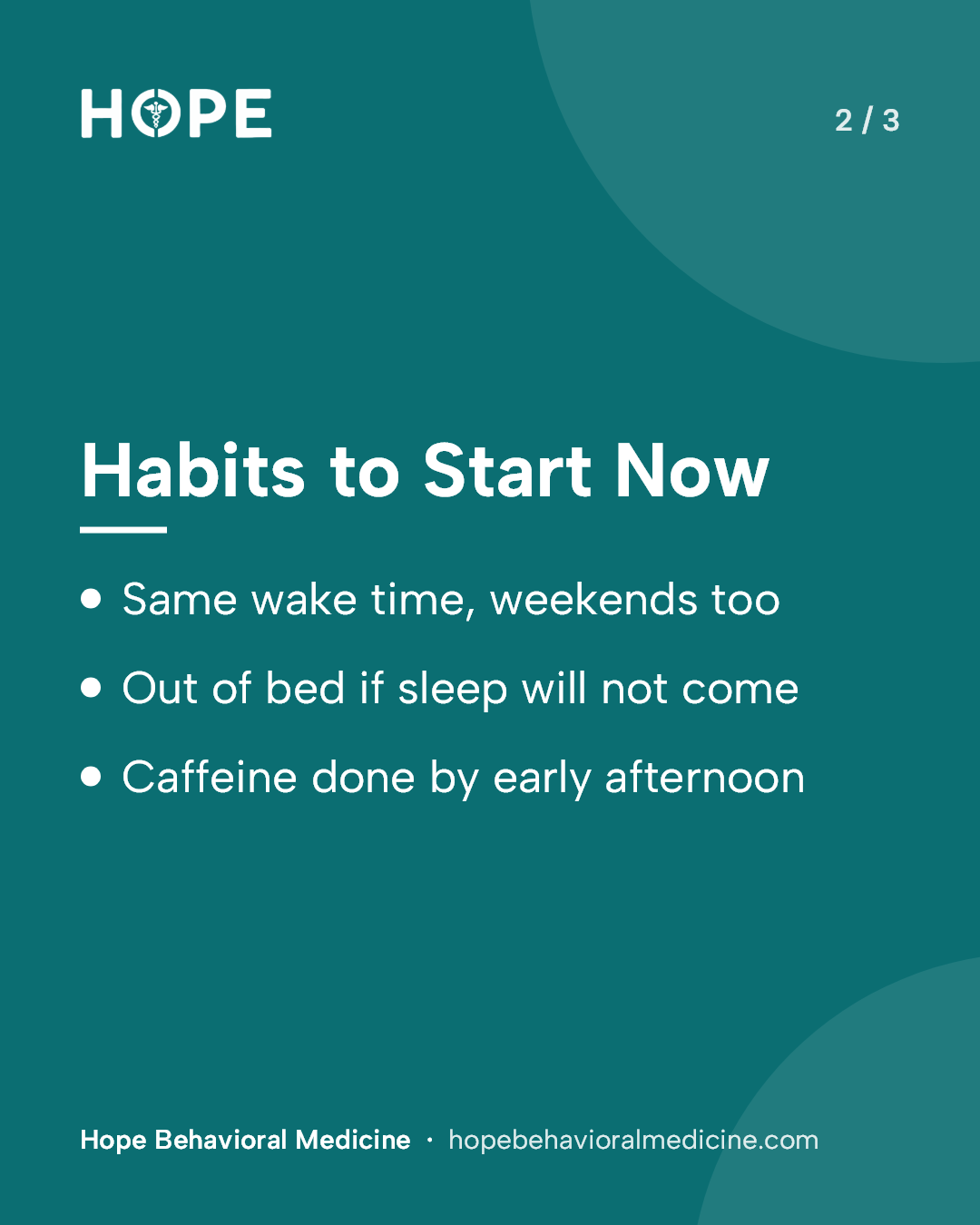
Habits to Start Now
- Same wake time, weekends too
- Out of bed if sleep will not come
- Caffeine done by early afternoon
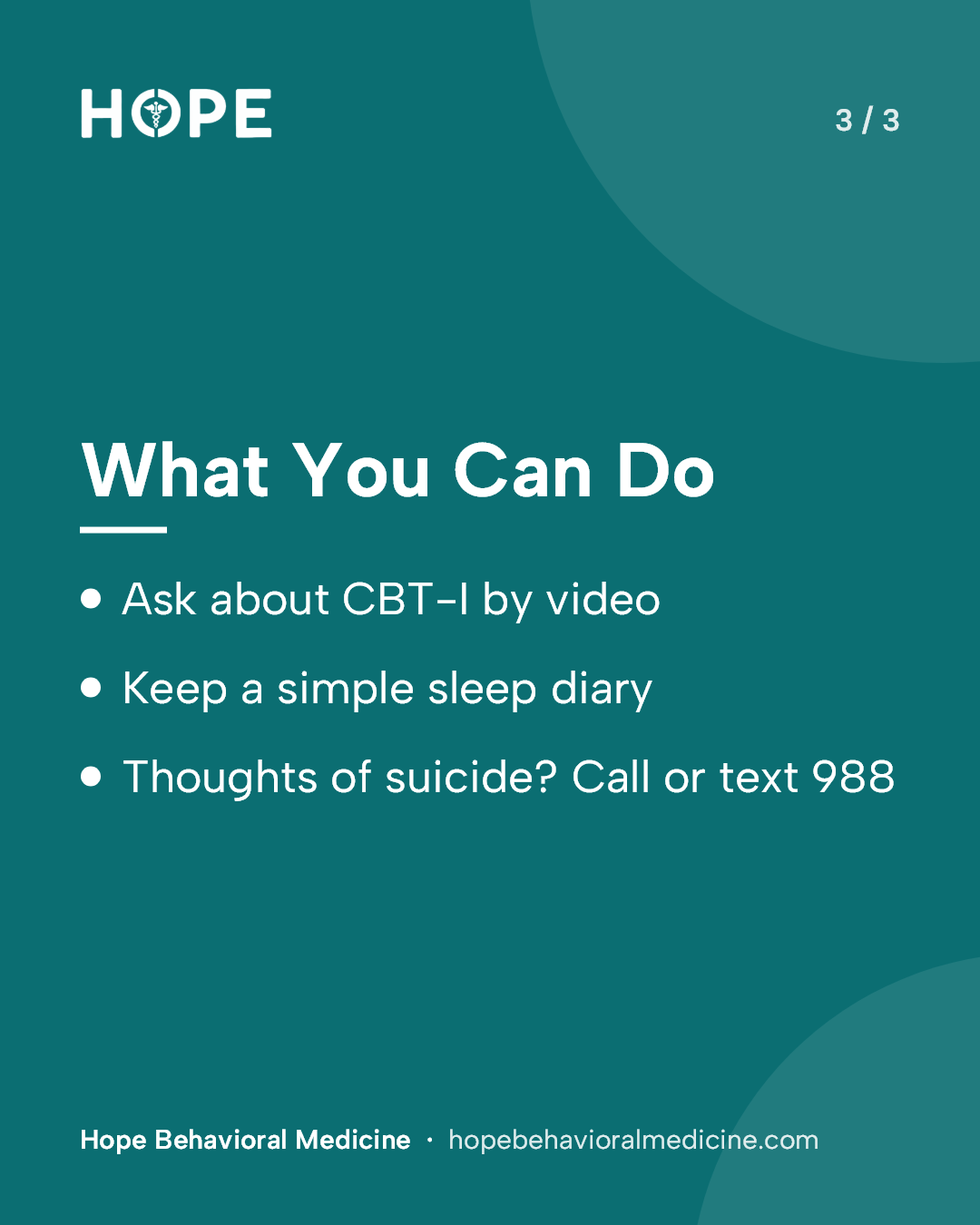
What You Can Do
- Ask about CBT-I by video
- Keep a simple sleep diary
- Thoughts of suicide? Call or text 988
What the guideline says
- NHLBI says CBT-I is usually recommended as the first treatment option for long-term insomnia and can be very effective.
- NHLBI describes CBT-I as a 6- to 8-week plan to help you fall asleep faster and stay asleep longer.
- CBT-I has five parts: cognitive work, relaxation, sleep education, sleep restriction and stimulus control.
- CBT-I can be delivered in person, by phone or online, so it fits secure video visits well.
- The goal is steadier, better quality sleep rather than more hours in bed, and a sleep diary guides each step.
- Medication is considered only when indicated, decided jointly with you, with a focus on lasting change.
Source: National Heart, Lung, and Blood Institute, Insomnia Treatment
Read the full article: CBT-I: How Insomnia Treatment Works Without Relying on Sleep Aids →
This guide is general health information and does not replace advice from your own provider.
Frequently Asked Questions
Yes. The NHLBI notes that CBT-I can be delivered in person, by phone or online. Because it is built on conversation, practice and a sleep diary, it fits secure video visits well.
Get up and do something calm until you feel sleepy. Using the bed for sleep, not for scrolling or work, is one of the habits that supports CBT-I.
A sleep diary shows your progress and guides each step of CBT-I.