Months After a Trauma and Still on Edge?
Based on National Institute of Mental Health, Post-Traumatic Stress Disorder (revised 2023)
5 cards. Swipe or tap to see the next one.
Fear after a frightening event is natural, and for many people it fades. When PTSD symptoms usually begin, how they can surface later and when to get an evaluation.
Need to Talk to Someone?
In-person in West Ashley or telehealth statewide across South Carolina.
In this guide
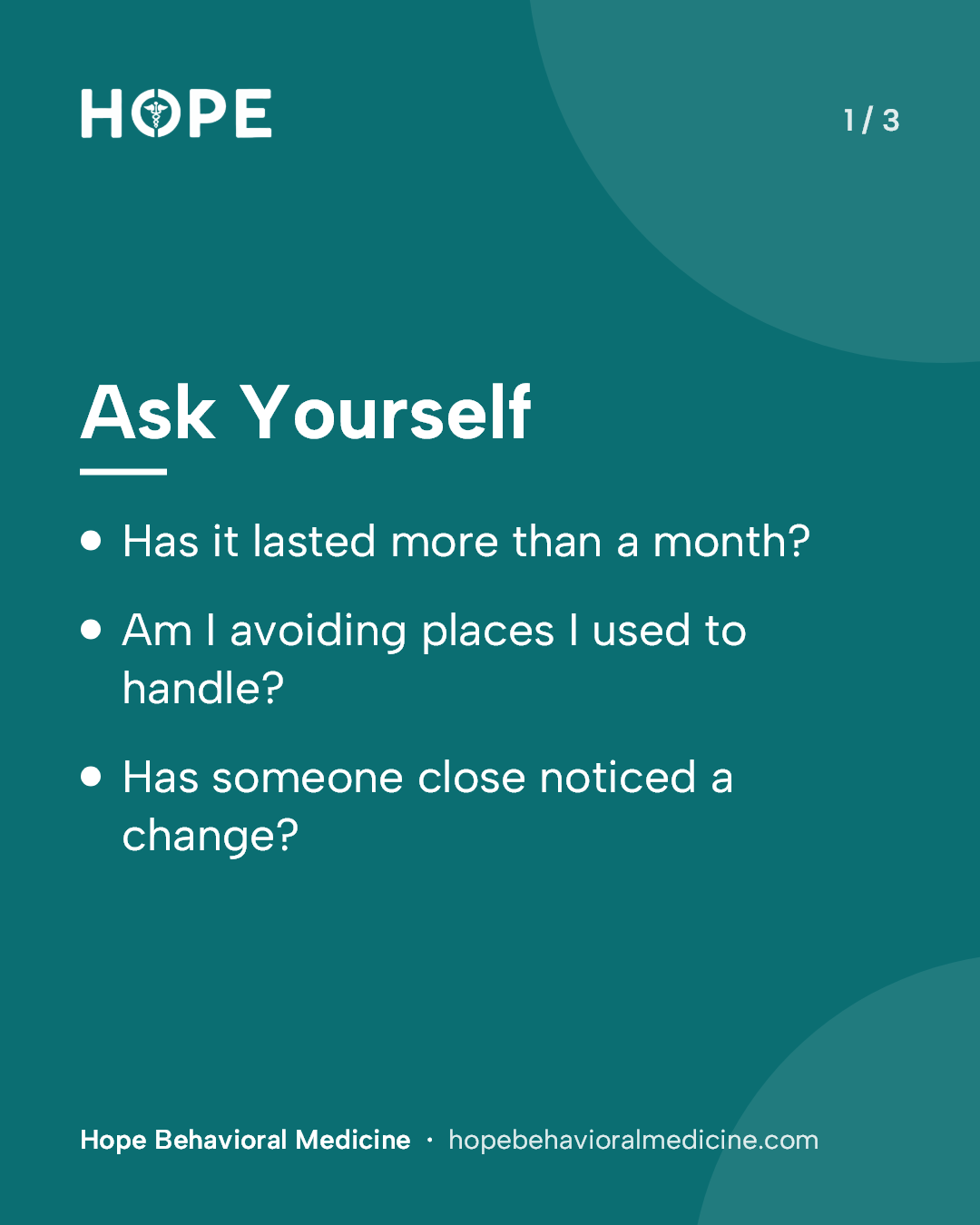
Ask Yourself
- Has it lasted more than a month?
- Am I avoiding places I used to handle?
- Has someone close noticed a change?
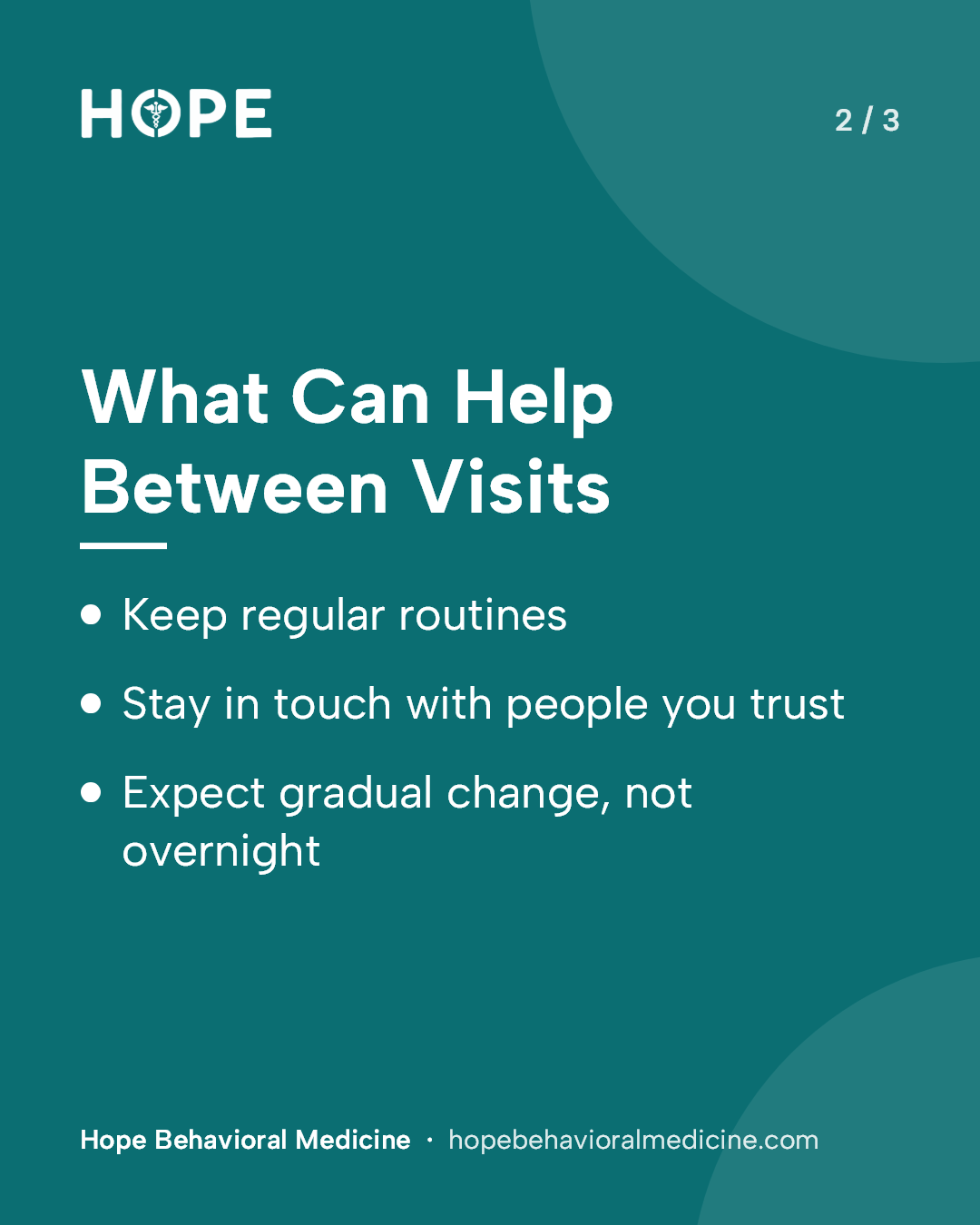
What Can Help Between Visits
- Keep regular routines
- Stay in touch with people you trust
- Expect gradual change, not overnight
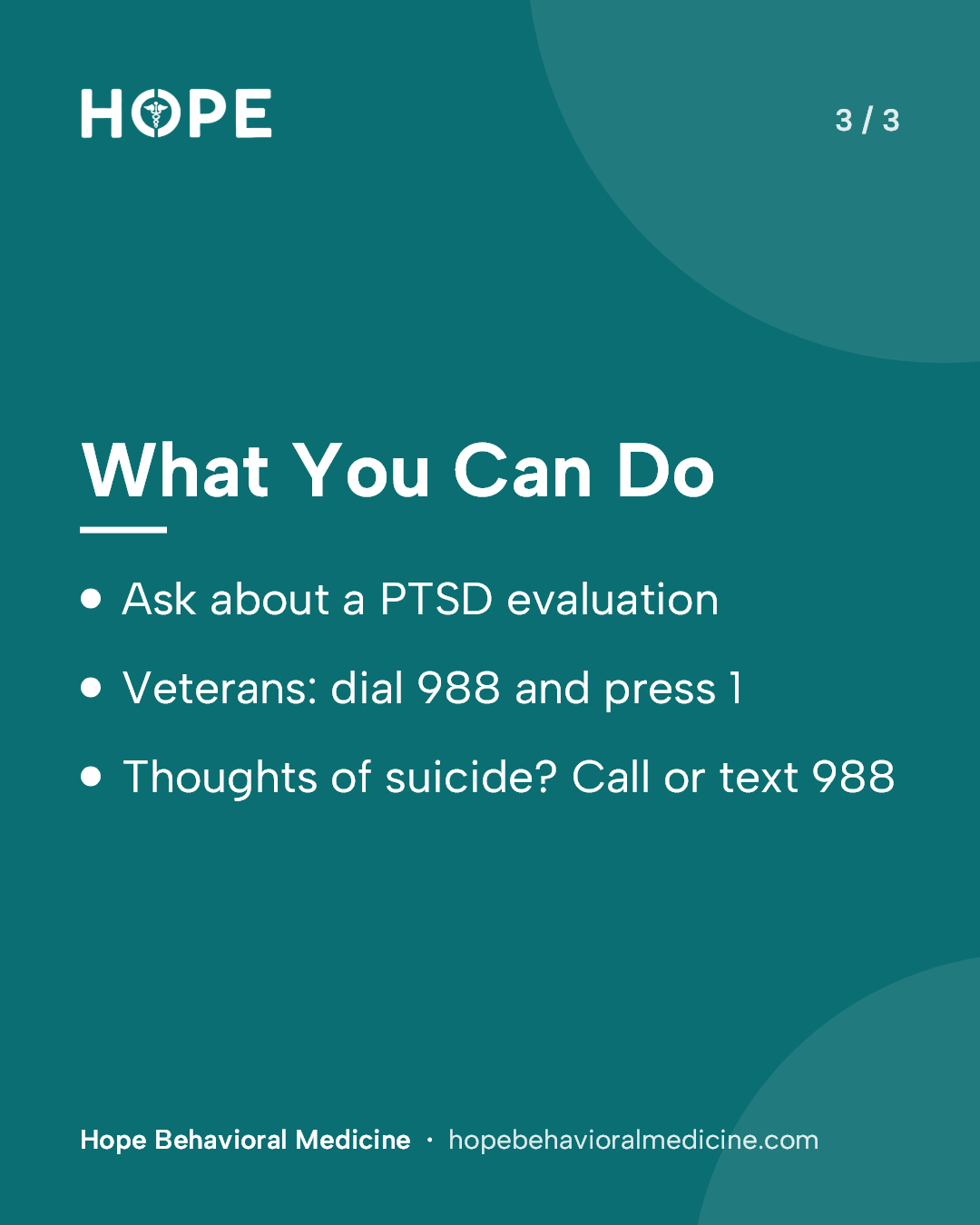
What You Can Do
- Ask about a PTSD evaluation
- Veterans: dial 988 and press 1
- Thoughts of suicide? Call or text 988
What the guideline says
- NIMH says it is natural to feel afraid during and after a traumatic situation, and for many people the jumpiness and bad dreams settle down.
- NIMH says PTSD symptoms usually begin within 3 months of the event but sometimes emerge later, and the APA notes they can persist for months and sometimes years.
- NIMH sorts PTSD symptoms into four groups: reliving it, steering clear, feeling on alert, and changes in thinking and mood.
- An adult diagnosis calls for symptoms lasting longer than a month that get in the way of daily life, and a qualified clinician makes it using the DSM-5-TR.
- NIMH says some people improve within 6 months, while others have symptoms that last a year or longer.
- NIMH names psychotherapy, medication or both as the main treatments, and talk therapies include cognitive processing therapy, prolonged exposure and EMDR.
Source: National Institute of Mental Health, Post-Traumatic Stress Disorder (revised 2023)
Read the full article: Can PTSD Start Months After a Trauma? Signs, Timing and When to Get Help →
This guide is general health information and does not replace advice from your own provider.
Frequently Asked Questions
Symptoms that have lasted more than a month, avoiding work, driving, people or places you used to handle, sleep, temper or concentration problems affecting your job or family, or someone close to you noticing a change.
NIMH links resilience to seeking out and accepting support from others, having a coping strategy and feeling okay about how you acted during the event.
A qualified clinician, using the DSM-5-TR, which names it posttraumatic stress disorder. NIMH says an adult diagnosis calls for symptoms lasting longer than a month that get in the way of daily life.