Is Your Worry More Than Everyday Worry?
Based on National Institute of Mental Health, Generalized Anxiety Disorder: What You Need to Know (revised 2025)
5 cards. Swipe or tap to see the next one.
Everyone worries. When worry jumps from topic to topic, is hard to switch off and lasts for months, it may be generalized anxiety disorder. The signs, the diagnosis and what helps.
Need to Talk to Someone?
In-person in West Ashley or telehealth statewide across South Carolina.
In this guide
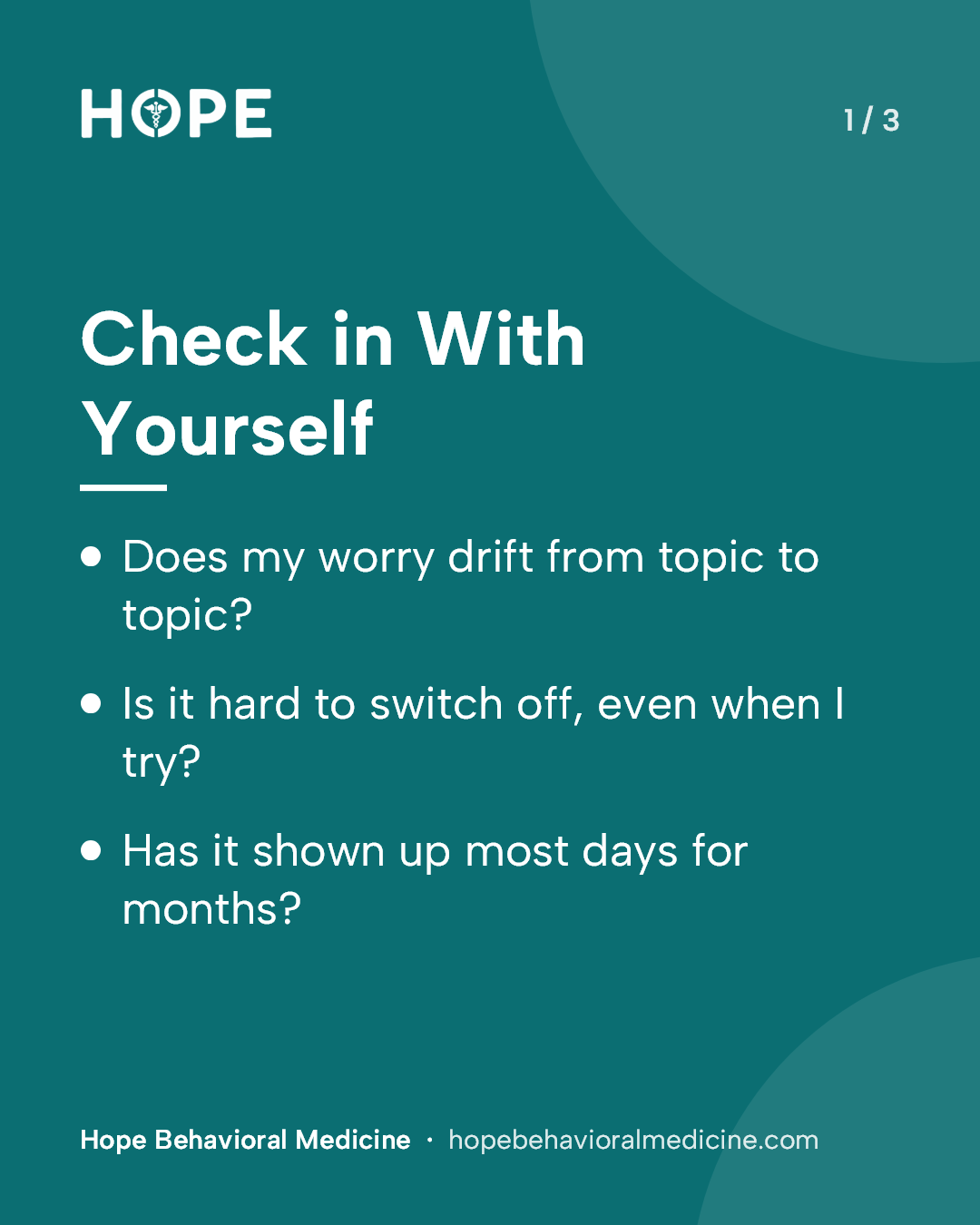
Check In With Yourself
- Does my worry drift from topic to topic?
- Is it hard to switch off, even when I try?
- Has it shown up most days for months?
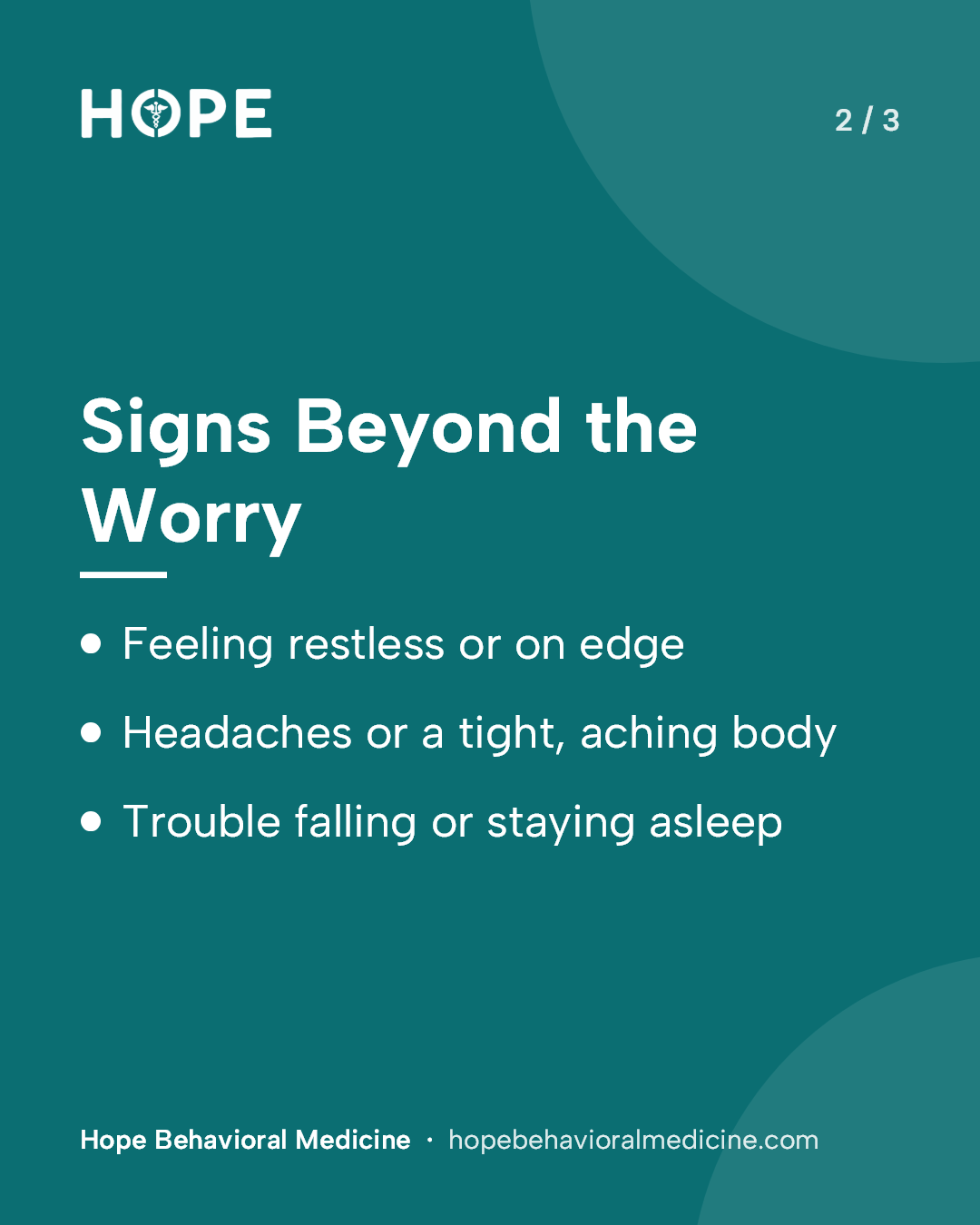
Signs Beyond the Worry
- Feeling restless or on edge
- Headaches or a tight, aching body
- Trouble falling or staying asleep
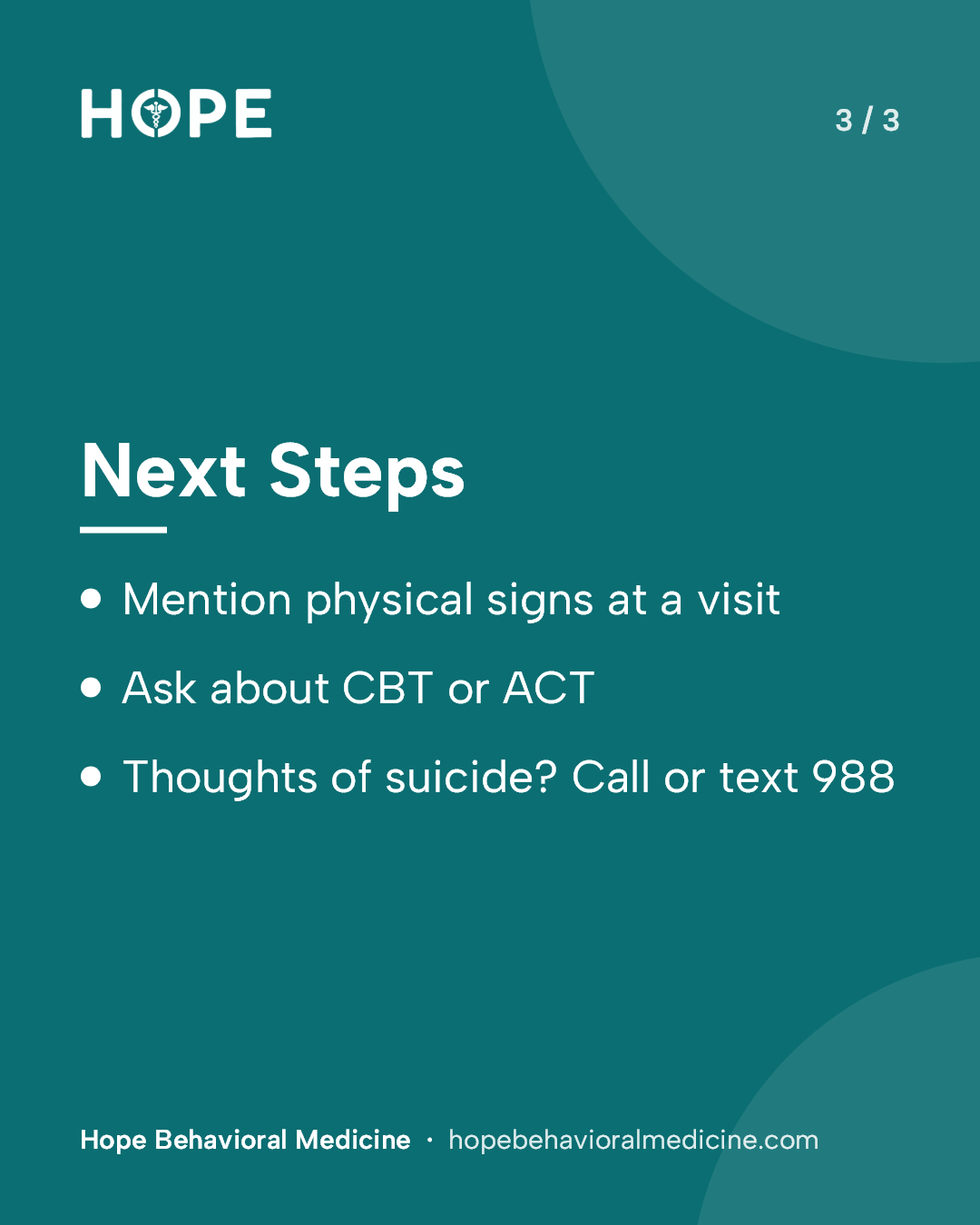
Next Steps
- Mention physical signs at a visit
- Ask about CBT or ACT
- Thoughts of suicide? Call or text 988
What the guideline says
- Everyday worry is usually tied to a specific problem and eases when the problem passes; GAD worry jumps between topics and is hard to switch off.
- NIMH describes people with GAD as worrying too much about ordinary matters, such as health, money or a job, on most days for at least 6 months.
- NIMH lists signs that reach beyond worry, including restlessness, irritability, trouble concentrating, poor sleep, headaches, muscle aches and stomachaches.
- Generalized anxiety disorder is a DSM-5-TR diagnosis made by a qualified clinician, and other explanations such as a thyroid problem or too much caffeine are ruled out.
- NIMH calls cognitive behavioral therapy well studied and the gold standard choice of psychotherapy for GAD, with growing research support for acceptance and commitment therapy.
- Treatment typically involves psychotherapy, medication or both, and medication when indicated is decided jointly with you.
Read the full article: Worrying All the Time? Everyday Worry vs Generalized Anxiety Disorder →
This guide is general health information and does not replace advice from your own provider.
Frequently Asked Questions
Yes. Among the possible signs of GAD, NIMH lists headaches, muscle aches and stomachaches, trembling, heavy sweating, lightheadedness and trouble sleeping.
Because so many signs of anxiety are physical, part of a good evaluation is making sure something else, such as a thyroid problem or too much caffeine, is not behind them.
No. Questionnaires such as the GAD-7 help measure how strong symptoms are and track change over time, but a score on its own is not a diagnosis.