Habit or OCD? A Simple Self-Check
Based on National Institute of Mental Health, Obsessive-Compulsive Disorder: When Unwanted Thoughts or Repetitive Behaviors Take Over (revised 2023)
9 cards. Swipe or tap to see the next one.

Everyone double-checks sometimes. How obsessions differ from passing thoughts, the signs that point to OCD and how exposure and response prevention helps.
Need to Talk to Someone?
In-person in West Ashley or telehealth statewide across South Carolina.
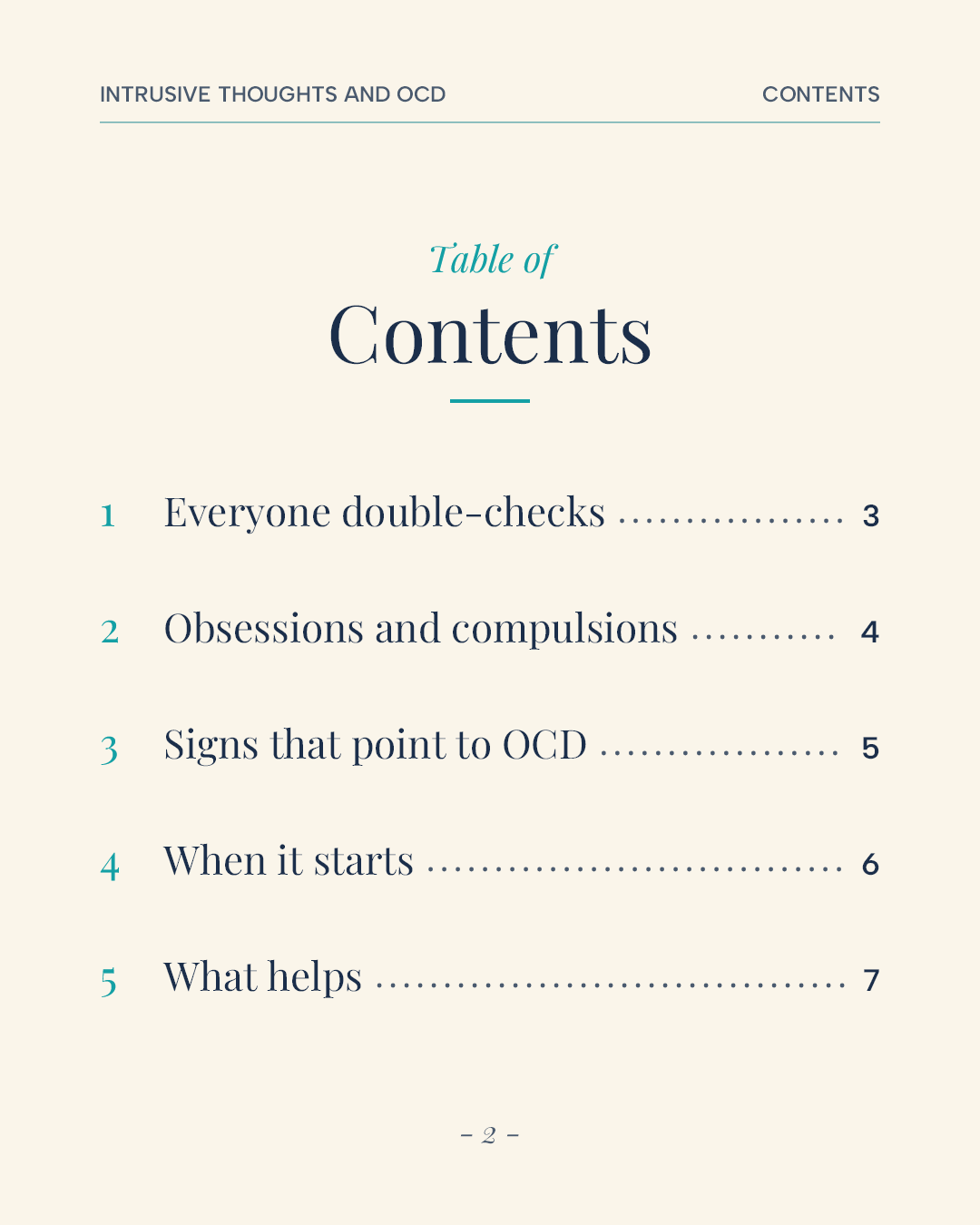
In this guide
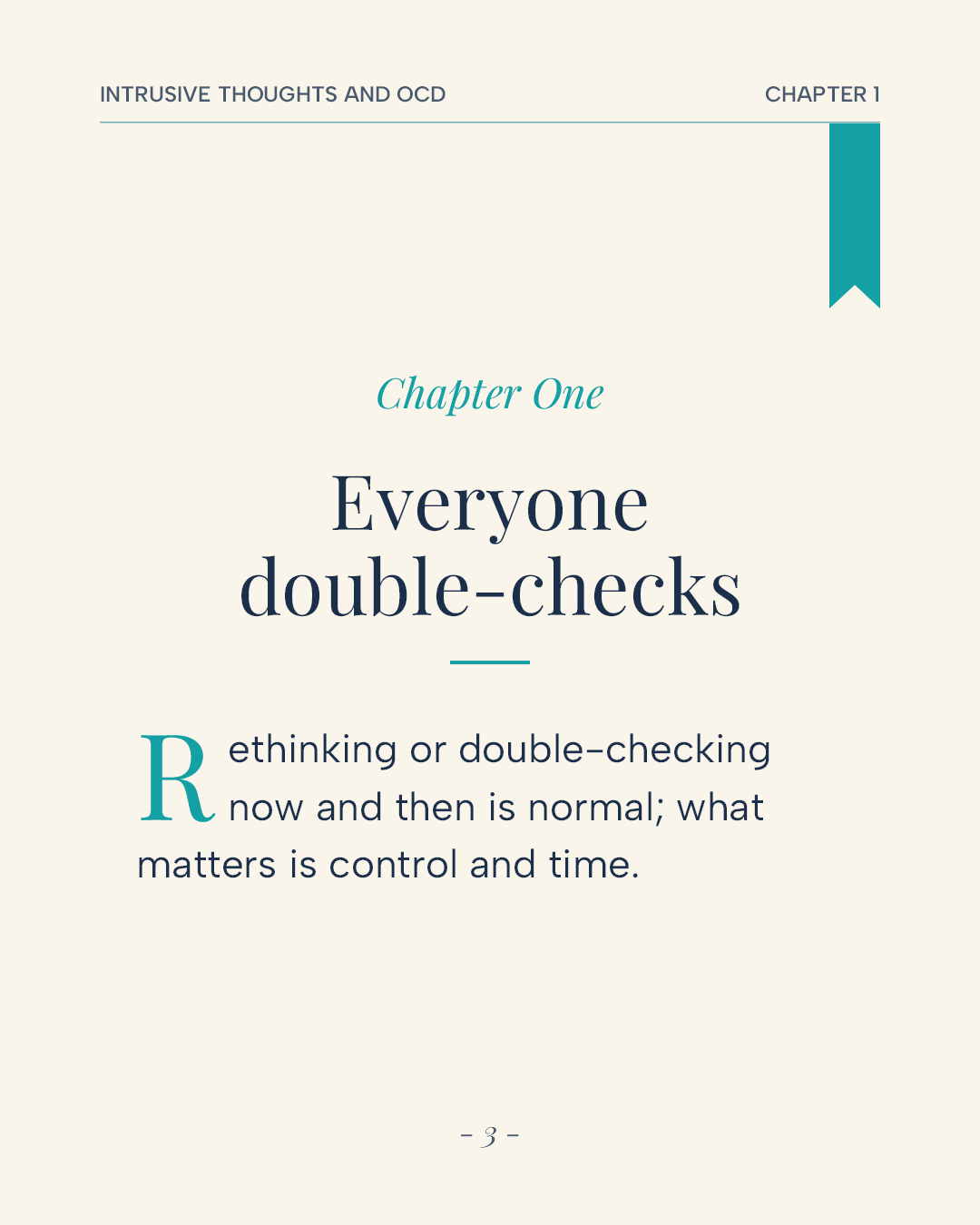
Everyone double-checks
- Rethinking or double-checking now and then is normal; what matters is control and time.
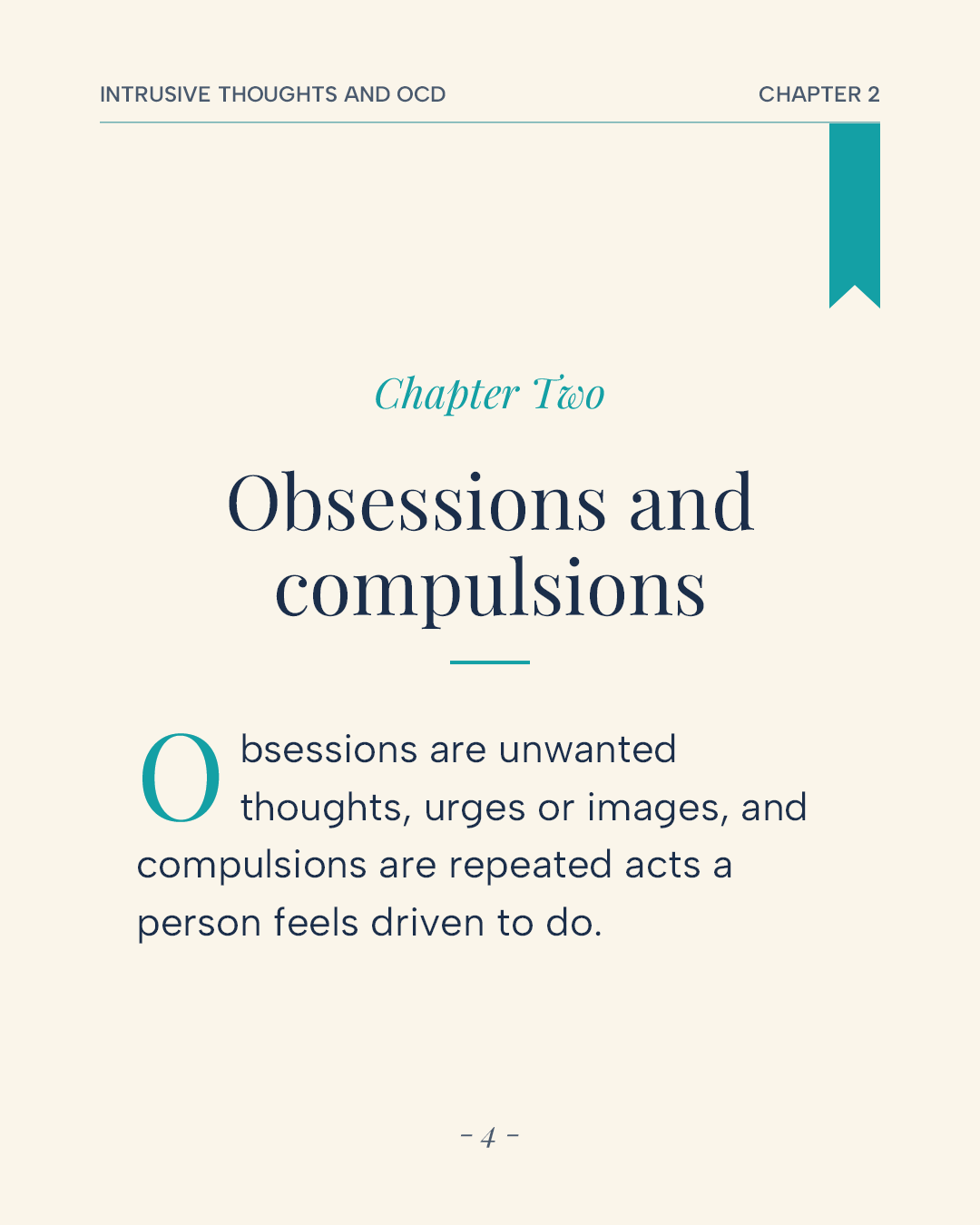
Obsessions and compulsions
- Obsessions are unwanted thoughts, urges or images, and compulsions are repeated acts a person feels driven to do.
Signs that point to OCD
- Thoughts or rituals you cannot control, more than an hour a day on them and only short-lived relief.
When it starts
- Symptoms usually begin between late childhood and young adulthood, often alongside anxiety or low mood.
What helps
- Cognitive behavioral therapy and exposure and response prevention can reduce compulsive behaviors.
What the guideline says
- NIMH notes that everyone rethinks or double-checks things sometimes; what matters is how much control you have and how much of your day the thoughts and urges take.
- NIMH describes obsessions as repeated, intrusive and unwanted thoughts, urges or mental images, and compulsions as repetitive behaviors a person feels an urge to do.
- Signs NIMH points to include not being able to control the thoughts or rituals, spending more than an hour a day on them and getting only short-lived relief.
- Symptoms usually start between late childhood and young adulthood, NIMH says, and a mood or anxiety disorder is common alongside OCD.
- Obsessive-compulsive disorder is a DSM-5-TR diagnosis made by a qualified clinician.
- NIMH names cognitive behavioral therapy and exposure and response prevention (ERP), which it says effectively reduces compulsive behaviors.
Read the full article: Intrusive Thoughts: When Are They a Sign of OCD? →
This guide is general health information and does not replace advice from your own provider.
Frequently Asked Questions
No. NIMH says the rituals bring no pleasure, only short-lived relief from anxiety.
NIMH says some people with OCD also have a tic disorder, and it is common to have a mood or anxiety disorder as well.
NIMH's advice is to start by speaking with a health care provider about what you are experiencing. An evaluation also looks at anxiety, depression and other conditions that can overlap.