Getting Ready for a Video Visit: A Quick Checklist
Based on National Institute of Mental Health, Getting Mental Health Support Virtually (revised 2025)
5 cards. Swipe or tap to see the next one.

A practical check before a mental health video visit: what the research says, the setup, keeping it private, and when an office visit or emergency care is the right call.
Need to Talk to Someone?
In-person in West Ashley or telehealth statewide across South Carolina.
In this guide
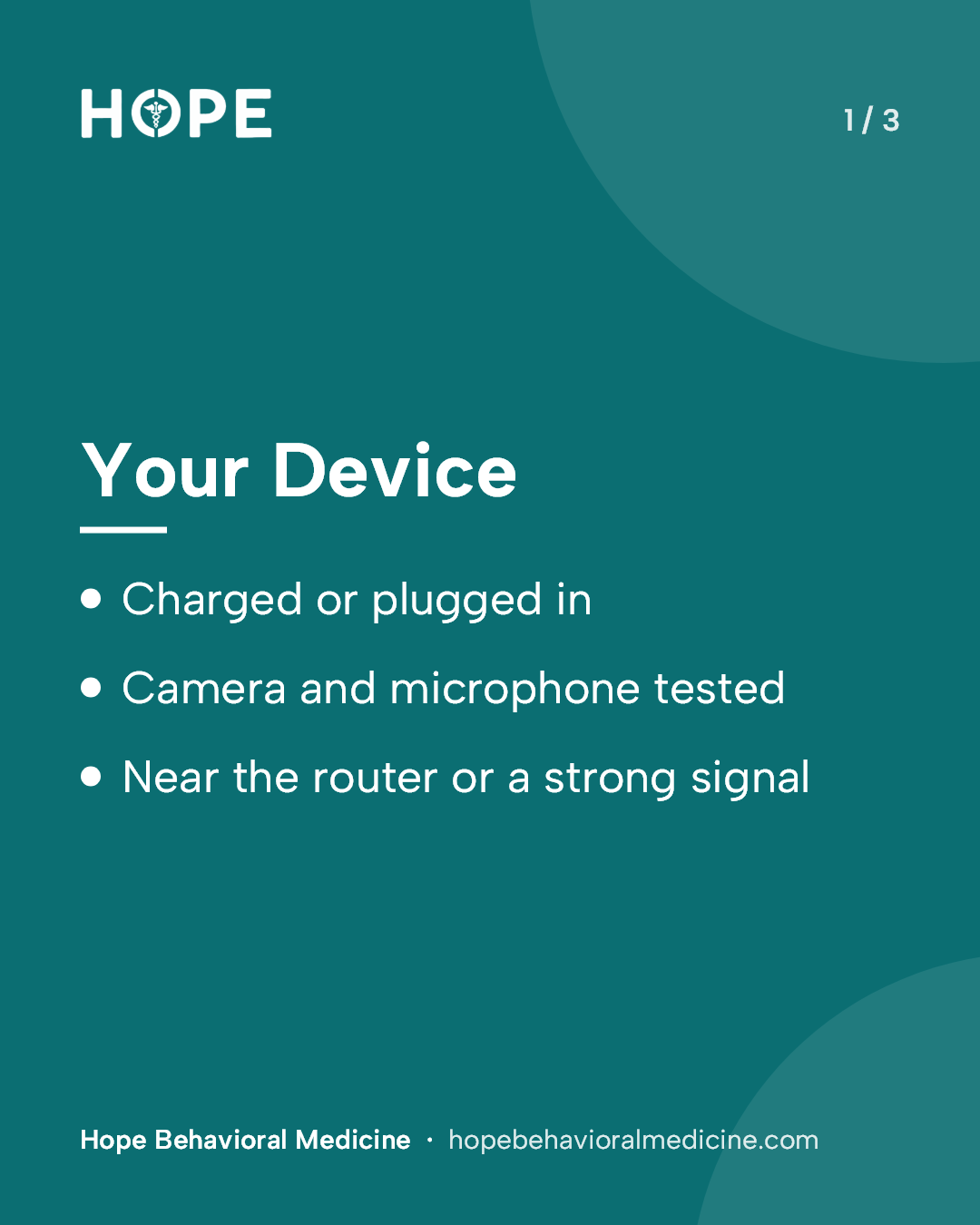
Your Device
- Charged or plugged in
- Camera and microphone tested
- Near the router or a strong signal
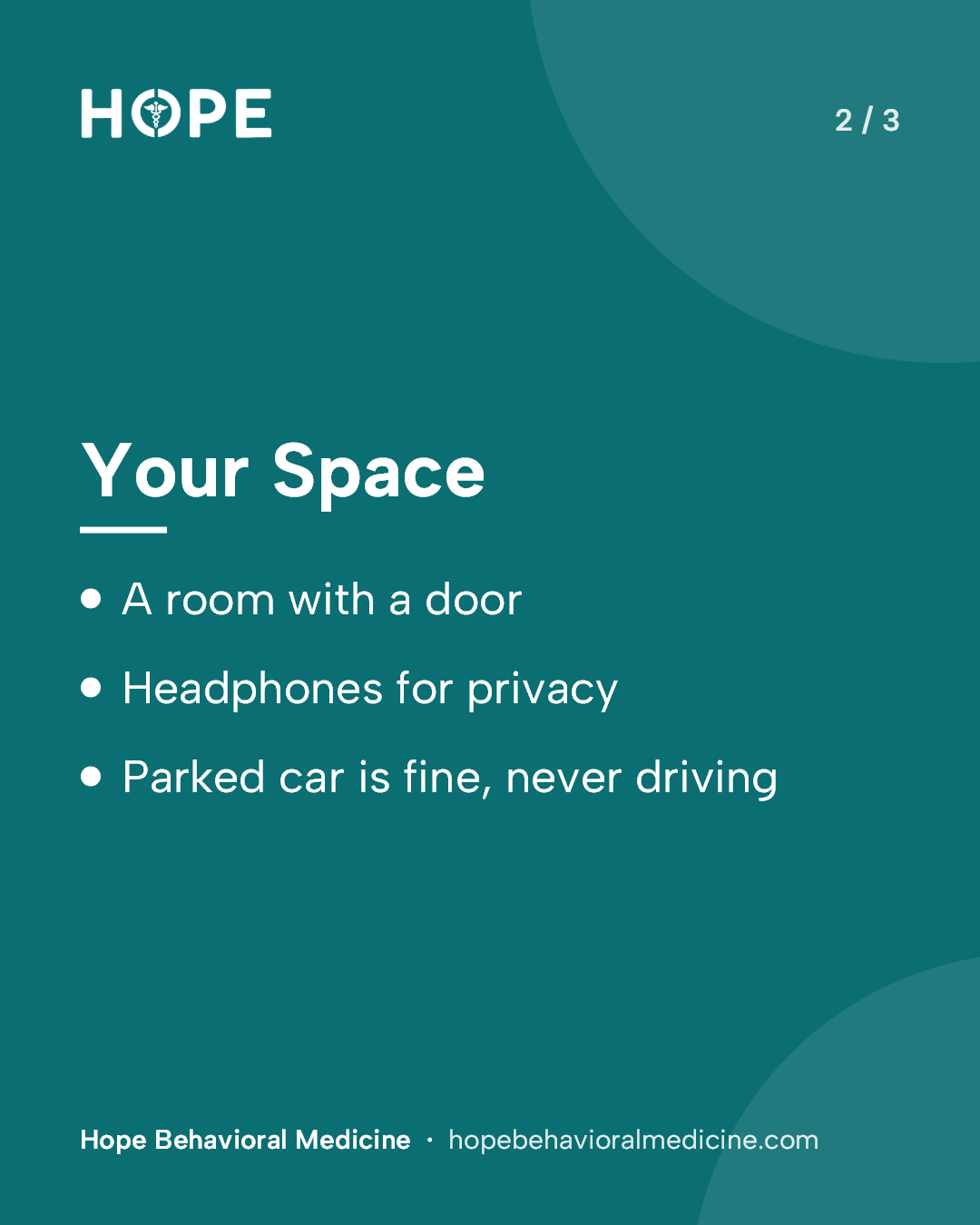
Your Space
- A room with a door
- Headphones for privacy
- Parked car is fine, never driving
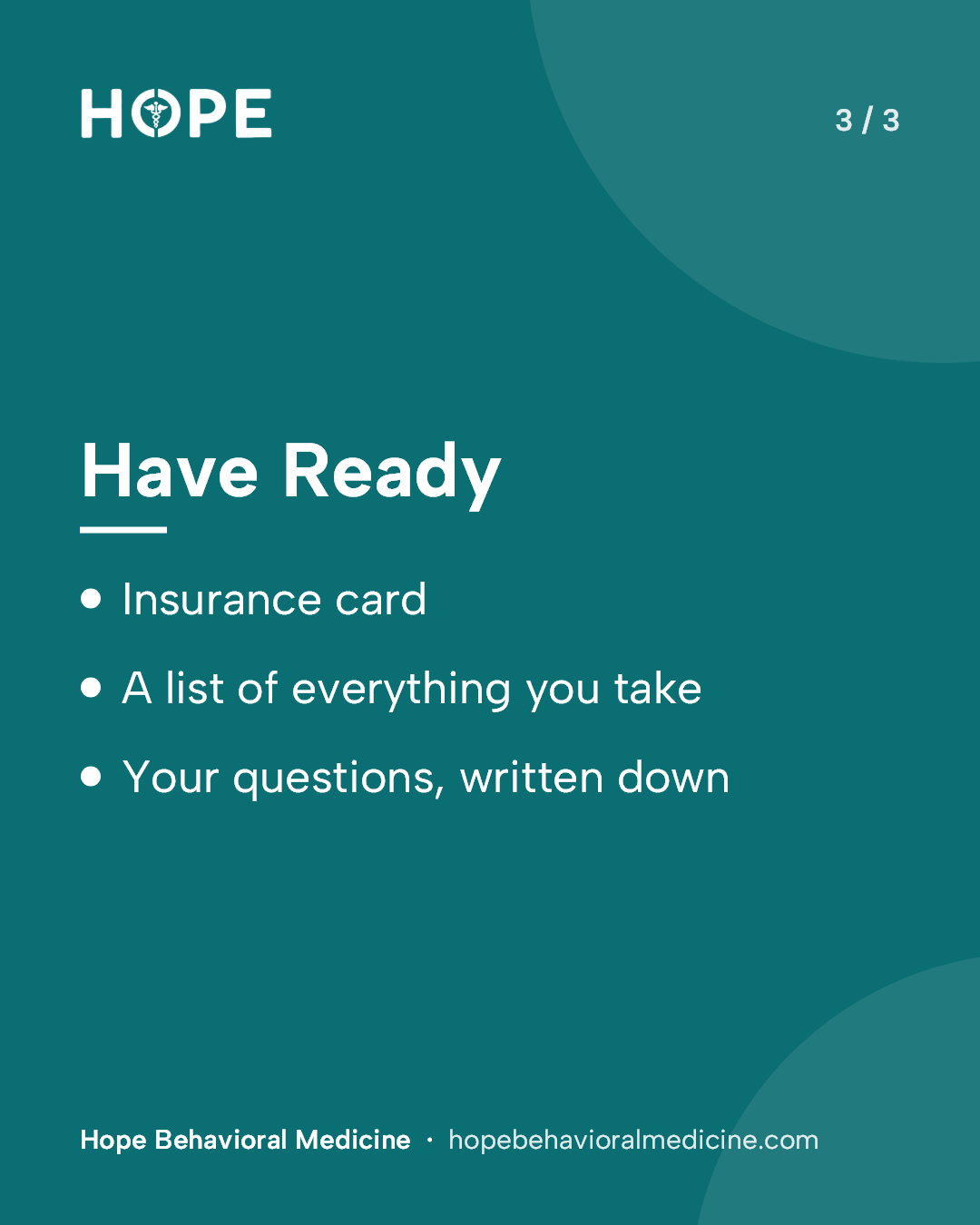
Have Ready
- Insurance card
- A list of everything you take
- Your questions, written down
What the guideline says
- NIMH says virtual care can be effective for anxiety, ADHD, bipolar disorder, depression and PTSD.
- The challenges NIMH names are access to technology, technical trouble and privacy, so a little setup before the visit helps.
- NIMH advises choosing a provider whose platform is secure, protects your privacy and verifies your identity.
- A room with a door and headphones help keep a visit private, and a parked car can work, but never join while driving.
- MedlinePlus notes that some diagnoses require an in-person exam or a lab test, and our West Ashley office is there when you prefer it.
- A scheduled video visit is not crisis care: call or text 988, and call 911 in danger.
Source: National Institute of Mental Health, Getting Mental Health Support Virtually (revised 2025)
Read the full article: Is a Video Visit Right for You? Privacy, Setup and When to Come In Person →
This guide is general health information and does not replace advice from your own provider.
Frequently Asked Questions
Use a room with a door, wear headphones and pause the visit if someone walks in. Some people turn on a fan or a radio outside the door, or ask family to step out for the hour.
Your provider calls you by phone to continue the visit, so keep your phone nearby.
NIMH suggests asking about a provider's experience with your symptoms, the treatment methods they use and how long treatment usually takes.