Can't Concentrate? Questions to Ask Before You Guess
Based on Hope Behavioral Medicine, Why Am I Having So Much Trouble Focusing? (2026)
5 cards. Swipe or tap to see the next one.
Sleep, anxiety, depression, stress and medical conditions can all wreck concentration. Here is how to tell what is behind it, and where ADHD fits.
Need to Talk to Someone?
In-person in West Ashley or telehealth statewide across South Carolina.
In this guide
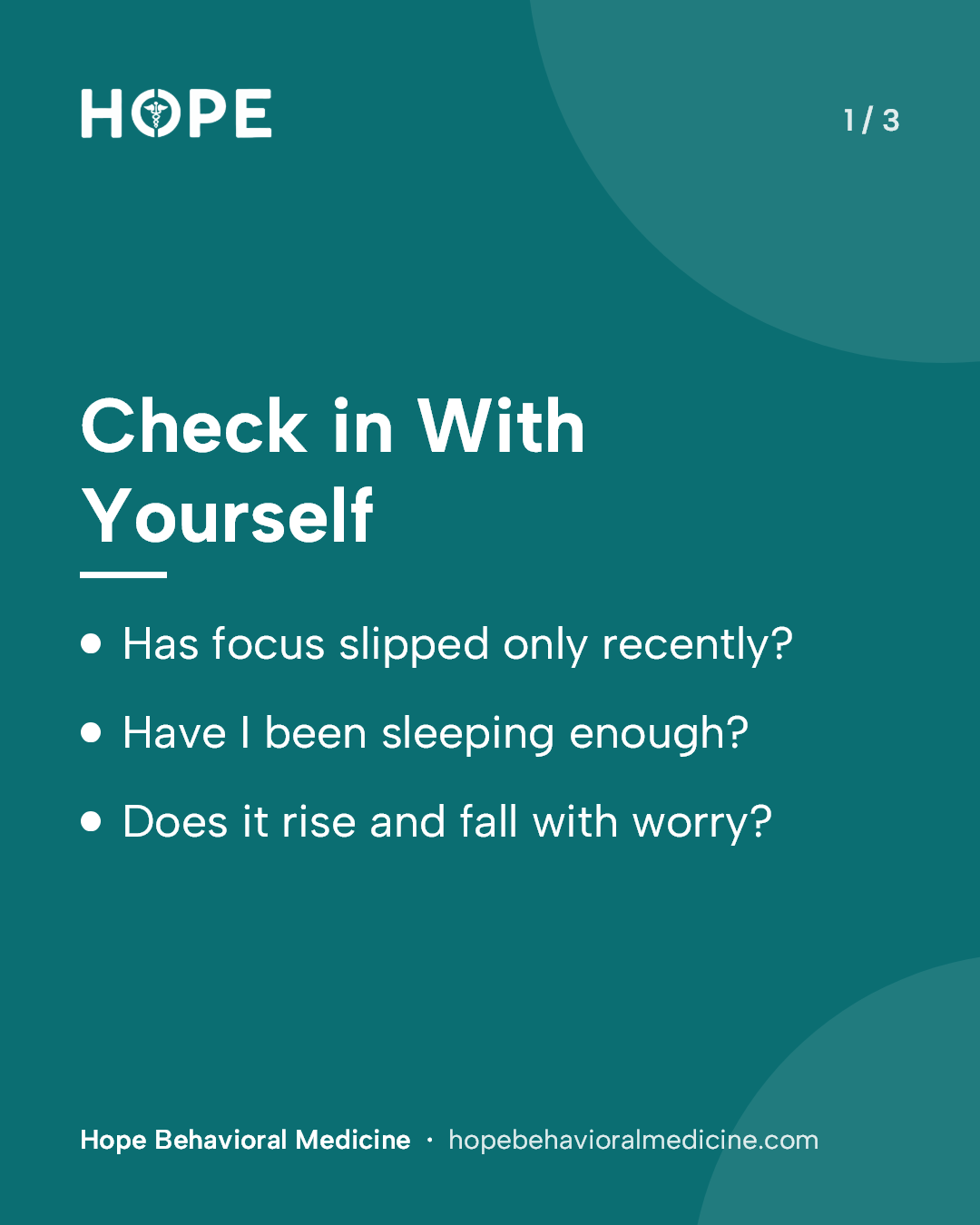
Check In With Yourself
- Has focus slipped only recently?
- Have I been sleeping enough?
- Does it rise and fall with worry?
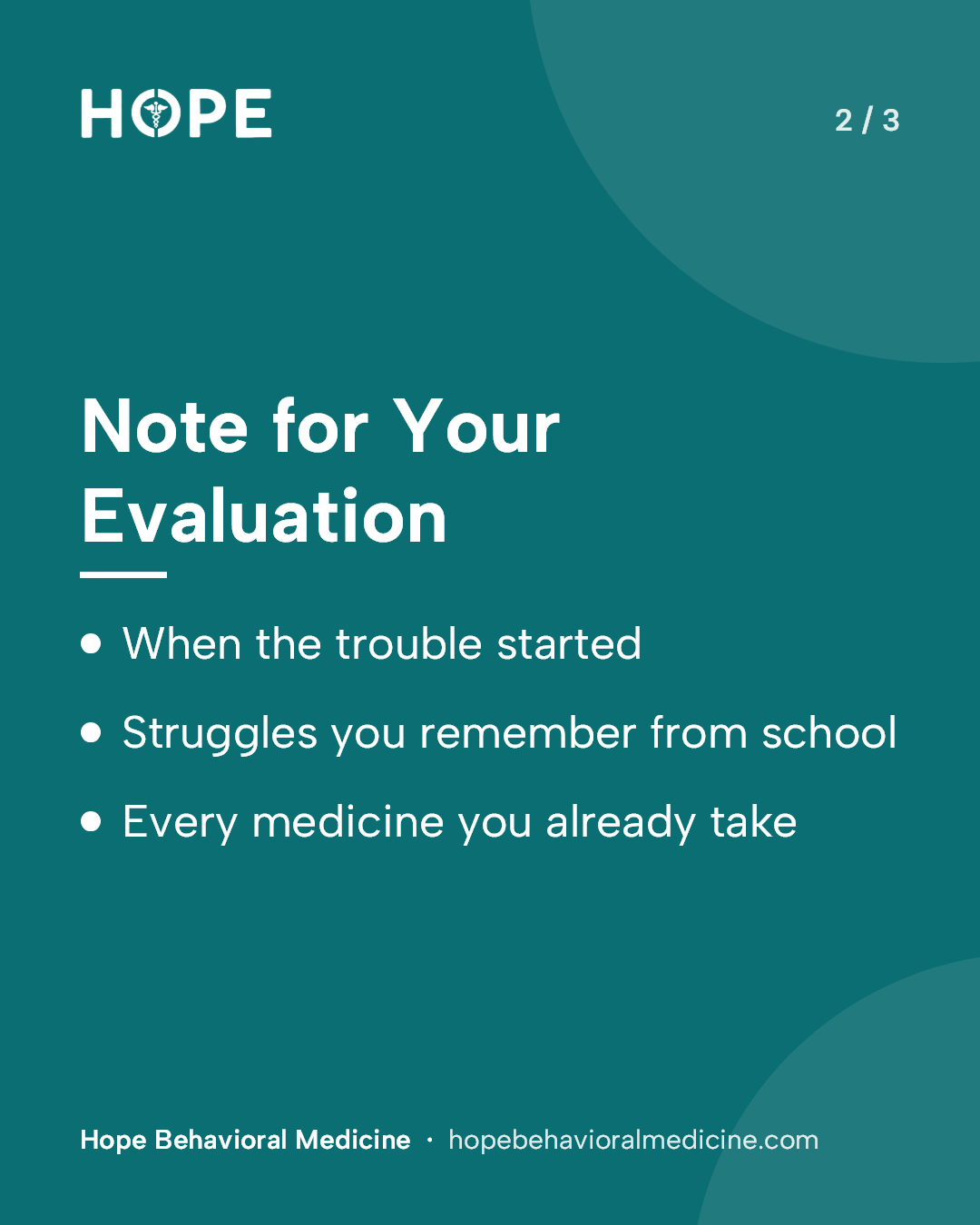
Note for Your Evaluation
- When the trouble started
- Struggles you remember from school
- Every medicine you already take
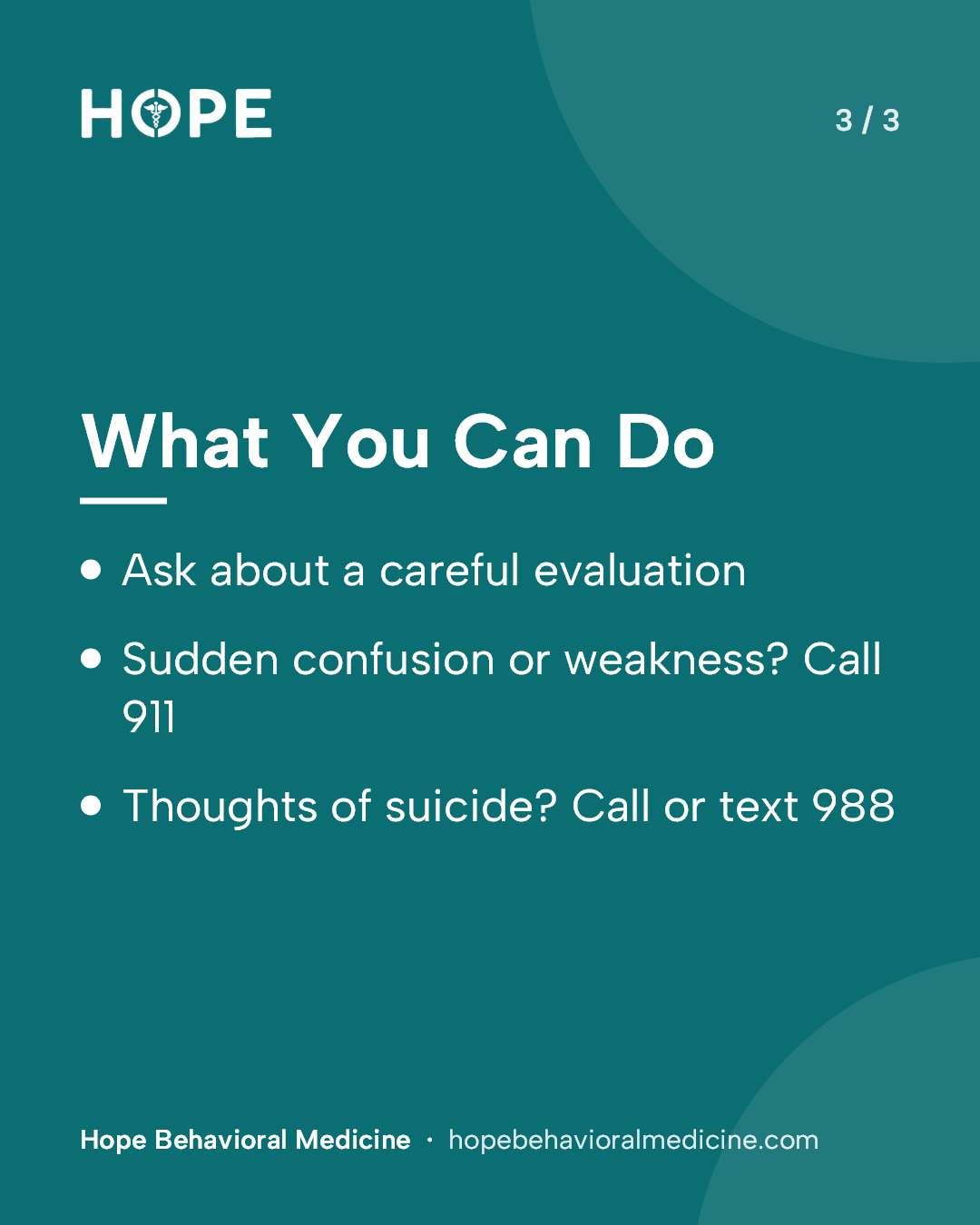
What You Can Do
- Ask about a careful evaluation
- Sudden confusion or weakness? Call 911
- Thoughts of suicide? Call or text 988
What the guideline says
- Trouble focusing is one of the most common reasons adults look for help, and ADHD is only one possible cause.
- Poor or short sleep, including sleep apnea that often goes unnoticed, anxiety, depression, chronic stress and burnout can all wreck concentration.
- Medical conditions such as thyroid problems or anemia, and side effects of medicines you already take, can also play a part.
- ADHD begins in childhood, so adults with ADHD can usually trace the same struggles back to school, and they show up in more than one part of life.
- Our practice requires objective ADHD testing for anyone who has not had a formal ADHD evaluation before.
- Sudden confusion, trouble speaking, weakness or memory loss can be signs of a stroke, so call 911.
Source: Hope Behavioral Medicine, Why Am I Having So Much Trouble Focusing? (2026)
Read the full article: Why Am I Having So Much Trouble Focusing? Causes Beyond ADHD →
This guide is general health information and does not replace advice from your own provider.
Frequently Asked Questions
ADHD usually shows signs back to childhood and affects attention across most situations. Anxiety-driven focus problems tend to rise and fall with worry. A careful evaluation, including objective testing, helps tell them apart, and some people have both.
Yes, if it is affecting your work, relationships or safety, or if it came on suddenly. Our team sees adults by telehealth anywhere in South Carolina and in person in West Ashley.
Call 911 for sudden confusion, trouble speaking, weakness or memory loss, which can be signs of a stroke.